Types of Live Animal Traps for Predators
Cage traps, box traps and live-catch traps for predators near the coop, with safe setting, local rules and what to do after a catch.

On this page
Top picks at a glance
As an Amazon Associate I earn from qualifying purchases.
- 1
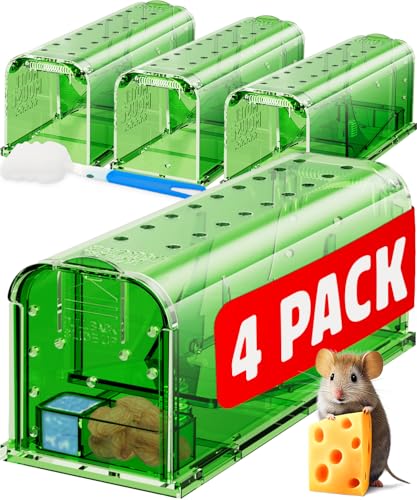 Motel Mouse Humane No Kill Mouse Traps Live Catch and Release9.6/10View on Amazon
- 2
 Anyhall 2-Pack Rat Traps Humane Live Mouse Vole Chipmunk Trap9.5/10View on Amazon
- 3
 4 Pcs Humane Live Mouse Traps No Kill Reusable Mice Trap Catch9.5/10View on Amazon
When the morning feed round shows a dug patch by the run fence and feathers scattered near the pop door, types of live animal traps are the live-catch traps that hold a predator alive inside a cage, box or tube so a keeper can deal with it under local rules. This guide explains the trap types keepers meet, how each type works, and what to check before setting a trap near a coop.
CoopKeeperHQ earns a commission if you buy through our links, at no added cost to you. Affiliate disclosure.
Types of live animal traps: cage traps
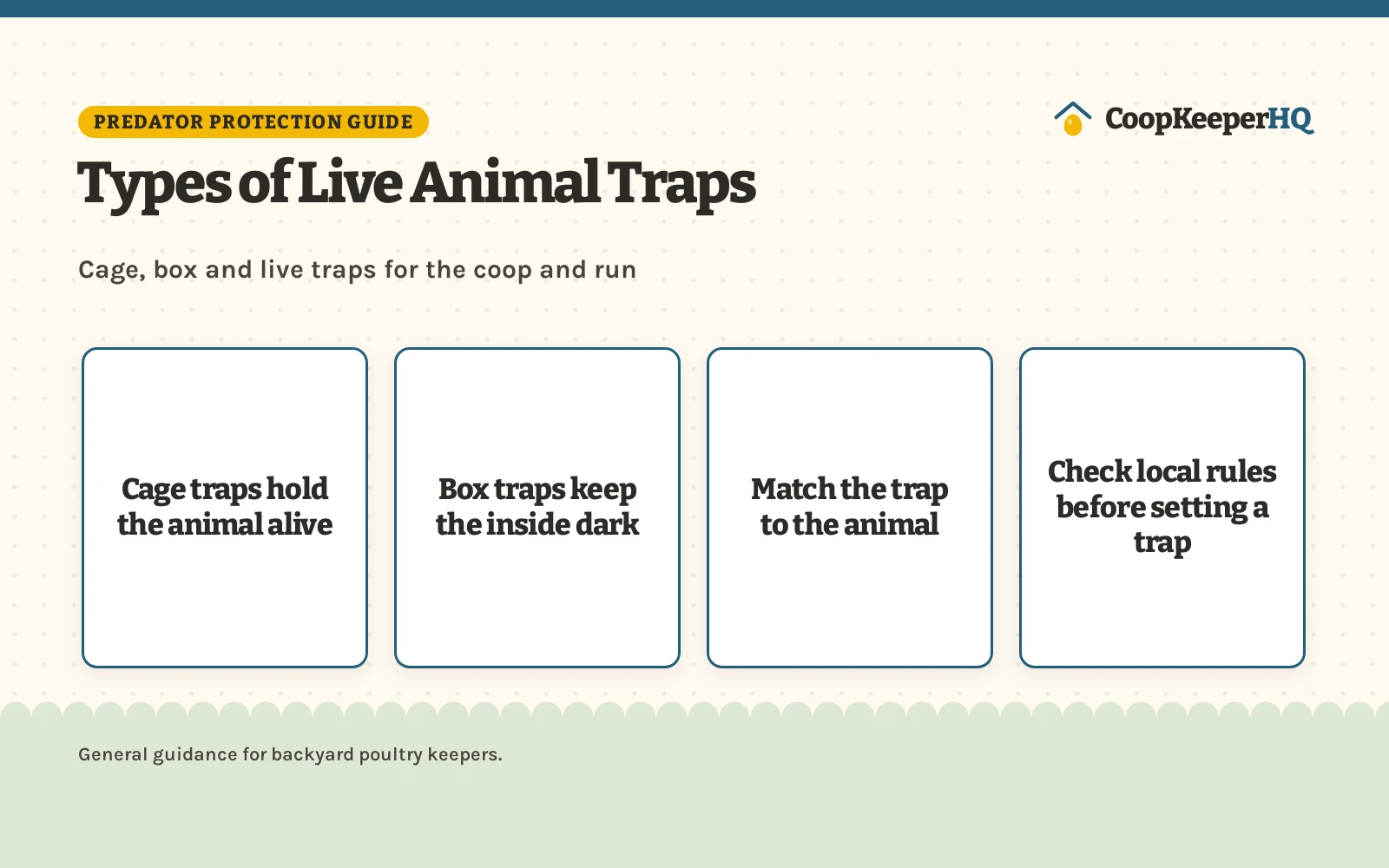
A cage trap is a wire mesh box with a door that snaps shut when an animal steps on a plate inside. Bait sits at the back of the box, past the plate, so the animal must walk in to reach it. The animal stays alive inside the cage, with air and light coming through the mesh, until the keeper checks the trap. Cage traps come in a range of sizes, from small traps for rats and mice to large traps for raccoons and foxes. For raccoons, see the raccoon trap guide, and for foxes see the fox trap guide.
The mesh lets a keeper see at a glance whether the trap holds an animal. A cover draped over the cage can calm a caught animal and keep rain off the bait. Set the cage on flat ground where it cannot tip, and keep it clear of the run fence so a caught animal cannot reach through the mesh toward the flock.
Box traps and tube traps
A box trap works like a cage trap, with solid sides in place of mesh. The dark inside can keep a caught animal calmer, and the solid sides keep bait out of sight from outside the trap. Box traps suit animals that shy away from an open mesh cage. For mice, see the live trap for mice guide.
A tube trap is a long hollow tube with a door at the end, made for animals that travel through burrows and narrow runs. Tube traps suit small animals that like tight, dark spaces, and they sit low on the ground where those animals move.
What is not a live trap
A snap trap kills the animal with a bar that strikes when the bait is touched, so it is not a live trap. A foothold trap holds an animal by the leg, and it can injure the leg while the animal struggles to get free. A snare tightens around the neck or body of an animal that walks through it, and a glue trap holds an animal fast by adhesive on a board. Poison is not a trap at all, and it can harm pets, wild birds and the flock itself. A keeper who wants a live catch should not use these tools for that job.
Choosing a trap for the coop and run
Start with the animal. A trap made for rats will not hold a raccoon, and a trap made for a raccoon often will not trip for a mouse, because the door, the plate and the mesh all suit a certain size of animal. Look for tracks, droppings and dig marks near the coop, and match the trap to the animal that left them. A skunk needs a trap that keeps the animal calm, so see the guide to setting a skunk trap before choosing.
A trap is a tool for a known visitor, not a fence. Before setting a trap, walk the run and look for gaps, dig marks and loose wire, and fix the fence so the next visitor cannot walk in. Hardware cloth beats chicken wire for keeping predators out, as the hardware cloth versus chicken wire guide explains, and netting over the run keeps out climbers and birds of prey, as the poultry netting for predators guide explains. For coyotes, see the guide to setting a coyote trap.
Bait and placement
Bait should smell strong and sit past the trigger plate, at the back of the trap. Sweet fruit, peanut butter, meat scraps and eggs all draw predators, and the right bait depends on the animal. Change the bait when it dries out or goes stale, and keep bait out of reach of the flock.
Place the trap where the animal travels, along a fence line away from the run or beside a shed wall, and keep it away from the coop door. Keep the trap out of the run itself, and shut the flock in the coop while the trap is set.
Setting a trap safely
Check local rules before setting a trap, and keep the trap where children and pets cannot reach it. Wear gloves when handling bait and the trap, and wash hands after handling either. Set the trap on flat ground, check the door with a stick rather than a hand, and make sure the door falls cleanly before leaving it armed. A trap that is not fully set can snap shut on a hand or a paw, so take the time to set it right.
Check the trap at dawn and at dusk, and never leave it unchecked for a long stretch. A caught animal needs water and shade, so keep the trap out of full sun. For the run itself, see the guide to predator-proofing a chicken run.
After the catch: local rules
What happens after a catch depends on local rules, and those rules differ from place to place. Some places allow release on the same land, some places ask keepers to call animal control, and some places forbid moving a caught animal to new ground. Check the rules for the area before setting a trap, and ask the local animal control office or the state wildlife office when the rules are unclear.
Never set a trapped animal free beside another flock, and never handle a caught animal with bare hands. Keep the trap covered while moving it, and let the animal out with care, away from the coop. If the animal looks hurt or will not leave, call the local animal control office for help.
A simple trap checklist
- Trap type matches the animal seen near the coop
- Local rules checked before the trap is set
- Trap sits on flat ground, away from the flock
- Bait sits past the trigger plate, at the back of the trap
- Trap checked at dawn and at dusk
- Gloves ready, and the flock shut in the coop while the trap is set
Wash your hands after handling birds, eggs or equipment, supervise children around the flock, and check local rules on flock size and roosters before you buy. For sick birds, call a poultry veterinarian or your state extension office. See CDC backyard poultry guidance. Read our Safety Disclaimer.
FAQ for the flock
What type of live trap suits a raccoon near a coop?
A sturdy cage trap made for raccoons is the usual choice, with bait at the back and the trap set where the raccoon travels. Check local rules before setting it, and keep the flock shut in while it is set.
Can a live trap catch a rat near a chicken coop?
Yes, a small cage or tube trap set along a wall or fence line is the usual way to do it. Check the trap often and keep it away from the flock.
Is it legal to move a trapped animal to new ground?
Rules differ from place to place, and moving a caught animal is against the rules in many places. Check local rules before setting a trap.
What should I do if a trap catches the wrong animal?
Keep the flock away, wear gloves, and let the animal out with care, away from the coop. If the animal looks hurt or will not leave, call the local animal control office for help.
Do live traps work for foxes?
Foxes are wary and often avoid a new trap, so a cage trap for a fox takes patience and a careful set. Fencing, hardware cloth and a shut pop door at night matter more than a trap.
More coop guides
- How to Predator Proof a Chicken Run
- Best Raccoon Trap (2026)
- Best Fox Traps (2026): 5 Live Traps for the Coop and Run
- How to Set Fox Trap: A Live Trap Guide for the Coop
- How to Set Coyote Trap for Predator Protection
- Best Poultry Netting for Predators (2026): 4 Picks Compared
- Hardware Cloth vs Chicken Wire: Which Keeps Predators Out?
- How to Trap a Rat Near Chicken Coops
See the predator protection picks and the chicken runs and fencing guides.