Plastic Tote vs Brooder Box: Which One Should You Buy?
A sturdy plastic tote works as a brooder for a small backyard batch; compare size, lids and materials across four listed totes.

On this page
Top picks at a glance
As an Amazon Associate I earn from qualifying purchases.
- 1
 Brinsea EcoGlow 1200 Covers9.5/10View on Amazon
- 2
 Proshine Chicken and Quail Brooder Box with 50W Heating Lamp9.6/10View on Amazon
- 3
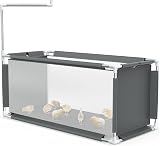 Chicken Brooder Box 10.6 cu ftView on Amazon
- 4
 Brooder Box for ChicksView on Amazon
- 5
 Large Chick Brooder Heating Plate Chick Brooder Box 21.6"View on Amazon
- 6
 Chick BrooderView on Amazon
- 7
 Wooden Chick Brooder Box with Heat Lamp and ThermometerView on Amazon
The chicks arrive in a peeping box, and they need somewhere warm, dry and contained to land. That first landing spot is where the plastic tote vs brooder box question comes from. The short answer: a sturdy plastic tote works well as a brooder for a small backyard batch, while a purpose-made brooder box suits a keeper who broods often or in larger numbers. The four totes below all list lids and stated dimensions, so you can match one to your space and your plans.
Other options for the coop
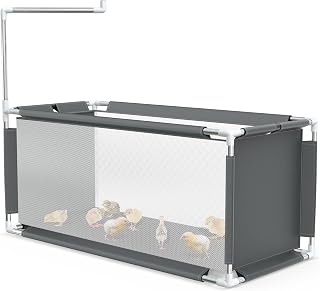 Chicken Brooder Box 10.6 cu ftCheck price on Amazon
 Brooder Box for ChicksCheck price on Amazon
 Large Chick Brooder Heating Plate Chick Brooder Box 21.6"Check price on Amazon
 Chick BrooderCheck price on Amazon
 Wooden Chick Brooder Box with Heat Lamp and ThermometerCheck price on Amazon
 Chicken Brooder Box for Chicks with Heating Lamp Up to 10Check price on Amazon
CoopKeeperHQ earns a commission if you buy through our links, at no added cost to you. Affiliate disclosure.
Plastic tote vs brooder box: the short answer
A plastic tote is a storage container doing a second job. It is cheap, easy to find, simple to clean between batches and easy to store when the chicks move out. A brooder box is built for the job from the start, often with more floor space and access designed around chicks. For a first small batch, a tote is the practical pick; for repeated brooding, a dedicated box earns its keep. Our plastic vs wooden chick brooder comparison looks at the material question in more detail.
What to look for in a tote brooder
Floor space comes first. The roomiest tote here is the Sterilite Ultra at 70 quarts and 26 1/8 x 16 1/4 x 13 1/2 inches; the smallest is the IRIS at 32.5 quarts and 18.5 x 15.13 x 9.38 inches. Chicks grow fast, so the bigger totes buy you more weeks before the birds need a larger space. See the small vs large chick brooder guide for how keepers think about sizing.
Next is the lid. Three of the four totes list latching lids that clamp shut, and the Akro-Mils lists a hinged lid with steel pins and a padlock eye. A lid that closes matters when you need to keep chicks in or other household animals out. Make sure air can still circulate when the lid is on.
Check the material notes. Three of the four listings state BPA-free plastic, and both Sterilite listings add phthalate-free; the Akro-Mils listing states neither. Two listings state water resistance, the Sterilite Ultra and the Akro-Mils, while the IRIS listing states it is not water resistant. Smooth plastic wipes clean, which is the main reason totes beat cardboard for repeat use.
Four totes that work as brooders, ranked
| Tote | Size | Capacity | Pack | Lid |
|---|---|---|---|---|
| Sterilite Ultra Latch 70 Quart | 26 1/8 x 16 1/4 x 13 1/2 in | 70 quarts | 4-pack | Latching |
| Sterilite Latching 64 Quart | 23 3/4 x 16 x 13 1/2 in | 64 quarts | 4-pack | Latching |
| IRIS USA Clip Box 32.5 Quart | 18.5 x 15.13 x 9.38 in | 32.5 quarts | 6-pack | Latching |
| Akro-Mils KeepBox 12 Gallon | 21.5 x 15 x 12.5 in | 12 gallons | Single | Hinged |
Sterilite Ultra Latch Box, 70 Quart, 4-Pack. The roomiest pick: 70 quarts, 26 1/8 x 16 1/4 x 13 1/2 inches outside and 20 x 13 1/2 x 12 5/8 inches at the interior bottom. The maker calls the latches heavy-duty and the box shatterproof, lists a maximum weight of 70 pounds and states the plastic is BPA and phthalate-free. It is also listed as water resistant, and each box weighs 5.3 pounds. The 4-pack suits a keeper who wants a spare or broods in two totes at once.
Sterilite Latching Box, 64 Quart, 4-Pack. Close behind at 64 quarts and 23 3/4 x 16 x 13 1/2 inches, with an interior of 19 3/8 x 13 1/8 x 13 inches. The latching lid and stackable shape match the Ultra, and the listing states BPA-free and phthalate-free plastic. No item weight is stated for this one. Pick it when the 70-quart size is more tote than your space allows.
IRIS USA Clip Box, 32.5 Quart, 6-Pack. The compact option: 18.5 x 15.13 x 9.38 inches outside, 15 x 10.88 x 9 inches inside, 32.5 quarts and 1.9 pounds per box. The listing states BPA-free plastic, a latching lid and made-in-USA construction. Note a small mismatch in the listing: the title says 32.5 quarts while the spec table says 32 quarts; the title figure is the one to go by. The listing states this tote is not water resistant, so keep it somewhere dry.
Akro-Mils KeepBox, 12 Gallon. A single 12-gallon tote at 21.5 x 15 x 12.5 inches per the title and bullets, though the spec table gives the width as 15.25 inches; the title figure wins. It weighs 16 ounces, lists a maximum weight of 50 pounds and water-resistant construction, with a hinged lid on steel pins and a padlock eye. The maker describes it as industrial-grade. It does not state BPA-free plastic, which the other three all do. Buy it singly when you need exactly one brooder, not a pack.
Setting up the tote brooder
Start with bedding. A layer of dry bedding on the tote floor gives chicks footing and soaks up spills; plan to change damp spots often and wash the tote out between batches. Smooth plastic makes that washout easy, which is half the argument for a tote. Our brooder cleaning guide covers the routine.
Sort out heat before the chicks arrive. Do not use a heat lamp in a plastic tote: the hot bulb is a fire risk around bedding and plastic sides. A heat plate is the safer choice for chicks, and our heat plate vs heat lamp comparison explains why. Run any electrical gear from a GFCI outlet, and keep cords out of reach.
Put a thermometer in the brooder so you can see the warm and cool areas at a glance; our brooder thermometer guide compares options. Set the tote where the room temperature is steady, away from drafts and direct sun through a window. When the chicks feather out and start pushing at the lid, it is time for a bigger space.
Heat lamps are a common cause of coop and barn fires. If you use one, secure it with more than the clamp (a chain or wire to a fixed point), keep it well away from bedding, walls and cardboard, and plug it into an outlet or a cord rated for the load. Radiant heat plates run cooler and remove most of that risk. Check chicks often in the first days: huddling under the heat means too cold, spreading to the edges means too warm. Read our Safety Disclaimer.
FAQ for the flock
Can a plastic storage tote work as a brooder box?
Yes, for a small backyard batch. The four totes here are hard plastic storage containers with lids, and their stated dimensions and capacities let you pick one that fits your space. A dedicated brooder box suits keepers who brood often or in larger numbers.
What size tote works for chicks?
Of the four listed, the Sterilite Ultra is the roomiest at 70 quarts and 26 1/8 x 16 1/4 x 13 1/2 inches, and the IRIS is the smallest at 32.5 quarts and 18.5 x 15.13 x 9.38 inches. Bigger totes give chicks more floor space and more weeks before they need a larger home.
Should the lid stay on the tote?
All four list lids: three latching and one hinged. Use the lid when you need to keep chicks contained or other animals out, and make sure air can circulate while it is on.
Are these totes BPA-free?
Three of the four say so: the IRIS lists BPA-free plastic, and both Sterilite listings state BPA-free and phthalate-free. The Akro-Mils listing does not state BPA-free.
Heat lamp or heat plate in a tote brooder?
Use a heat plate. Heat lamps are a known fire risk around bedding and plastic, and a plate is the safer choice for chicks in a tote.
More coop guides
- Plastic vs Wooden Chick Brooder (2026): 4 Compared
- Small vs Large Chick Brooder: Which One Should You Buy?
- Indoor vs Outdoor Chicken Brooder: Which One Should You Buy?
- Heat Plate vs Heat Lamp for Chicks: Which Is Safer?
- Incubator vs Brooder: Which One Should You Buy?
- How Often to Clean Chicken Brooder
- Best Brooder Heat Plate: Safer Heat for Chicks
- Best Thermometer for Brooder Box (2026): 4 Picks