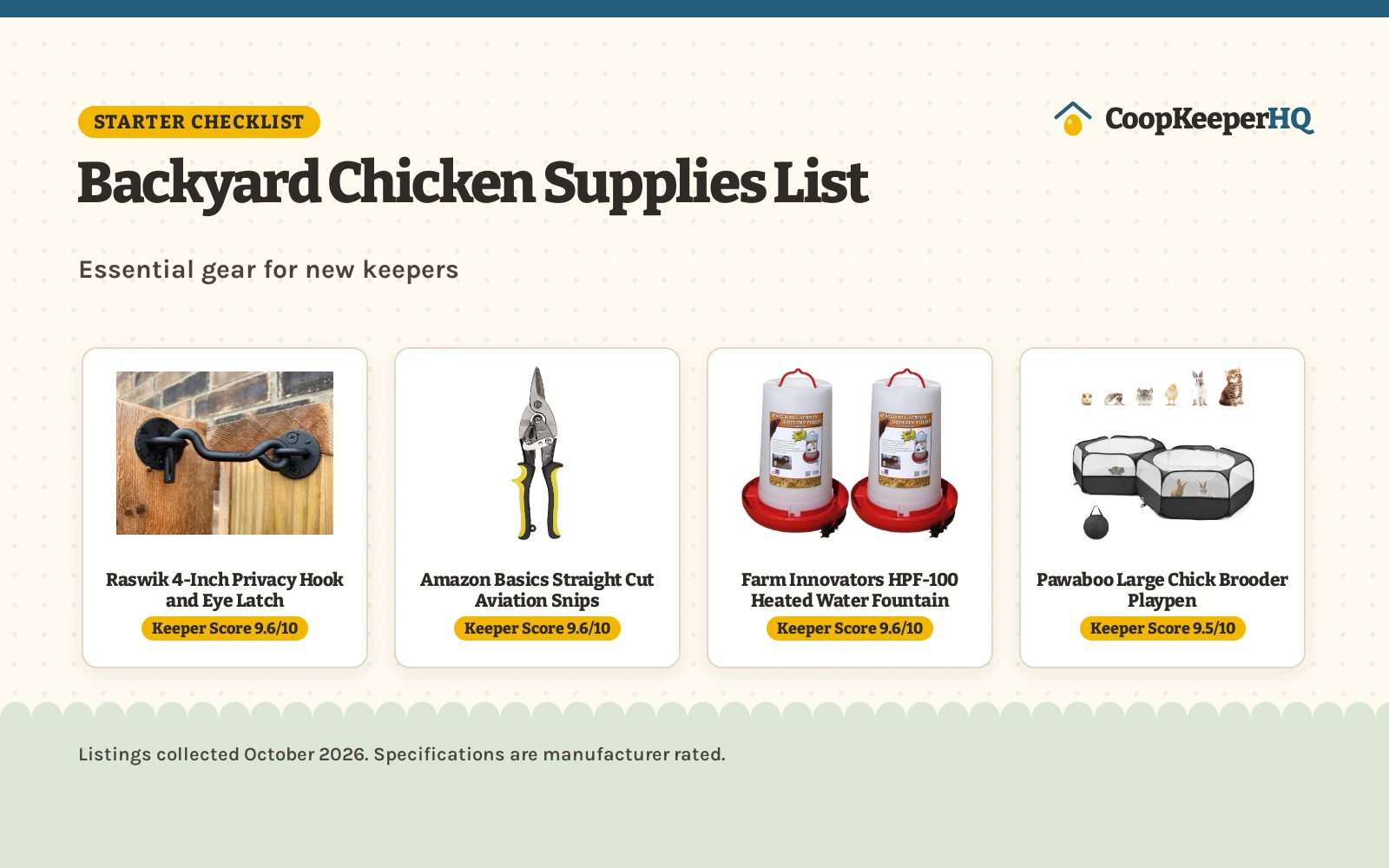
Are Backyard Chickens Worth It? Costs, Time and Eggs
An honest breakdown of setup expenses, daily chores, egg production realities, and whether raising backyard hens makes sense.

On this page
Top picks at a glance
As an Amazon Associate I earn from qualifying purchases.
- 1
 Backyard Chickens: A Practical Handbook to Raising ChickensView on Amazon
- 2
 The Backyard Chicken Keeper's Bible: Discover Chicken BreedsView on Amazon
- 3
 Backyard Chickens: Simple Steps to Raise ChickensView on Amazon
- 4
 RentACoop High Rise 2 Gallon Chicken Waterer and 10lb FeederView on Amazon
- 5
 ZenxyHoC Chicken Nesting Box Red 3 Compartments Metal EggView on Amazon
- 6
 ZenxyHoC Two-Tier Chicken Nesting Box Red 6 CompartmentsView on Amazon
Stepping outside in the crisp morning air with a bowl of kitchen scraps and hearing the hens softly clucking at the run gate is among the finest quiet pleasures of keeping a flock. Yet when aspiring keepers ask are backyard chickens worth it to cut their household grocery bill, the practical answer is almost certainly no. Between purchasing a sturdy coop, fencing a secure run, and buying bags of commercial feed, home-gathered eggs cost far more than cartons from the local supermarket. Raising backyard hens is worth the effort when you value rich culinary eggs, garden compost, chemical-free pest control, and outdoor connection, rather than simple grocery savings.
Other options for the coop
 Backyard Chickens: A Practical Handbook to Raising ChickensCheck price on Amazon
 The Backyard Chicken Keeper's Bible: Discover Chicken BreedsCheck price on Amazon
 Backyard Chickens: Simple Steps to Raise ChickensCheck price on Amazon
 RentACoop High Rise 2 Gallon Chicken Waterer and 10lb FeederCheck price on Amazon
 ZenxyHoC Chicken Nesting Box Red 3 Compartments Metal EggCheck price on Amazon
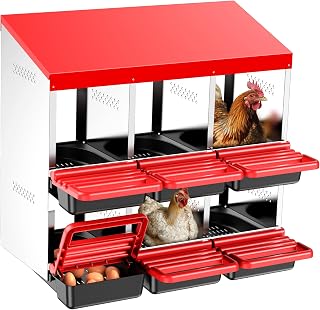 ZenxyHoC Two-Tier Chicken Nesting Box Red 6 CompartmentsCheck price on Amazon
CoopKeeperHQ earns a commission if you buy through our links, at no added cost to you. Affiliate disclosure.
Are backyard chickens worth it: start with honest expectations
Every spring, feed stores fill with chirping fluff balls that tempt gardeners and homeowners into sudden flock ownership. The romantic vision of gathering free breakfast treats overlooks the reality of building shelters, cleaning manure, and protecting birds from neighborhood wildlife. Chickens are livestock that depend on your daily care through summer heat, winter freezes, and muddy autumn storms. If you evaluate a flock purely on household accounting spreadsheets, store-bought eggs will always win. But when you factor in garden soil enrichment, natural yard pest control, family education, and flavorful eggs gathered fresh from the nest, the real value becomes obvious.
Upfront coop and startup expenses
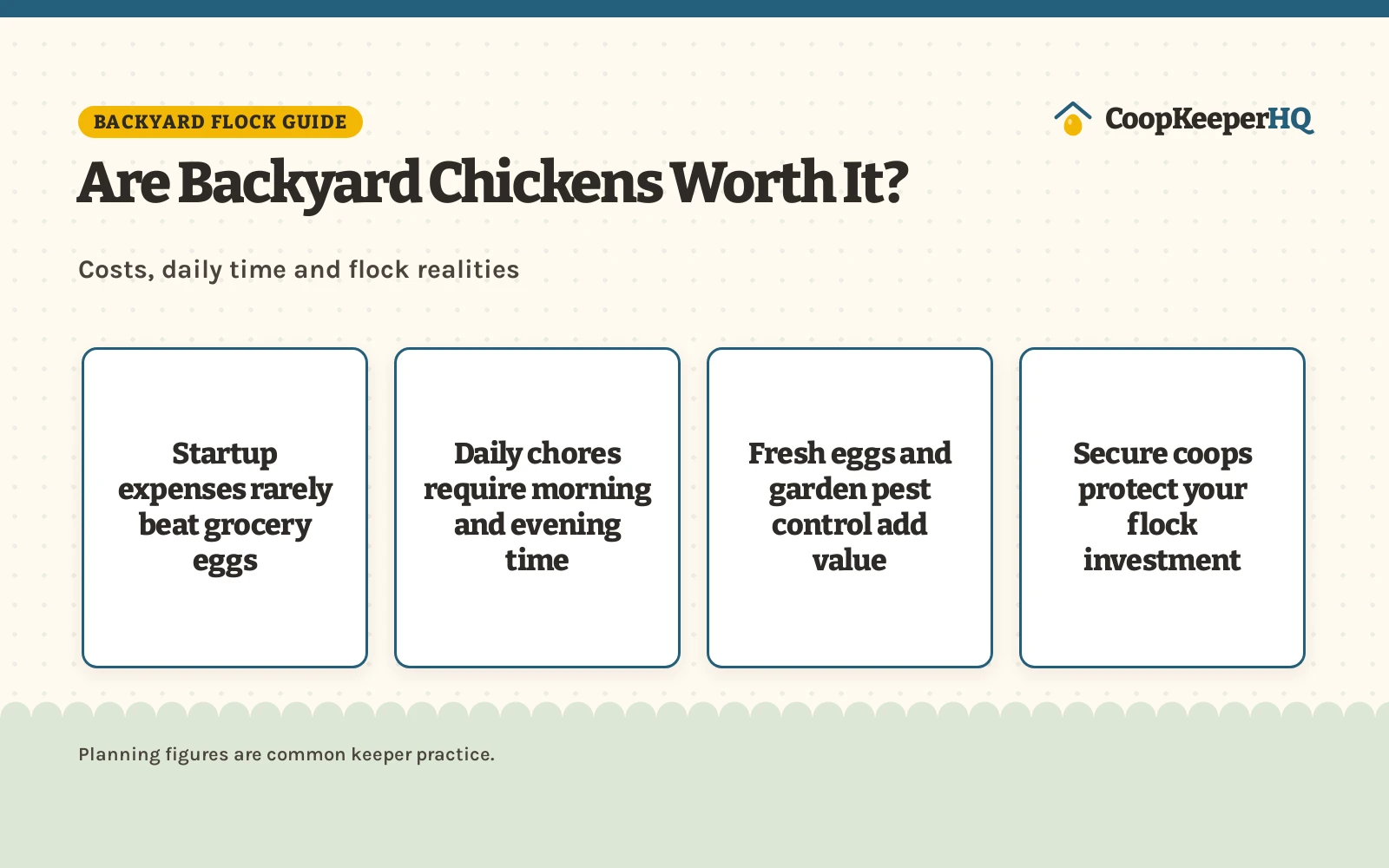
The largest expense of raising backyard birds arrives before your pullets ever produce an egg. Chickens require sturdy shelter that stays dry, resists driving wind, and locks tight against hungry predators. Building from lumber, siding, and roofing demands considerable materials and labor. If you prefer a pre-built kit rather than building from scratch, comparing chicken coops under 500 provides practical ideas for starter footprints suited to modest yards. Beyond the coop shelter, you must budget for heavy welded wire, sturdy feeders, drinkers, and roosts. Gathering essential gear from a practical chicken keeping supplies list helps clarify what hardware you need right away and what can wait.
Ongoing feed and bedding supplies
Once your coop stands complete, feed becomes your primary recurring flock expense. Laying hens need a dependable commercial layer ration balanced with proper protein and calcium to sustain laying and build strong shells. Scratch grains and kitchen vegetable trimmings serve as enjoyable occasional treats rather than main meals, since unbalanced diets lead to overweight birds and stalled production. In addition to balanced feed, hens require free-choice granite grit to grind grain and crushed oyster shell for calcium reserves. Coop bedding is another steady necessity: absorbent pine shavings, chopped straw, or clean sand line the floor to trap droppings. Selecting the right chicken coop bedding controls coop moisture and keeps ammonia odors low.
Daily chores and routine flock time
Flock care follows a steady daily cadence that anchors mornings and evenings. Early in the day, hens need their pop door opened, drinking founts scrubbed and filled with clean water, and feeders topped off. Installing an automatic chicken coop door lets birds enter their predator-proof run at sunrise even if you work early or sleep in, though checking water and feed remains an essential morning habit. Late afternoon brings egg collection, checking food hoppers, and watching flock behavior. At dusk, birds naturally hop onto roosting bars, requiring you to latch coop doors tight against nocturnal predators. Weekly chores include scraping droppings boards and refreshing nesting straw, while thorough coop scrub-outs occur seasonally.
Egg production across changing seasons
Egg laying is neither continuous nor permanent, which often catches new keepers by surprise. Young pullets lay with remarkable regularity through their initial spring and summer, filling egg cartons with firm whites and rich yolks. But production naturally tracks daylight hours. As autumn days shorten, hens shed old plumage during an annual molt, directing their nutritional energy into regrowing warm feathers rather than laying eggs. Winter often brings a natural laying slowdown or pause unless you install low-wattage supplemental light. Furthermore, laying volume gradually tapers with each passing year. Appreciating this natural rhythm keeps expectations grounded through productive summers and quiet winter breaks.
Predator defense and secure fencing
Raccoons, foxes, hawks, weasels, and roaming neighborhood dogs all view backyard chickens as easy meals. Keeping birds alive requires impenetrable barriers rather than wishful thinking. Lightweight hexagonal wire can keep hens contained, but our comparison of hardware cloth vs chicken wire reveals why standard wire mesh fails against strong predators. Protecting your investment means covering every ventilation window with heavy welded mesh secured by screws and washers. Burying an outward-facing wire apron around the run perimeter prevents digging wildlife, while dual-action latches on access doors baffle clever raccoons. Applying proven methods to predator proof a chicken coop protects your flock through every season.
Managing feed waste and rodents
Open troughs and spilled grain on the coop floor quickly attract wild birds, mice, and rats. Rodents burrow beneath run walls, foul drinking water, and steal valuable feed. Preventing feed loss keeps monthly flock costs in check and preserves a clean backyard environment. Switching to a secure dispenser makes a dramatic difference; comparing a treadle vs gravity chicken feeder illustrates how step-on doors prevent pests from reaching grain while granting hens easy access. Storing feed bags inside heavy metal bins with tight lids stops rodents from chewing into fresh supplies, while cleaning up spilled scratch each evening prevents pests from colonizing your coop.
Checking civic rules and neighborhood limits
Before ordering chicks or assembling coop walls, researching local regulations is essential. Municipal codes, county health rules, and homeowner association bylaws frequently govern backyard poultry keeping. Common ordinances prohibit noisy roosters, establish flock size caps, and mandate specific setback distances between coops and neighboring property lines or residential dwellings. Always check local, HOA, and state rules before spending money on flock housing. Beyond legal requirements, maintaining neighborly goodwill is crucial. Keeping coop bedding fresh, controlling manure odors, and sharing occasional cartons of farm-fresh eggs over the fence ensures your flock remains welcome in the neighborhood.
Garden benefits and daily flock joy
The intangible rewards of raising chickens often outshine any grocery calculation. Spent coop shavings and nitrogen-rich manure break down into exceptional garden compost that revitalizes raised beds and vegetable plots. Chickens also serve as eager garden partners, scratching through soil to devour beetle larvae, cutworms, and weed seeds. Beyond practical garden utility, hens provide quiet companionship. Watching birds scratch in autumn leaves, take dust baths in sunlit dirt, and trot toward you with soft vocalizations brings grounding satisfaction to daily routines that store-bought groceries never provide.
A simple flock readiness checklist
- Local municipal, county, and HOA rules permit keeping hens on your property
- Sturdy coop shelter provides dry roosting perches, elevated vents, and secure latches
- Enclosed run features welded hardware cloth with a buried predator dig apron
- Feed is stored in chew-proof metal containers and dispensed through waste-reducing feeders
- Fresh water is checked daily and protected from freezing during cold spells
- Coop interior provides clean nesting boxes lined with fresh bedding for egg collection
- A daily routine covers morning release, evening lockdown, and weekend care backup
For additional details on sizing and setup before bringing birds home, see our nesting box planning guide.
What a dozen of your own eggs really costs, with and without startup costs, against the store price.
Wash your hands after handling birds, eggs or equipment, supervise children around the flock, and check local rules on flock size and roosters before you buy. For sick birds, call a poultry veterinarian or your state extension office. See CDC backyard poultry guidance. Read our Safety Disclaimer.
FAQ for the flock
Is it cheaper to raise chickens than buy eggs?
No, raising chickens is rarely cheaper than purchasing commercial eggs from the grocery store. High initial setup costs for a predator-resistant coop, strong hardware cloth, quality feeders, and automatic waterers take seasons of production to balance out. Ongoing purchases of commercial feed, fresh bedding, and calcium grit further outweigh supermarket prices. Keepers raise hens for flavor, pasture access, fresh food security, and flock companionship rather than grocery savings.
How much daily time does keeping chickens take?
Daily chicken care requires a quick morning visit and an evening check. Morning routines involve letting birds into the run, refilling clean water, checking feed levels, and inspecting the flock. Evening chores include collecting eggs, locking predator doors, and making sure all hens are safely roosting. Weekly tasks include refreshing nest box bedding and raking droppings, while seasonal cleanouts take an afternoon.
Do backyard chickens attract rats and predators?
Chickens themselves do not attract rodents, but leftover grain, open scratch bowls, and spilled water certainly do. Rats and mice burrow toward easy feed, while predators like raccoons, foxes, and neighborhood dogs target the coop. Using treadle feeders that shut tight, hanging drinkers, burying hardware cloth aprons along the run perimeter, and installing secure latches keep pests away from the flock.
How long do hens lay fresh eggs?
Hens produce eggs most heavily during their initial laying seasons. As hens age, laying gradually tapers off, and production pauses during annual fall molting and dark winter weeks. Many keepers keep older hens as productive garden helpers, weeders, and beloved companions long after peak egg laying slows down.
Can you keep chickens in a suburban yard?
Many suburban neighborhoods allow small backyard flocks, but keepers must check local municipal codes, zoning laws, and homeowner association bylaws before ordering birds. Common rules restrict rooster ownership due to crowing, require coops to sit a specified distance from property lines, and limit total flock size. A clean, quiet hen flock with an odor-free coop setup keeps neighbors happy.
More coop guides
- Chicken Keeping Supplies List: What You Need and What Can Wait
- How to Predator Proof a Chicken Coop and Run
- Treadle vs Gravity Chicken Feeder: Which Wastes Less?
- Best Automatic Chicken Coop Door: Picks for Every Season
See the chicken coop picks and the coop supply guides.