Cheap Chicken Tractor Ideas: Low-Cost Mobile Coops for Backyard Flocks
Explore practical, low-cost chicken tractor designs including PVC hoop coops, simple A-frames, and add-on wheels to move your flock to fresh pasture.

On this page
Top picks at a glance
As an Amazon Associate I earn from qualifying purchases.
- 1
 Chicken Coop with Wheels9.6/10View on Amazon
- 2
 Wooden Chicken Coop9.5/10View on Amazon
- 3
 Aivituvin Mobile Chicken Coop with Wheels for 4-6 Chickens9.5/10View on Amazon
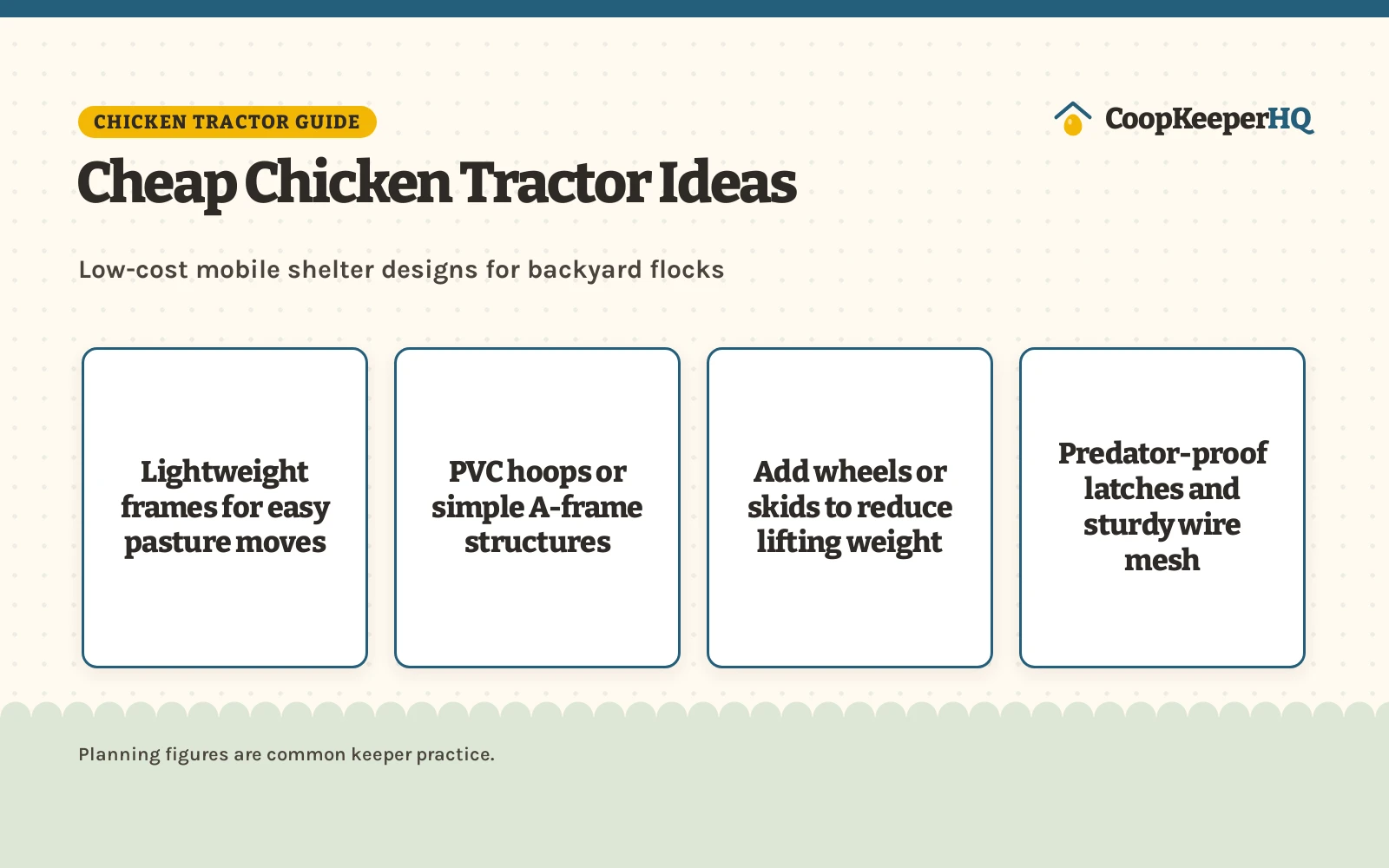
Moving your flock across a bare, scratched-out patch of lawn in the morning is a chore every keeper knows well. Exploring cheap chicken tractor ideas gives you low-cost ways to build mobile shelters using arched hoops, scrap timber A-frames, and add-on wheels that glide over pasture.
CoopKeeperHQ earns a commission if you buy through our links, at no added cost to you. Affiliate disclosure.
Cheap chicken tractor ideas: start with a lightweight frame
Weight is the main hurdle when building a mobile shelter. A heavy tractor stays parked in a corner of the yard, defeating the entire purpose of pasture rotation. Building with lightweight lumber, recycled pallets, or PVC pipe keeps the overall structure portable. If you are planning your setup, our guide on what is a chicken tractor explains how mobile grazing benefits pasture health. Keep the roofline low to reduce wind resistance while providing enough interior headroom for birds to stand and forage comfortably as the frame rests flush on the ground.
Build with PVC hoops or cattle panels
Hoop designs are among the most economical mobile shelters a keeper can construct. Flexible PVC piping bends over a rectangular wooden base to form a sturdy arch, which is then skinned with wire mesh and covered with a waterproof tarp. Arched profiles shed driving rain and wind far better than flat roofs. For lightweight grazing runs, commercial tunnel designs show how arched frames operate in the yard: Hogarjal lists foldable chicken tunnel frames in 79″ and 157″ lengths, with the 157 x 21 x 32 inches option weighing 6.04 pounds. Pairing an arched wire run with shade fabric creates a protected grazing corridor that shifts across turf. For additional shelter options, see our covered chicken run ideas.
Build a simple A-frame shelter
A triangular A-frame tractor requires minimal framing material because the steep walls double as roof rafters. Sourcing clean shipping pallets, salvaged fence pickets, or leftover framing studs keeps material costs low. Enclosing the upper peak creates an elevated, dry roosting space while leaving the bottom footprint open to grass. Commercial wooden models illustrate how dimensions translate to real builds: GUTINNEEN lists a mobile wood chicken tractor measuring 80.5 x 21.2 x 42.5 inches for 2-4 chickens featuring 2 wheels and 2 nesting boxes. Even compact standalone houses like Gowoodhut (measuring 62.2 x 22.8 x 28.5 inches at 51 pounds with 4 nesting boxes and 2 roosting bars for 2-4 chickens) show how enclosed wooden boxes add weight compared to open A-frame structures. Studying these proportions helps you plan roosting space and overall heft before cutting scrap timber.
Add wheels or skids to ease pasture moves
Small, lightweight PVC hoop shelters can slide directly across short grass on smooth skids or conduit runners using a simple pull rope. However, as frames get larger or incorporate wooden lumber, dragging them across uneven turf wears down the base and strains your back. Adding a dedicated wheel kit transforms a heavier shelter into a mobile tractor that rolls smoothly. Aftermarket lift systems bolt onto existing wooden or metal frames: TOPOWN lists wheel kits stated to fit coops up to 7ft using 2 bolts, as well as a larger kit for coops 8ft or wider with a load capacity of up to 400 lbs secured with 4 bolts. For smaller setups, Flehomo lists a 4″ caster wheel kit with a lifting handle compatible with coops housing 2-8 chickens. If your mobile build carries heavier timbers, GRIND MODE lists a lift kit with 6-inch wheels rated for a load capacity of up to 500 LBS, while Iridesc lists a set of 4 caster wheels supporting up to 700 lb. Review our dedicated guide to wheels for chicken coop hardware for mounting advice, or explore chicken coop on wheels plans to integrate axle mounts directly into your frame.
Keep predators out without overspending
A cheap mobile coop is no bargain if predators can slip under the bottom rails or breach the wire. Raccoons, foxes, and neighborhood dogs will try to dig beneath the edges or pry open access doors. Line the lower perimeter with welded wire or hardware cloth rather than thin chicken wire, which predators can tear through. Our breakdown of what is hardware cloth details why welded mesh resists teeth and claws, while our guide on chicken wire alternative options explains where lighter netting falls short. To stop digging without adding dragging weight, attach an outward-facing wire apron around the bottom edge that folds upward during moves. Secure all access doors with spring-loaded latches or padlocks to foil clever paws. For budget enclosure designs, explore our guide to a cheap predator proof chicken run.
Keep interior furnishings simple and light
Bulky wooden nest boxes and heavy ladders add unnecessary dead weight to a mobile tractor. Keep interior fittings minimal by mounting lightweight wooden roosting bars directly across the frame. Plastic tubs, recycled milk crates, or small wooden boxes lined with dry straw serve as clean, low-cost nest boxes that lift out easily for cleaning. Removable nesting boxes allow you to shed weight whenever rolling the tractor across muddy ground. Ensure roosts are placed higher than nest boxes so birds do not foul their laying area overnight.
Balance airflow with weather shelter
Chickens generate substantial body heat and moisture, making continuous airflow essential even in small mobile shelters. Cover a portion of your tractor with a heavy-duty waterproof tarp or corrugated panel to provide shade and rain protection, while leaving the remaining sections wrapped in wire mesh for cross-ventilation. When positioning or moving the tractor, orienting the covered end toward prevailing winds helps shield the flock from driving rain while maintaining dry ground underneath. Secure tarps with heavy zip ties or bungee cords so you can adjust shade coverage as the seasons change.
Establish a smooth daily moving routine
A steady moving routine keeps pasture healthy and your flock content. Shifting the tractor forward onto clean ground, whether every morning or every few days depending on flock size, prevents manure buildup, breaks pest cycles, and gives hens a fresh supply of greens and insects. Before rolling or sliding the shelter, check that all birds are clear of the wheels and bottom skids. Securing lightweight drinkers and feeders directly to the frame keeps them upright during pasture shifts.
A simple chicken tractor checklist
- Lightweight frame constructed from PVC conduit, cattle panels, or scrap timber
- Secure hardware cloth lining the lower walls and predator-prone openings
- Weatherproof tarp or solid roof covering the roost and nesting area
- Lift kit, wheels, or smooth skids fitted to allow effortless relocation
- Spring-loaded latches on all inspection doors and egg access points
- Feeders and waterers suspended or secured to prevent spills during moves
Birds, breed size, run time and climate in; coop floor, run space, roost length and nesting boxes out.
Wash your hands after handling birds, eggs or equipment, supervise children around the flock, and check local rules on flock size and roosters before you buy. For sick birds, call a poultry veterinarian or your state extension office. See CDC backyard poultry guidance. Read our Safety Disclaimer.
FAQ for the flock
What is the cheapest way to build a chicken tractor?
The lowest-cost approach uses arched PVC conduit or bent cattle panels attached to a simple scrap wood skid frame. Covering the sleeping end with an inexpensive tarp and wrapping the remainder in welded wire delivers a functional mobile shelter without costly hardware.
How often should a chicken tractor be moved?
Most keepers move their tractor daily or every few days depending on flock density and pasture growth. Regular movement ensures your birds always have clean foraging ground while preventing damage to your lawn.
How do you keep predators from digging under a chicken tractor?
A fold-up wire apron attached around the bottom perimeter lays flat on the grass during grazing and flips up when moving. Predators attempting to dig at the fence line encounter the wire barrier and cannot burrow underneath.
Do all chicken tractors require wheels?
No. Very light A-frame shelters and small hoop coops can slide across grass on wooden skids or PVC rails using a simple rope handle. Larger wooden coops benefit significantly from bolt-on wheel lift kits to prevent back strain.
Can chickens live in a tractor year-round?
Yes, provided the shelter offers adequate wind protection, a dry sleeping area, and constant ventilation. In regions with harsh winters, many keepers park the tractor near a windbreak or connect it to a permanent winter run.
More coop guides
- What Is a Chicken Tractor?
- Chicken Coop on Wheels Plans: Mobile Tractor Sizing and Build Guide
- Wheels for Chicken Coop: 5 Heavy-Duty Picks for Mobile Tractors (2026)
See the chicken coop picks and the chicken tractor guides.