Alternative to Heat Lamp for Chickens: Which One Should You Buy?
Safer radiant brooder plates and flat coop heaters protect growing chicks and backyard flocks from heat lamp fire hazards.

On this page
Top picks at a glance
As an Amazon Associate I earn from qualifying purchases.
- 1
 Jugbuy 250 Watt Red Heat Lamp Bulbs9.5/10View on Amazon
- 2
 Poiyham 350W Heat Lamp for Chickens9.6/10View on Amazon
- 3
 Premier 1 “Prima” Heat Lamp® Rugged & reliable. Superior9.5/10View on Amazon
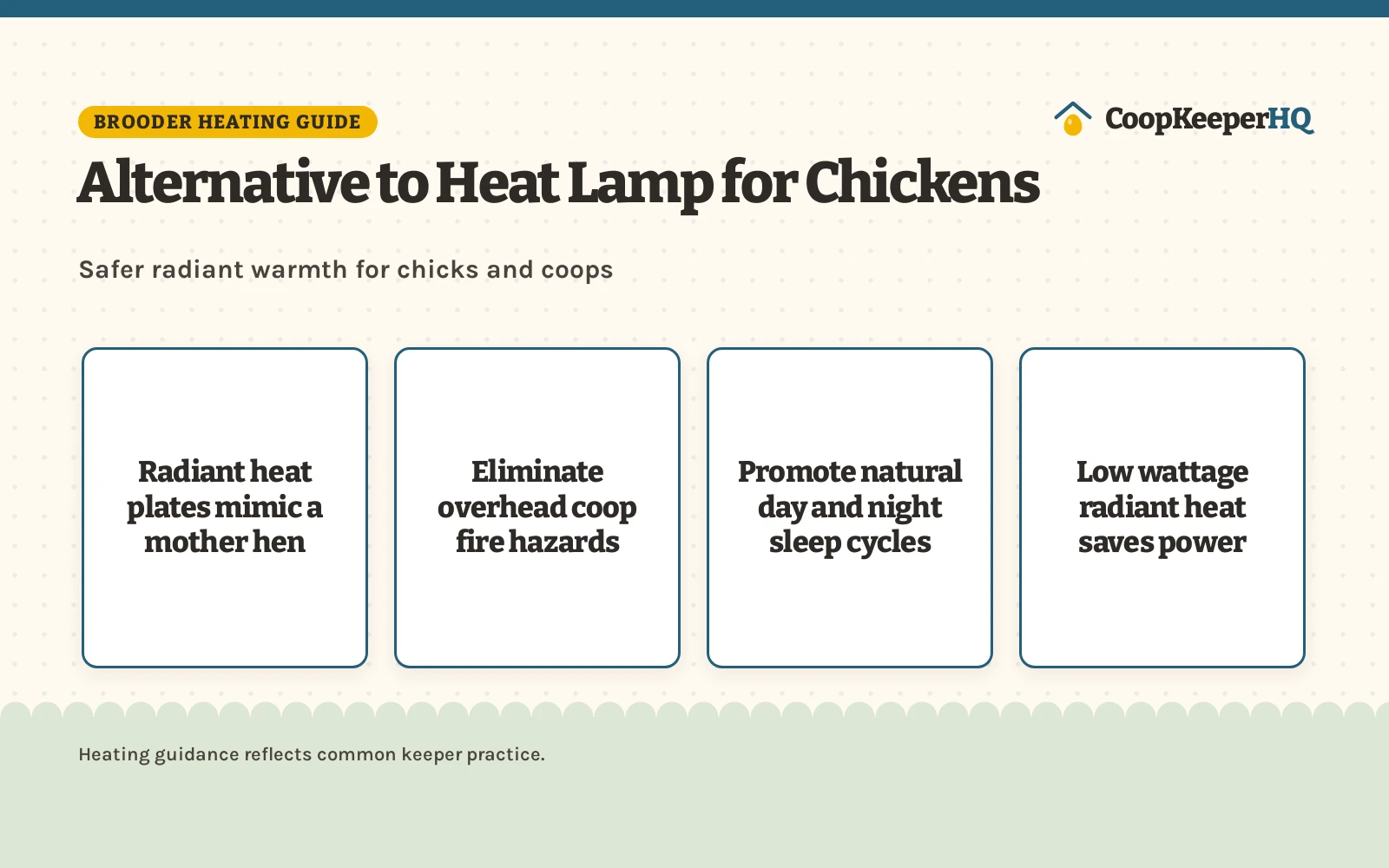
The safest alternative to a heat lamp for chickens is a radiant brooder heat plate for young chicks and a flat radiant wall panel for adult coops. Traditional hanging heat lamps bring intense surface temperatures, fragile glass bulbs and dangerous clamp fixtures into dusty coops filled with dry pine shavings. Radiant heating equipment warms birds directly without heating ambient air, eliminating common fire hazards while supporting natural resting patterns.
CoopKeeperHQ earns a commission if you buy through our links, at no added cost to you. Affiliate disclosure.
Alternative to heat lamp for chickens: why radiant heat is safer
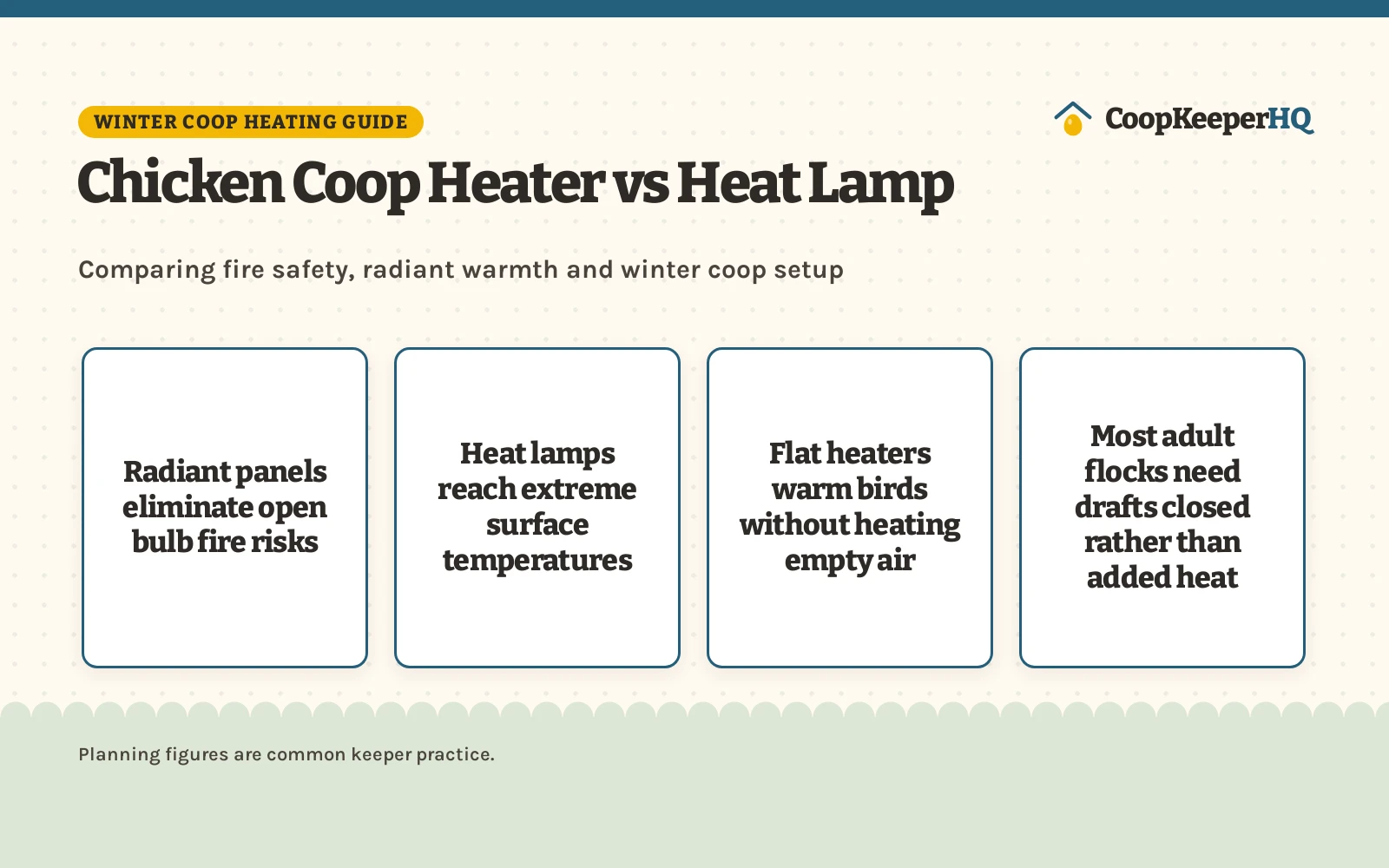
Traditional heat lamps rely on incandescent or ceramic bulbs that radiate intense heat into the surrounding bedding and air. If a spring clamp slips, a hanging chain snaps or startled birds flap into the fixture, hot glass contacts dry pine shavings and ignites in moments. Radiant heat warms physical objects rather than air volume. When chicks or adult birds sit beneath or beside a radiant heating element, warmth transfers directly to their feathers and bodies. The exterior surfaces of radiant heaters remain far cooler than glass bulbs, drastically reducing combustible risks in dusty coop environments. Our heat plate vs heat lamp guide explains these comparative fire risks in detail.
Radiant brooder heat plates for growing chicks
Young chicks need supplemental warmth because downy bodies cannot regulate internal temperatures against cold drafts. In nature, a mother hen provides contact heat: chicks burrow under warm underside feathers to warm their backs, then venture out into cooler ambient air to drink and eat. A radiant brooder heat plate mimics this natural maternal behavior. The underside of the plate stays steadily warm, while adjustable legs allow keepers to match the height of the unit to the growing height of the chicks. Birds simply duck underneath when chilled and step out when comfortable.
Unlike heat lamps that blast continuous harsh light, heat plates emit no illumination. This allows chicks to establish normal circadian rhythms, resting quietly in natural darkness. Keepers observe calmer flock behavior, reduced stress pecking and steady feather development. Providing clean water from a dedicated waterer for baby chicks outside the plate perimeter keeps bedding dry and clean.
Flat radiant panels for winter coop protection
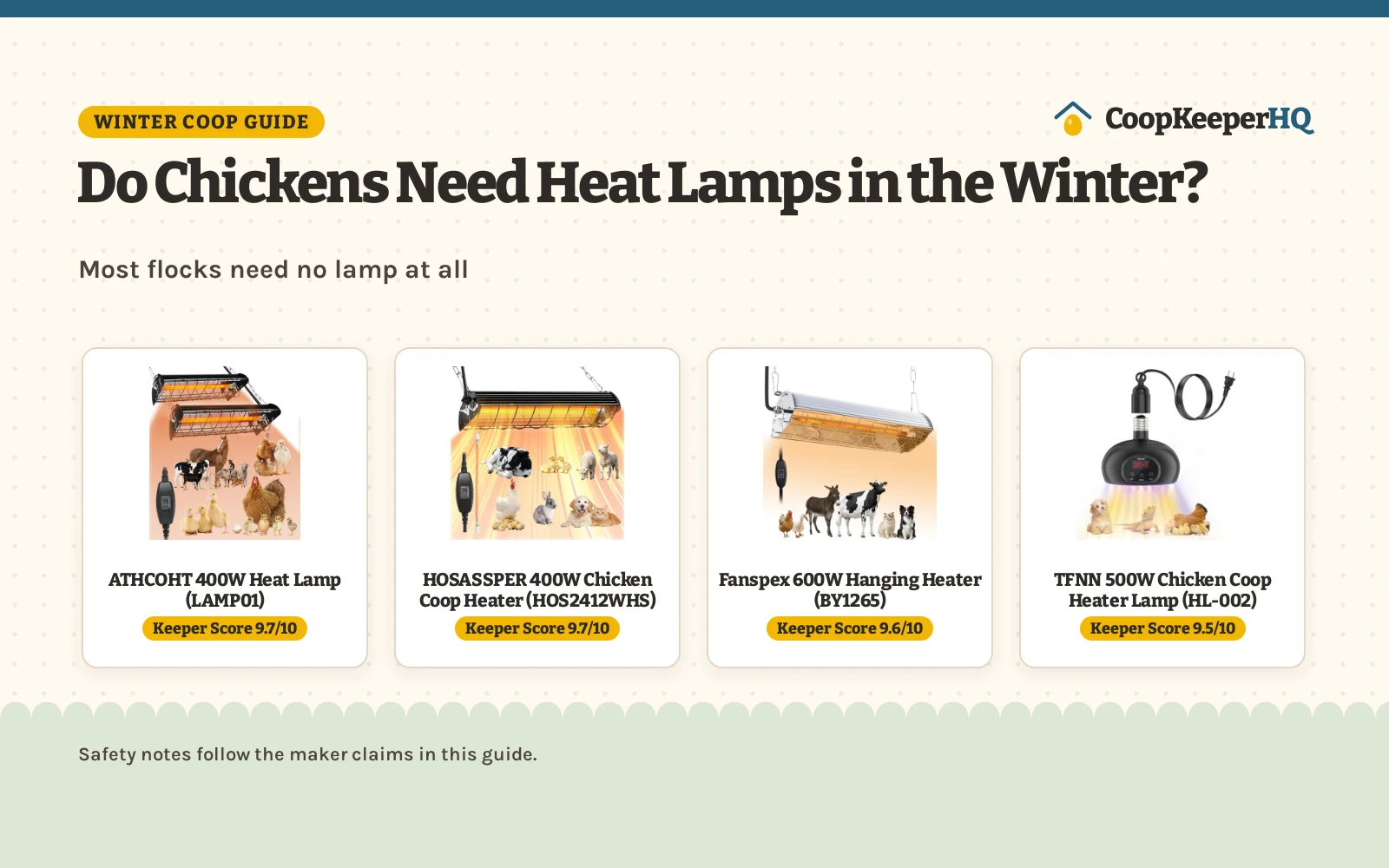
Backyard keepers often wonder whether adult chickens require supplemental heat during freezing winter storms. Healthy adult hens carry dense down coats, fluff their feathers to trap insulating air pockets and roost closely together to share body warmth. In most climates, mature flocks stay comfortable without artificial heat if their shelter remains dry and draft-free at roost height.
However, in regions experiencing prolonged sub-zero cold snaps, keepers may choose to offer mild supplemental warmth. Hanging a heat lamp in an adult coop is hazardous because flying hens, flapping wings and rising roost dust create constant ignition risks. A flat chicken coop heater mounted securely to a solid wall offers a far safer solution. These radiant panels warm roosting birds that sit nearby without heating the entire coop structure or scorching combustible bedding. If you are comparing brooder and coop warming setups, our brooder heater vs heat lamp breakdown reviews safety standards for both environments.
Why backyard keepers are abandoning heat lamps
Clamp lamps were long considered standard equipment simply due to widespread availability in local farm supply stores. Yet experienced keepers increasingly retire these lamps after recognizing their vulnerabilities:
- Clamp failures: Spring-loaded clamps easily slip loose from wooden framing, wire mesh or brooder rims.
- Combustible bedding contact: A fallen bulb resting against dry wood shavings, straw or cardboard can ignite flames in moments.
- Dust buildup: Coops and brooders generate fine dander and feed dust that settle onto hot bulbs, creating smoldering smoke and fire risks.
- Disrupted sleep cycles: Continuous bright red or white lighting prevents chicks from experiencing natural darkness, leading to agitation and feather pecking.
- High electrical draw: High-wattage incandescent bulbs consume substantial electricity compared to low-wattage radiant elements.
Choosing a chicken heat lamp alternative gives flock owners peace of mind when leaving brooders unattended overnight.
Keeping chickens warm without supplemental electricity
Managing winter flock comfort often comes down to coop design rather than electrical appliances. Dampness and drafts cause far more winter stress to chickens than cold air alone. Keepers can optimize winter warmth through practical management:
- Seal drafts at roost level while leaving high wall vents open to exhaust respiratory moisture.
- Maintain deep, dry bedding on the coop floor to insulate against frozen ground.
- Offer wide roosting bars so resting birds can sit flat and cover their feet with breast feathers.
- Keep drinking stations ice-free so birds maintain continuous hydration and digestion.
For complete winter preparation strategies, explore our guide on how to keep chickens warm in winter without adding unnecessary heaters.
Step-by-step setup for a safer chick brooder
Transitioning from a heat lamp to a radiant brooder plate is straightforward when following basic brooding principles:
- Place the brooder enclosure in a draft-free indoor space away from exterior doors and windows.
- Line the floor with clean absorbent bedding such as large pine shavings, avoiding slick paper that causes leg injuries.
- Position the radiant heat plate toward a corner of the brooder enclosure, leaving open space for exercise, feeding and drinking.
- Adjust the plate legs so the lower edge rests just above chick back height, allowing feathers to lightly contact the warm underside.
- Slant the plate slightly so chicks of varying sizes can choose their preferred height.
- Place feed troughs and water fonts in the cooler zone of the brooder to encourage active foraging between warm-up sessions.
- Raise plate height incrementally as chicks grow and develop mature adult feathers.
Birds, breed size, run time and climate in; coop floor, run space, roost length and nesting boxes out.
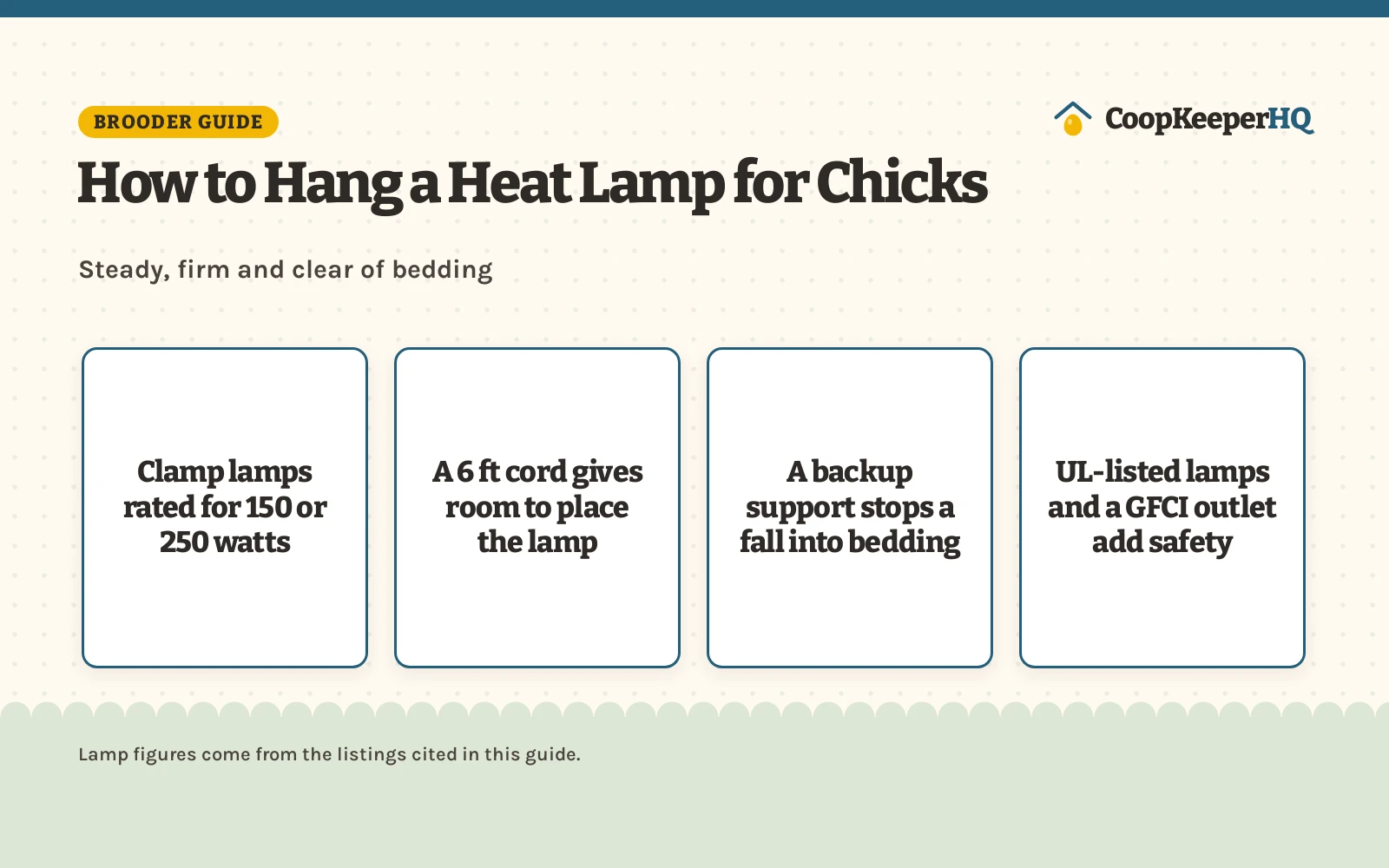
Heat lamps are a common cause of coop and barn fires. If you use one, secure it with more than the clamp (a chain or wire to a fixed point), keep it well away from bedding, walls and cardboard, and plug it into an outlet or a cord rated for the load. Radiant heat plates run cooler and remove most of that risk. Check chicks often in the first days: huddling under the heat means too cold, spreading to the edges means too warm. Read our Safety Disclaimer.
FAQ for the flock
Do chickens need heat lamps?
Healthy adult chickens do not need heat lamps. Fully feathered birds handle winter cold naturally by trapping body heat beneath thick down feathers and roosting together. Heat lamps inside coops create severe fire hazards from flying birds, dust and dry bedding. If supplemental heat is required during unusual sub-zero weather, a wall-mounted radiant flat panel is far safer than a hanging bulb.
How long does a baby chick need a heat lamp?
Chicks require supplemental heat until they are fully feathered and capable of regulating their own body temperature. As their adult plumage develops, chicks gradually reduce their time under supplemental warmth. Instead of an overhead heat lamp, using an adjustable radiant heat plate allows growing birds to self-regulate naturally by stepping underneath only when chilled.
Do chicks need a heat lamp to survive?
Chicks need reliable warmth, but they do not need a heat lamp. Radiant brooder heat plates provide the warmth chicks need with far greater safety. Heat plates eliminate burn risks, avoid bright light disruption and mirror the natural contact warmth provided by a brooding hen.
What is the safest chicken heat lamp alternative for chicks?
A radiant brooder heat plate is widely considered the safest alternative for brooding chicks. It features enclosed heating elements operating at moderate surface temperatures, preventing dry bedding ignition even if bedding contacts the housing. Sturdy adjustable legs eliminate the hanging and clamp failure risks common to traditional farm lamps.
Can you run a chick heat lamp solar setup?
Powering traditional high-draw heat lamps with solar panels and batteries requires large, expensive electrical storage systems. In contrast, radiant brooder heat plates draw modest electrical wattage, making them far more practical and dependable for solar-assisted or off-grid homestead brooders.
More coop guides
- Heat Plate vs Heat Lamp for Chicks: Which Is Safer?
- Best Brooder Heat Plate: Safer Heat for Chicks
- Best Chicken Coop Heater: Safer Panels for Winter
Explore our complete collection of brooder guides and coop supply recommendations to keep your flock thriving in every season.