Best Material for Chicken Tunnel (2026)
Compare welded steel wire, PVC-coated metal frames, and nylon netting to choose the best materials for building a safe backyard chicken tunnel.

On this page
Top picks at a glance
As an Amazon Associate I earn from qualifying purchases.
- 1
 VIXZEN Chicken CoopView on Amazon
- 2
 VIXZEN Outdoor Duck/Chicken HouseView on Amazon
Every morning when you unlatch the coop, your flock rushes out eager to scratch through fresh green grass and hunt bugs around the yard. Letting hens roam freely often leads to scratched-up flowerbeds and trampled vegetable rows, which leaves keepers looking for safe runways around the perimeter. The best material for chicken tunnel setups depends on your predator pressure: rigid welded steel wire with a rust-proof coating offers the strongest barrier against digging and biting animals, while flexible nylon mesh over plastic-coated steel hoops provides lightweight mobility for rotating birds across garden beds.
Other options for the coop
 VIXZEN Chicken CoopCheck price on Amazon
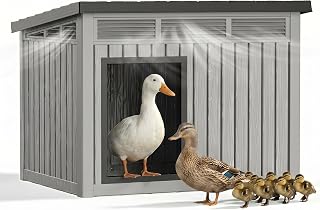 VIXZEN Outdoor Duck/Chicken HouseCheck price on Amazon
CoopKeeperHQ earns a commission if you buy through our links, at no added cost to you. Affiliate disclosure.
Best material for chicken tunnel: welded steel wire and coated metal frames
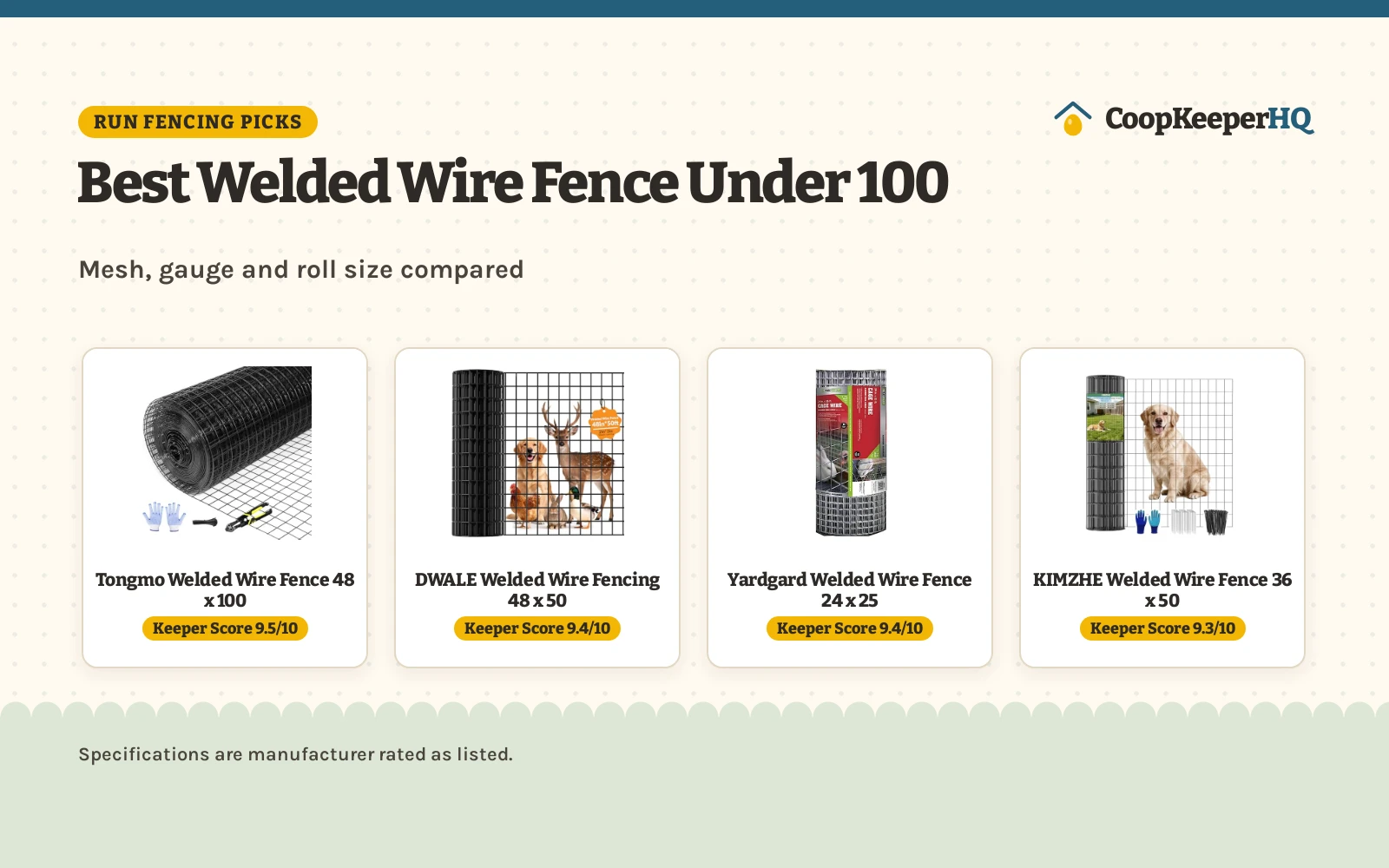
When selecting materials for an outdoor poultry runway, the structural frame and enclosing mesh determine how well the corridor stands up to daily weather and wandering predators. Backyard flocks face threats from dogs, foxes, coyotes, raccoons, and raptors. Lightweight plastic netting can keep chickens inside a boundary, but it is a poor match for a hungry dog or raccoon that wants to tear through. For permanent or semi-permanent installations, welded steel wire mesh attached to a rigid metal framework is the sturdiest option among the materials below.
| Material | Ground predators (dogs, foxes, raccoons) | Aerial predators (hawks, owls) | Mobility |
|---|---|---|---|
| Welded steel wire | Strongest of the three, if the base is staked and the top is covered | Good when the top is closed with wire or a cover | Heavier, slower to move, best for long stays |
| PVC-coated metal | Similar to welded wire, with a coating aimed at rust at ground level | Good when the top is covered | Moderate, often modular with corner pieces |
| Nylon netting over coated hoops | Weak against chewing or clawing animals | Helps keep raptors out of the corridor | Lightest, folds flat, easy to rotate between beds |
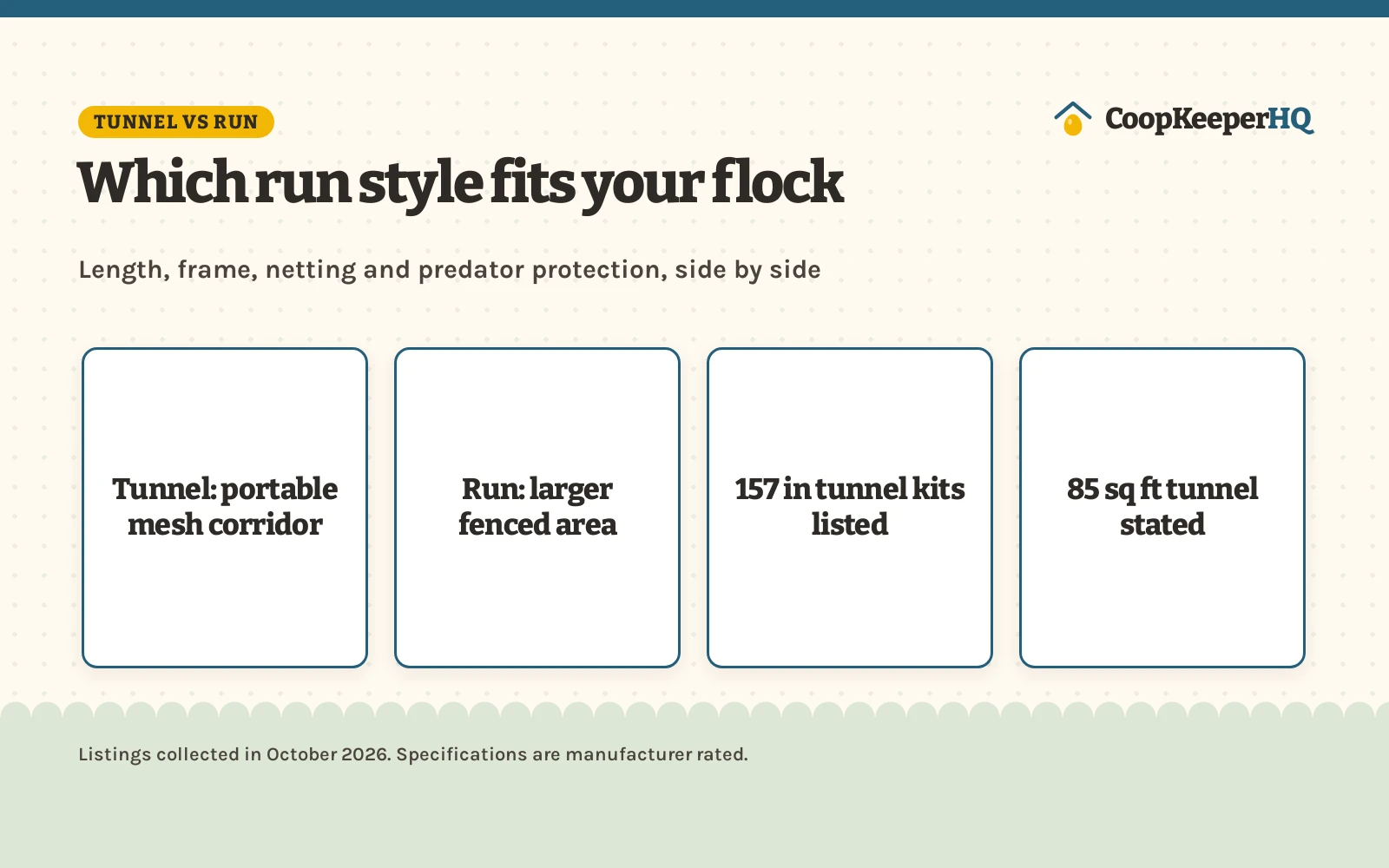
Steel wire panels built from Q195 steel with a spray rust-proof coating, such as those specified by VEVOR, are rigid. Its outdoor metal chicken tunnels measure 118.1 inches or 157.5 inches long, 24.2 inches high, and 28 inches to 39.4 inches wide. The listings describe a thick wire grid and reinforced frame meant to prevent shaking. These units weigh 26 pounds for the 118.1-inch model and 36.6 pounds for the 157.5-inch model. Any outdoor metal tunnel still needs ground stakes to stay anchored when animals bump against the exterior, and a tunnel with an open or thin mesh top does not guarantee protection against determined predators. Cover the top and anchor the base.
Corrosion resistance matters because chicken tunnels sit directly against wet sod, morning dew, and damp soil. Uncoated bare wire rusts quickly at ground level. Look for metal frames protected by powder coating, spray rust inhibitors, or PVC coating. For example, LANEVAN lists a modular runway kit measuring 144 inches long, 24 inches wide, and 24 inches high made of PVC-coated metal, and states that it is rust-proof and UV-resistant. The listing also notes that if the surface is damaged, you should deal with the corrosion promptly. If you are comparing wire rolls for a custom wooden or metal tunnel project, our hardware cloth guide and chicken wire for predators review provide mesh recommendations.
Plastic-coated steel poles for flexible tunnel arches
While welded steel rectangular frames suit stationary use, they can feel heavy and awkward when a keeper wants to shift grazing corridors between garden beds every few days. For high-mobility setups, arched hoop tunnels supported by plastic-coated steel poles offer a practical alternative. The arch shape gives hens overhead headroom while flexing during moves.
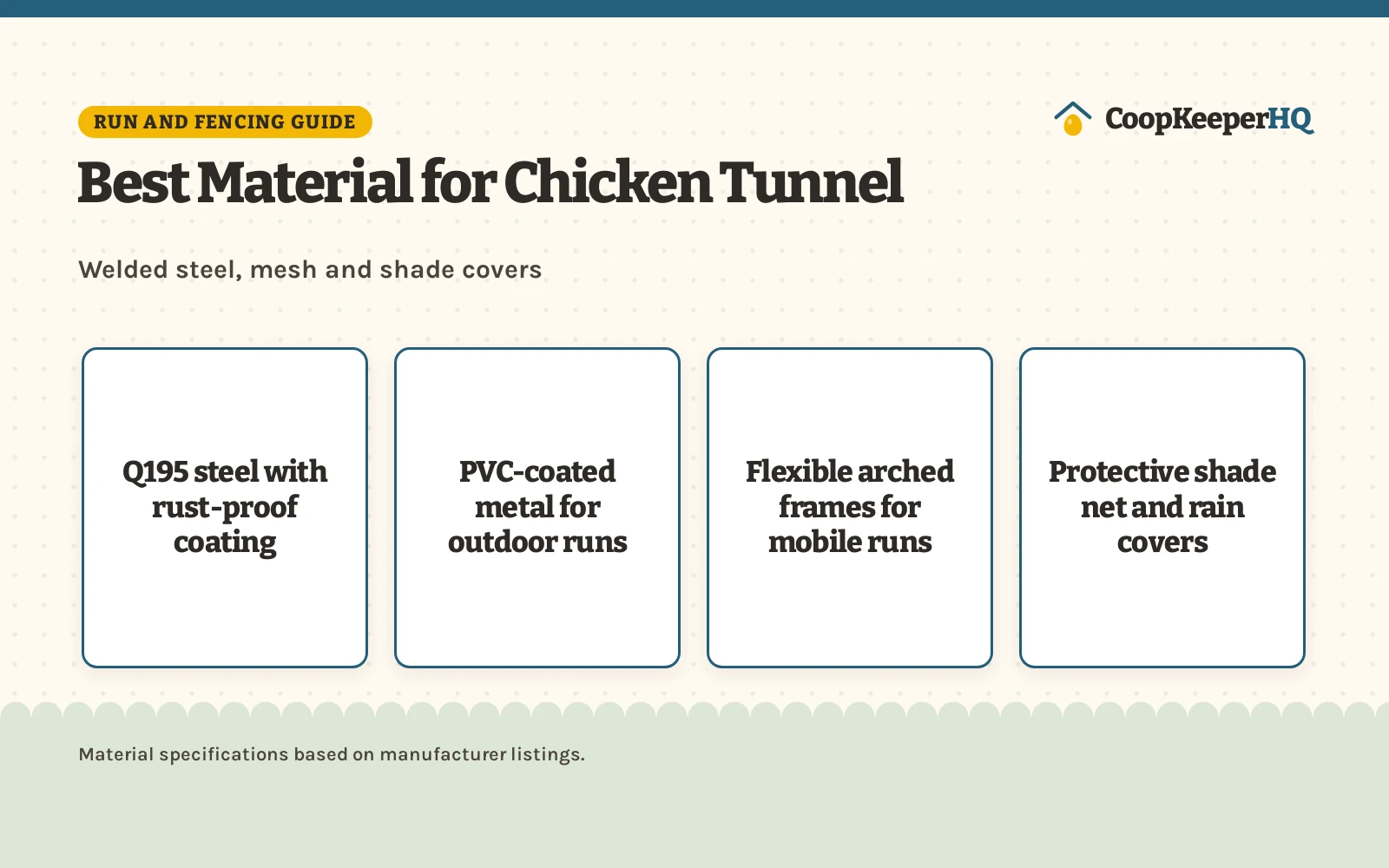
Some flexible chicken tunnels use steel tubing sheathed in plastic to limit moisture damage. For example, Zovida lists 11 mm thick plastic-coated steel support poles for its 157-inch long, 21-inch wide, and 32-inch high tunnel. The listing states the poles are rust-resistant and meant for long-term outdoor use. The unit weighs 4.81 pounds, so a keeper can lift, fold, and reposition the runway quickly.
Similarly, Hogarjal lists steel-reinforced plastic framing for several of its portable tunnels. In its 79-inch and 157-inch configurations measuring 21 inches wide and 32 inches high, unit weights range between 3.81 pounds and 6.04 pounds. Hogarjal also specifies a 1.9-inch steel wire frame design for its 79-inch accordion run. These frames fold flat for storage behind a coop or garden shed when pasture rotation pauses for the season.
Chicken tunnels with netting for aerial predator protection
Netting plays a major role in portable chicken tunnels, particularly in suburban backyards where ground-level fencing already keeps dogs out, leaving hawks and owls as the primary danger. Chicken tunnels with netting use woven nylon or outdoor-grade mesh wrapped over support hoops.
Nylon mesh is lightweight during moves and, per the listings, made for sun and rain exposure. Zovida lists outdoor-grade tear-resistant mesh with small openings on its 157-inch tunnel. Hogarjal also lists nylon netting for its foldable tunnels, designed for outdoor sun and rain.
Keepers should recognize the limits of mesh netting compared to welded metal. Nylon is a poor barrier against chewing or clawing predators such as raccoons, rats, or neighborhood dogs. If your flock grazes in an unfenced yard or near wooded borders where ground predators roam during daylight hours, metal tunnel designs with welded wire panels are the safer choice over soft netting. For an in-depth comparison of mesh types, see our poultry netting vs chicken wire analysis and chicken wire sizes reference.
Protective covers: shade cloth and waterproof tarps
A bare wire or mesh runway leaves foraging poultry exposed to midday heat and sudden rain. Adding a roof cover, such as breathable shade cloth or a waterproof tarp, helps keep birds comfortable and also closes off the top of the tunnel.
Several makers include covers that attach to the upper arch. VEVOR states that a silver waterproof cloth is included with its metal tunnels, described as isolating rainwater and UV rays while maintaining ventilation. Hogarjal lists an integrated sun protection net that blocks harsh sun while letting air flow through. For additional shelter strategies, explore our chicken coop cover guide and covered chicken run ideas.
When setting up top covers, shade a portion of the runway rather than the entire length. That lets hens choose between sunny and shaded stretches as the day warms up.
Corner joints, ground stakes, and coop connections
A chicken tunnel is only as secure as its anchors and connection hardware. If a roaming predator can nose underneath an unpinned edge or pry apart modular sections, good mesh cannot protect the flock.
Ground stakes pin runway flanges against the turf. WGOHOSE lists 16 ground anchors and 30 zip ties with its modular metal tunnel kit, which includes 2 straight tunnels, 1 curved tunnel, and 2 doors across a 41-piece package spanning 165 inches in total length. Check that stakes sit along the whole base so there is no gap for a dog to lift or a hen to squeeze under.
Modular corner pieces let keepers route runways around obstacles. LANEVAN and WGOHOSE both list 90-degree corners, so runways can follow garden borders, foundation walls, or property fencing without leaving gaps. For coop attachment, Hogarjal lists a removable zipper door that connects the tunnel entrance to a coop door. Linking your tunnel to a secure exit, such as an automatic chicken coop door, creates a clean walkway from roost to pasture.
Matching tunnel materials to your yard and flock routine
Choosing between heavy welded wire, coated steel hoops, and nylon netting comes down to your daily chores, property layout, and local predator risks. If active daytime predators like foxes, coyotes, or loose neighborhood dogs are around, metal tunnels in Q195 steel or PVC-coated wire are the more sensible base. They take more effort to assemble and reposition, but sturdy wire and firm ground anchoring beat flexible netting for that job. Even then, a thin or open top is a weak point, so cover it.
If your yard already has a secure perimeter fence that excludes ground predators, lightweight accordion tunnels with plastic-coated steel poles and nylon netting are practical for moving birds between beds. They let you direct hens into overgrown garden patches to clear weeds and bugs, then fold flat once the plot is cleared. For broader setup ideas, see our chicken runs and fencing section and our guide to building a budget predator-proof chicken run.
Backyard chicken tunnel checklist
- Welded steel wire panels or PVC-coated metal for high predator pressure
- Plastic-coated steel poles or reinforced frames for flexible arch support
- Tear-resistant nylon netting with small openings for overhead protection
- A cover on top, such as waterproof cloth or a sunshade net
- U-shaped ground stakes along the base
- Modular 90-degree corner joints for paths around garden beds
- Secure zipper or latch door connecting the tunnel to the coop
Birds, breed size, run time and climate in; coop floor, run space, roost length and nesting boxes out.
Wash your hands after handling birds, eggs or equipment, supervise children around the flock, and check local rules on flock size and roosters before you buy. For sick birds, call a poultry veterinarian or your state extension office. See CDC backyard poultry guidance. Read our Safety Disclaimer.
FAQ for the flock
What are chicken tunnels?
Chicken tunnels are enclosed, narrow runways that connect a coop or main run to distant foraging areas in your yard. Built from welded wire mesh, metal panels, or netting draped over support arches, they let poultry scratch for insects and graze fresh grass while staying inside a defined pathway.
Do chicken tunnels work for backyard flocks?
Chicken tunnels work well for keepers who want to give their flock access to fresh forage without letting birds damage garden beds or wander into unsecured areas. They give exercise and greens while protecting vegetable rows and landscaping from scratching.
Are chicken tunnels safe from predators?
Safety depends on the materials and how well the tunnel is anchored. Listings for steel wire mesh tunnels with ground stakes describe them as meant to deter predators, but a tunnel with an open or thin mesh top does not guarantee protection against determined predators. Cover the top and anchor the base. Lightweight nylon netting tunnels may discourage aerial raptors but are a poor match for chewing predators like raccoons or dogs, so netting models suit fenced yards during supervised daylight hours.
How to build a chicken tunnel for your yard?
To build a chicken tunnel, assemble modular welded metal panels or bend plastic-coated steel support hoops into arches across your lawn. Secure the wire mesh or nylon netting over the frame with weather-resistant zip ties, pin the bottom edges into the turf with U-shaped metal stakes, add a cover on top, and connect the entrance to your coop door.
How to make chicken tunnels turn corners?
Use dedicated 90-degree corner frames or modular curved tunnel sections, such as those included in multi-piece metal kits. Make sure the joints between straight runs and corner pieces are locked with clips or ties so no gaps open where the tunnel changes direction.
More coop guides
- Best Hardware Cloth for Chicken Coop Runs and Aprons
- Poultry Netting vs Chicken Wire: Which One Should You Buy?
- Covered Chicken Run Ideas: Shelter, Tarps, and Roofing Options
See the chicken runs and fencing guides and our predator protection picks.