Best Chicken Run Flooring: Sand, Wood Chips and More
A practical guide to coarse sand, wood chips, pea gravel and heavy rubber mats to keep your chicken run dry, odor-free and easy to clean.

On this page
Stepping into a muddy chicken run after morning rain is a frustrating chore for backyard keepers. Wet ground turns into a smelly soup of mud and manure that clings to boots and feathers. The best chicken run flooring for backyard flocks is coarse construction sand or a deep layer of untreated wood chips, both of which keep the run floor dry, well-drained, and manageable through changing weather.
As an Amazon Associate I earn from qualifying purchases. CoopKeeperHQ earns a commission if you buy through our links, at no added cost to you. Affiliate disclosure.
Best chicken run flooring: why drainage comes first
Mud is the main enemy in any chicken enclosure. Chickens scratch away green grass within days, leaving bare dirt that absorbs rain and turns into stagnant sludge. Poor drainage creates foul smells, attracts flies, and keeps bird feet constantly damp. Good run flooring must drain water quickly away from the surface while giving birds a comfortable base for scratching and pecking. Before choosing a substrate, examine how your run connects to your shelter, as detailed in our chicken coop vs chicken run guide. Slope and perimeter drainage matter just as much as the bedding material itself.
Coarse construction sand for drainage and sifting
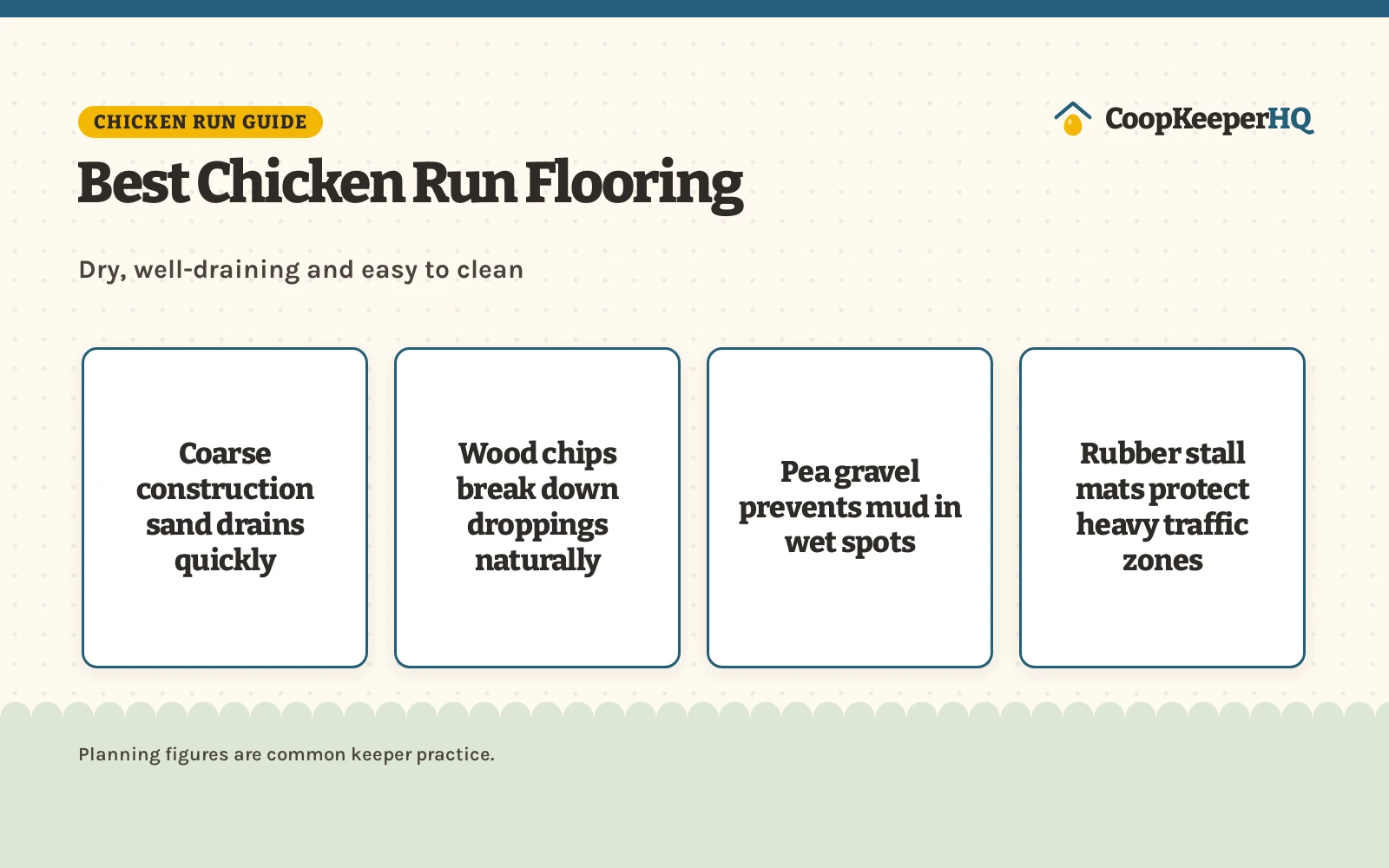
Coarse construction sand, often labeled concrete sand or washed mortar sand, is widely considered an ideal base for enclosed runs. Unlike fine sand, coarse sand contains rough grains and tiny pebbles that allow rainwater to percolate straight into the subsoil below without puddling. The surface dries out swiftly after storms, keeping footings firm and clean.
Daily upkeep with coarse sand resembles cleaning a large outdoor litter box. Droppings dry out on the surface and can be sifted out using a sturdy wire scoop, leaving the clean sand behind. Our sand scooper guide compares dependable sifting tools for this chore. Avoid fine play sand, which packs down into dense, soggy sludge when wet and creates irritating dust clouds when dry. Coarse sand stays in place, does not break down over time, and provides natural grit for dust bathing.
Wood chips and deep litter in covered runs
Untreated arborist wood chips are another outstanding choice, especially for keepers who prefer a natural deep litter system. Fresh wood chips contain a mix of wood, bark, and coarse fibers that resist compaction. When chickens scratch through the chips, they bury their droppings, allowing beneficial microbes to break down the manure naturally without generating unpleasant ammonia fumes.
This deep litter method requires wood chips rather than fine sawdust or landscape bark mulch. Fine mulch holds too much water and rots quickly, while cedar products contain aromatic oils that irritate avian airways. Keep in mind that pine shavings from our chicken coop bedding selections belong inside nest boxes and sheltered coops rather than open runs. Wood chips perform best beneath a solid roof where rainfall can be regulated, creating rich garden compost over time.
Pea gravel for high-moisture perimeter trenches
Smooth pea gravel or small washed river stone provides a permanent, heavy-duty surface that will not wash away or break down. Gravel is especially helpful in dedicated drainage swales around the run perimeter, along drip lines under roof overhangs, and directly beneath drinking fonts. Water splashes pass straight through the rounded stones into the earth, preventing muddy depressions from forming.
Placing an elevated chicken run waterer over a bed of pea gravel keeps the surrounding soil clean and firm. Always choose rounded pea gravel rather than jagged crushed limestone or sharp gravel, which can bruise or cut the undersides of chicken feet. While gravel does not absorb moisture or provide dust-bathing material, it serves as an excellent foundation in low-lying spots prone to seasonal puddling.
Rubber stall mats and heavy-duty tiles
High-traffic areas inside a run take heavy punishment from keeper footsteps and eager chicken scratching. Placing heavy mats or modular tiles in front of gates, under sheltered perches, or outside pop doors prevents persistent hollows where water collects. American Floor Mats lists 1/2-inch thick solid rubber mats measuring 4 feet by 6 feet, which lay completely flat over soil or stone dust to create an impenetrable, mud-proof walkway.
Modular plastic decking tiles offer another structured option where drainage and air circulation are required. Romlits lists 12-inch by 12-inch interlocking tiles with a 0.59-inch thickness, built with an open-grid pattern that allows water to drain swiftly while elevating feet above damp ground. In coop and run accessories, Forestchill lists ground pads with risers creating a 1.5-inch space above the ground to lift birds away from damp surfaces. These washable modular pieces can be rinsed with a garden hose when manure accumulates.
Materials to avoid in your chicken run
Certain common materials cause severe maintenance headaches when spread across a chicken run. Bare dirt tops the list of poor options, as scratching birds quickly remove any protective plant cover and turn bare soil into deep mud with every passing rain shower. Straw and hay are equally troublesome in outdoor runs; both materials pack down into dense, soggy mats that trap moisture, mold rapidly, and generate sour odors.
Avoid landscape weed fabric under loose substrates, because chicken claws tear through the cloth within days, tangling feet and complicating cleanouts. Artificial turf should also be skipped in backyard runs, as chicken droppings smear across the synthetic blades and wash into backing material that cannot be sanitized easily. Sticking to coarse construction sand, arborist wood chips, or smooth gravel saves hours of wasted labor.
Grading and preparing the run base
Successful run flooring starts with proper site preparation before spreading your chosen material. Clear away standing weeds, scrape off soft topsoil, and grade the subsoil so that moisture flows naturally away from coop walls and footings. If your run sits in a natural depression, bring in coarse fill dirt or crushed stone to build the ground level up above the surrounding yard.
Predator protection must be integrated during this site prep stage. Digging predators like foxes, raccoons, and dogs will attempt to tunnel beneath run fences. Burying heavy-gauge wire mesh around the base creates a reliable barrier. Our hardware cloth guide details wire selection, and our predator proofing guide outlines apron installation methods. Extending a wire apron outward along the ground prevents digging predators while keeping your flooring substrate securely inside the perimeter.
Run roofing and managing rainwater
The most effective way to maintain dry chicken run flooring is to keep rainwater out from above. An uncovered run receives the full brunt of downpours, requiring far more drainage capacity than a covered space. Installing clear corrugated polycarbonate panels, metal roofing, or heavy-duty tarps keeps the bulk of precipitation off your substrate while allowing daylight to reach the flock.
Roof runoff from the coop building should never empty directly into the run. Adding gutters and downspouts redirects roof runoff away from chicken scratching areas. For practical shelter layouts and tarp hanging suggestions, see our overview of covered chicken run ideas. A covered roof protects sand from becoming saturated and keeps deep litter dry enough for steady, odorless decomposition.
Daily rhythm and seasonal maintenance
Establishing a simple maintenance rhythm keeps your run fresh with minimal effort. In a sand-based run, take a few minutes each morning or evening to sift droppings from high-use areas around feeders and doors. In a wood chip run, toss a handful of scratch grains across the surface so the flock turns and aerates the chips for you, burying fresh manure naturally.
Seasonal maintenance involves inspecting the depth of your substrate and adding fresh material as needed. Sand settles into low spots over winter, while wood chips decompose into rich compost that can be shoveled onto garden beds and replaced with fresh chips. Wash rubber mats and plastic tiles with a garden hose when droppings accumulate. If you ever notice changes in bird posture, lethargy, or unusual droppings, consult a poultry vet or your state extension office rather than attempting home remedies.
A simple run flooring checklist
- Subsoil graded so ground moisture slopes away from coop foundations
- Hardware cloth apron installed along the perimeter to stop burrowing pests
- Coarse construction sand or arborist wood chips selected over fine substrates
- Heavy rubber mats or interlocking drainage tiles placed at high-traffic entry points
- Overhead roof panels or heavy tarps installed to shed rainwater
- Daily spot cleaning routine established to remove surface droppings
For broader flooring alternatives across backyard setups, explore our guide to chicken run floor covering.
Birds, breed size, run time and climate in; coop floor, run space, roost length and nesting boxes out.
Wash your hands after handling birds, eggs or equipment, supervise children around the flock, and check local rules on flock size and roosters before you buy. For sick birds, call a poultry veterinarian or your state extension office. See CDC backyard poultry guidance. Read our Safety Disclaimer.
FAQ for the flock
Can I use regular play sand in a chicken run?
Play sand should be avoided in backyard chicken runs. Its fine, uniform grains pack tightly together when exposed to moisture, creating a dense, non-draining sludge. When dry, fine play sand generates airborne dust that irritates chicken respiratory systems. Coarse construction sand contains varied, rough particle sizes that drain rainwater freely and sift easily.
How often does chicken run flooring need replacement?
Coarse construction sand does not decompose and rarely needs complete replacement if surface droppings are sifted regularly. Keepers simply add fresh sand occasionally to replenish material lost during scooping. In contrast, wood chips break down through natural microbial action and should be shoveled out seasonally to enrich garden compost, followed by a fresh layer of chips.
Is pea gravel safe for chicken feet?
Smooth pea gravel is safe for chickens because its rounded edges will not bruise or cut foot pads. It works exceptionally well in drainage swales and under water stations. However, sharp crushed limestone or angular gravel should never be used, as sharp edges can puncture feet and cause painful walking difficulties.
Can I leave my chicken run as bare dirt?
Bare dirt is rarely a sustainable flooring choice for a confined flock. Chickens quickly scratch up all vegetation, leaving exposed soil that turns into a deep, smelly mud pit during wet weather. Mud holds bacteria, soils eggs, and clings to bird feathers, making an added substrate like coarse sand or wood chips essential.
What is the best flooring for an uncovered chicken run?
In an open, uncovered run exposed to regular rainfall, coarse construction sand is the top performer because water drains straight through into the subsoil below. Wood chips become waterlogged and decompose too quickly in open weather, whereas coarse sand dries out swiftly once storms pass.
More coop guides
- Best Floor Covering for Chicken Run (2026)
- Covered Chicken Run Ideas: Shelter, Tarps, and Roofing Options
- Best Hardware Cloth for Chicken Coop Runs and Aprons
See the chicken runs and fencing guides and the chicken coop picks.