Duck Brooder Temperature Guide
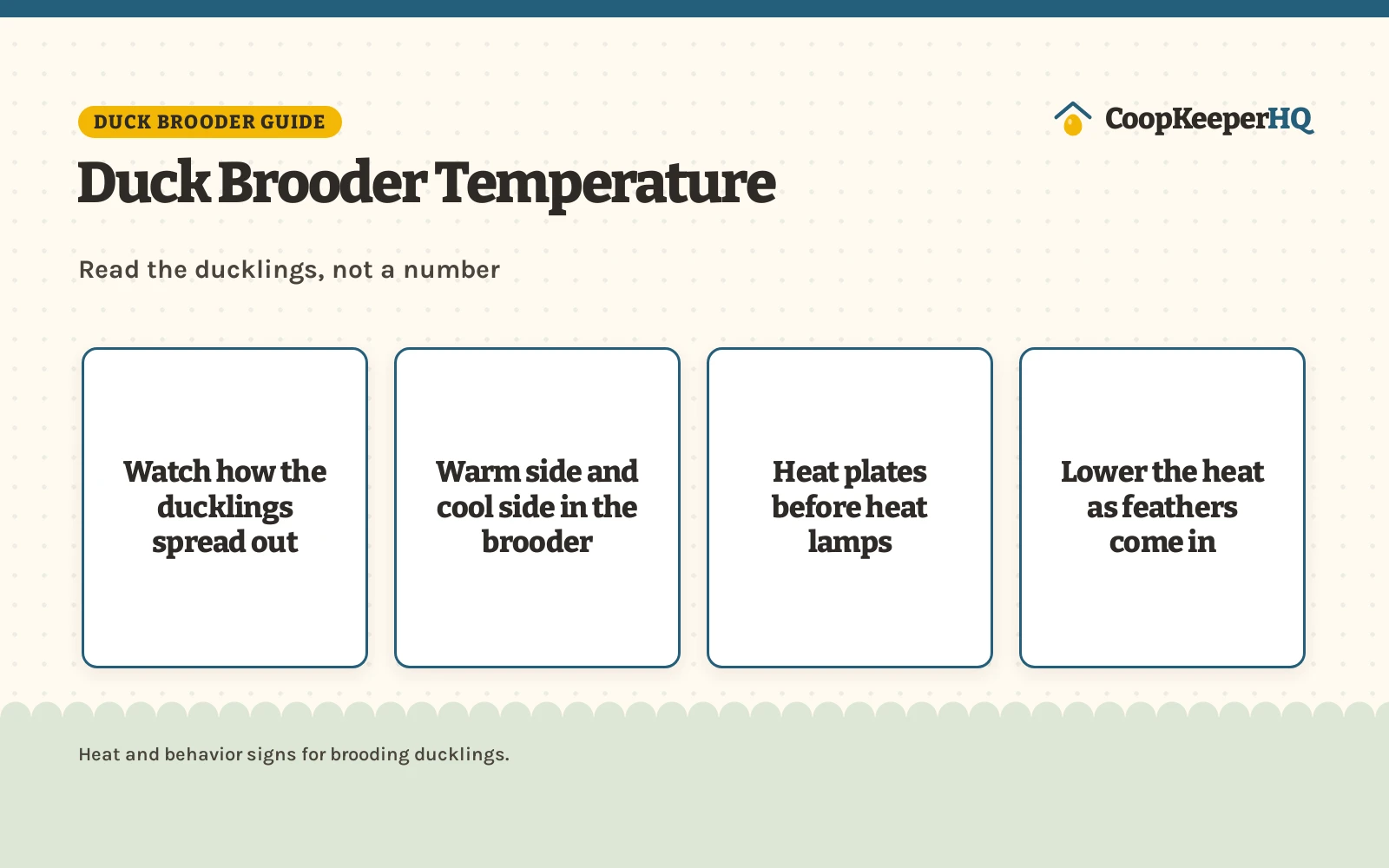
Duck brooder temperature is set by watching the ducklings: start warm, give them a warm side and a cool side, and lower the heat as they feather out.

On this page
Top picks at a glance
As an Amazon Associate I earn from qualifying purchases.
- 1
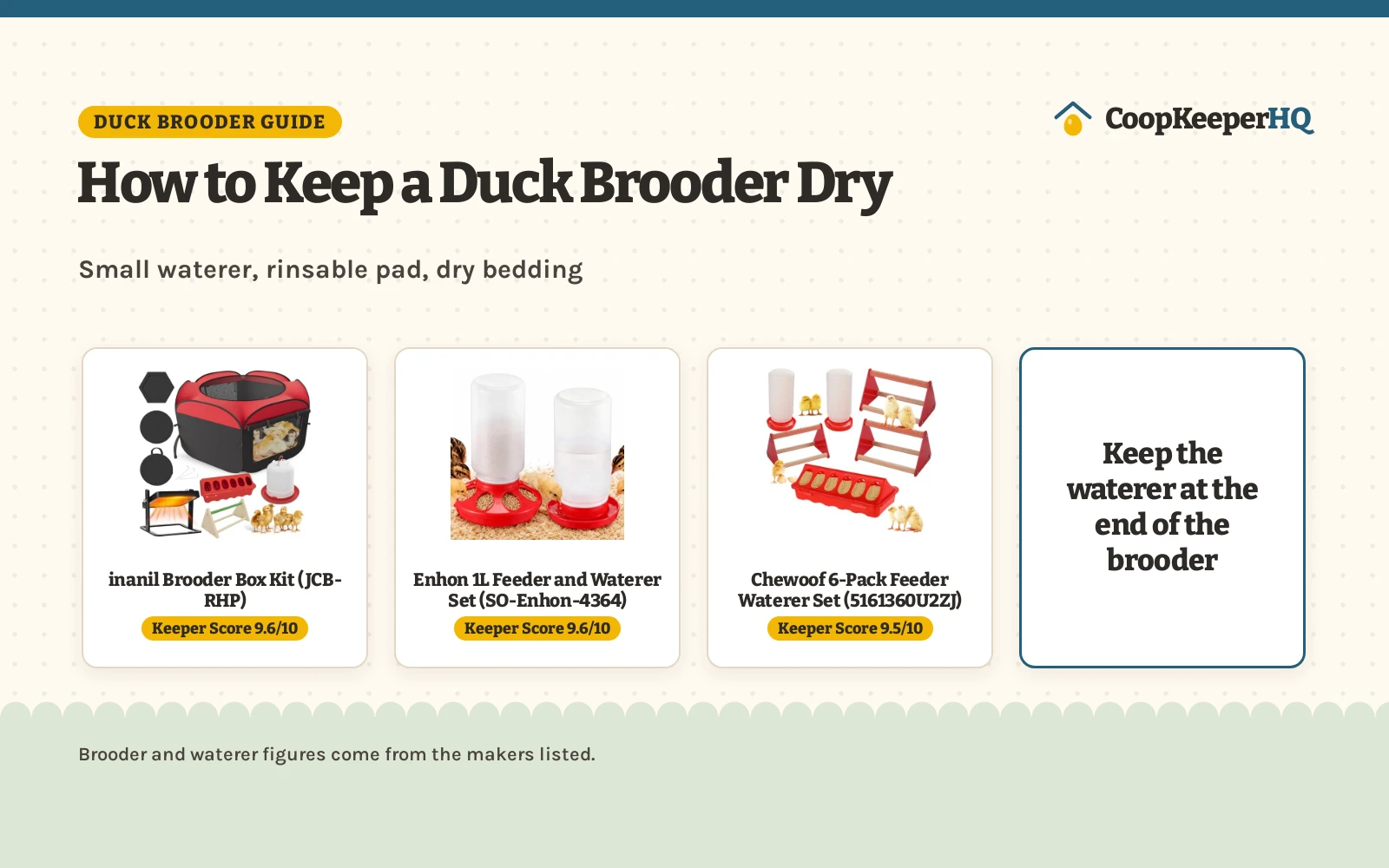
 inanil Brooder Box for Chicks Starter Kit9.6/10View on Amazon
- 2
 Enhon Chick Feeder and Waterer Set9.6/10View on Amazon
- 3
 Chewoof 6 Pack Chick Feeder and Waterer Set with 1 Feeder9.5/10View on Amazon
- 4
 BN-LINK Reptile Thermostat Temperature ControllerView on Amazon
- 5
 APDOE Egg Incubators for Hatching EggsView on Amazon
- 6
 Egg Incubators for Hatching EggsView on Amazon
- 7
 Chick Brooder Heater Plate with Digital Temperature ControlView on Amazon
- 8
 24 Egg Incubators for Hatching Eggs with Temperature andView on Amazon
- 9
 KETOTEK KT8230 Digital Temperature Controller ThermostatView on Amazon
New ducklings arrive in a box, peeping and piling together for warmth, and the brooder is the warm, dry place where they spend their early days. Duck brooder temperature is the warmth in that brooder, and it is set by watching the ducklings rather than by a fixed number: give them a warm spot under the heat and room to move away from it, then lower the heat as they feather out and grow. This guide walks through the signs to watch, the setup that gives ducklings a choice, and the better ways to heat a brooder.
Other options for the coop
 BN-LINK Reptile Thermostat Temperature ControllerCheck price on Amazon
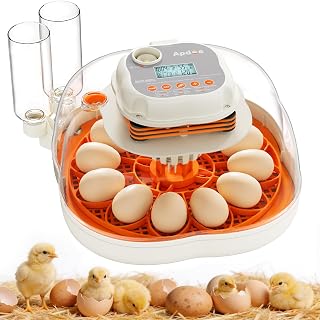 APDOE Egg Incubators for Hatching EggsCheck price on Amazon
 Egg Incubators for Hatching EggsCheck price on Amazon
 Chick Brooder Heater Plate with Digital Temperature ControlCheck price on Amazon
 24 Egg Incubators for Hatching Eggs with Temperature andCheck price on Amazon
 KETOTEK KT8230 Digital Temperature Controller ThermostatCheck price on Amazon
CoopKeeperHQ earns a commission if you buy through our links, at no added cost to you. Affiliate disclosure.
Duck brooder temperature: read the ducklings
Ducklings tell you how the brooder feels by where they settle. When they pile tight under the lamp and peep loudly, the brooder is too cool for them. When they crowd the far edges, pant, or hold their wings away from their bodies, it is too warm. When they move freely between the warm spot and the cooler corners, eat, drink, and rest in loose groups, the warmth is about right. A thermometer at duckling height helps you see how the warm side and the cool side compare, but the ducklings are the final judge. See the brooder thermometer guide for the kinds that suit a brooder. If a duckling looks weak or stops eating and drinking, ask a poultry vet or your state extension office rather than guessing.
Give them a warm side and a cool side
A brooder works best when it has a warm side and a cool side, so the ducklings can choose where to sit. Hang the heat over a corner or an end, and put food and water at the cooler end so the ducklings walk back and forth through the day. Keep the bedding dry under the lamp and around the water, since wet bedding chills ducklings fast and ducks splash more water around than chicks do.
Heat plates before heat lamps
A heat plate is the better choice for a brooder. A heat lamp is a fire risk: a hot bulb that falls into dry bedding can start a fire, and a lamp that slips can burn a duckling. If you use a lamp, clamp it tight, add an extra support so it stays put if the clamp slips, and keep it clear of bedding. The VIVOSUN clamp lamp listed (on Amazon) here is rated up to 150 W with an 8.5 in reflector, an E26 socket, a 6 ft cord, and a UL listing, and its ball joint adjusts 360 degrees for aiming the lamp where the ducklings rest. See the brooder heat plate guide to compare plates. Use a GFCI outlet for any electrical gear at the brooder, and check cords for damage.
Lower the heat as feathers come in
Ducklings need less heat as they grow feathers. When the fluff gives way to feathers and the ducklings spend more time at the cool end, raise the lamp a little or turn the heat down, then watch how they settle before changing anything again. A duckling that moves freely and rests in the open is coping well; a duckling that piles tight under the heat still wants more warmth. Change the heat in small steps and give the ducklings time to settle after each change, since a brooder that swings from hot to cool is harder on them than steady warmth.
Keep the brooder dry and draft-free
Ducklings love water and splash it everywhere, so the floor near the waterer gets wet fast. Put the waterer at the cool end on a tray, and swap damp bedding for dry bedding often. Wet bedding chills ducklings, while dry bedding holds warmth under them. Shield the brooder from drafts with solid sides or a windbreak, but leave the top open enough for air to move, since a sealed brooder traps damp air. See the guide to keeping a duck brooder clean for the daily routine.
A simple brooder checklist
- Ducklings rest in loose groups, not piled tight under the heat
- Warm side and cool side, with food and water at the cool end
- Bedding is dry, especially near the waterer
- Heat source is fixed firmly and clear of bedding
- Electrical gear runs from a GFCI outlet with protected cords
- Brooder is shielded from drafts with air room to move
Heat lamps are a common cause of coop and barn fires. If you use one, secure it with more than the clamp (a chain or wire to a fixed point), keep it well away from bedding, walls and cardboard, and plug it into an outlet or a cord rated for the load. Radiant heat plates run cooler and remove most of that risk. Check chicks often in the first days: huddling under the heat means too cold, spreading to the edges means too warm. Read our Safety Disclaimer.
FAQ for the flock
How do I know if ducklings are too cold?
They pile tight under the heat, peep loudly, and stay in a heap instead of moving to food and water. Give them more warmth by lowering the lamp, then watch whether they spread out and start moving around.
How do I know if ducklings are too hot?
They crowd the far edges of the brooder, pant, and hold their wings away from their bodies. Raise the lamp or turn the heat down, and make sure they have a cool corner with water to reach.
Do ducklings still need heat once they have feathers?
They need less heat as feathers come in, and they tell you when by spending more time at the cool end and resting in the open. Lower the heat in small steps and watch how they settle after each change.
Is a heat lamp safe in a duck brooder?
A heat lamp is a fire risk because a hot bulb can fall into dry bedding. A heat plate is the better choice for a brooder, since the ducklings rest under it and there is no hot bulb to fall.
When can ducklings go outside without heat?
When they are fully feathered and the weather is mild, they can spend time outside in a sheltered run with a dry spot to rest. Bring them back to the brooder if they pile together and peep, or if the weather turns cold and wet.
More coop guides
- Duckling Brooder Setup: Heat, Bedding and Supplies
- How to Keep Duck Brooder Clean: Dry Setup and Daily Care Guide
- What Is a Duck Brooder?
- Heat Plate vs Heat Lamp for Chicks: Which Is Safer?
- Best Brooder Heat Plate: Safer Heat for Chicks
- Best Brooder Thermometer for Baby Chicks (2026)
- Brooder Heater vs Heat Lamp: Which One Should You Buy?
- Best Duck Feed for Ducklings (2026): 5 Starter and Grower Picks
See the ducks, quail and turkeys guides and the brooder guides.