Heat Plate vs Ceramic Heat Emitter: Which One Should You Buy?
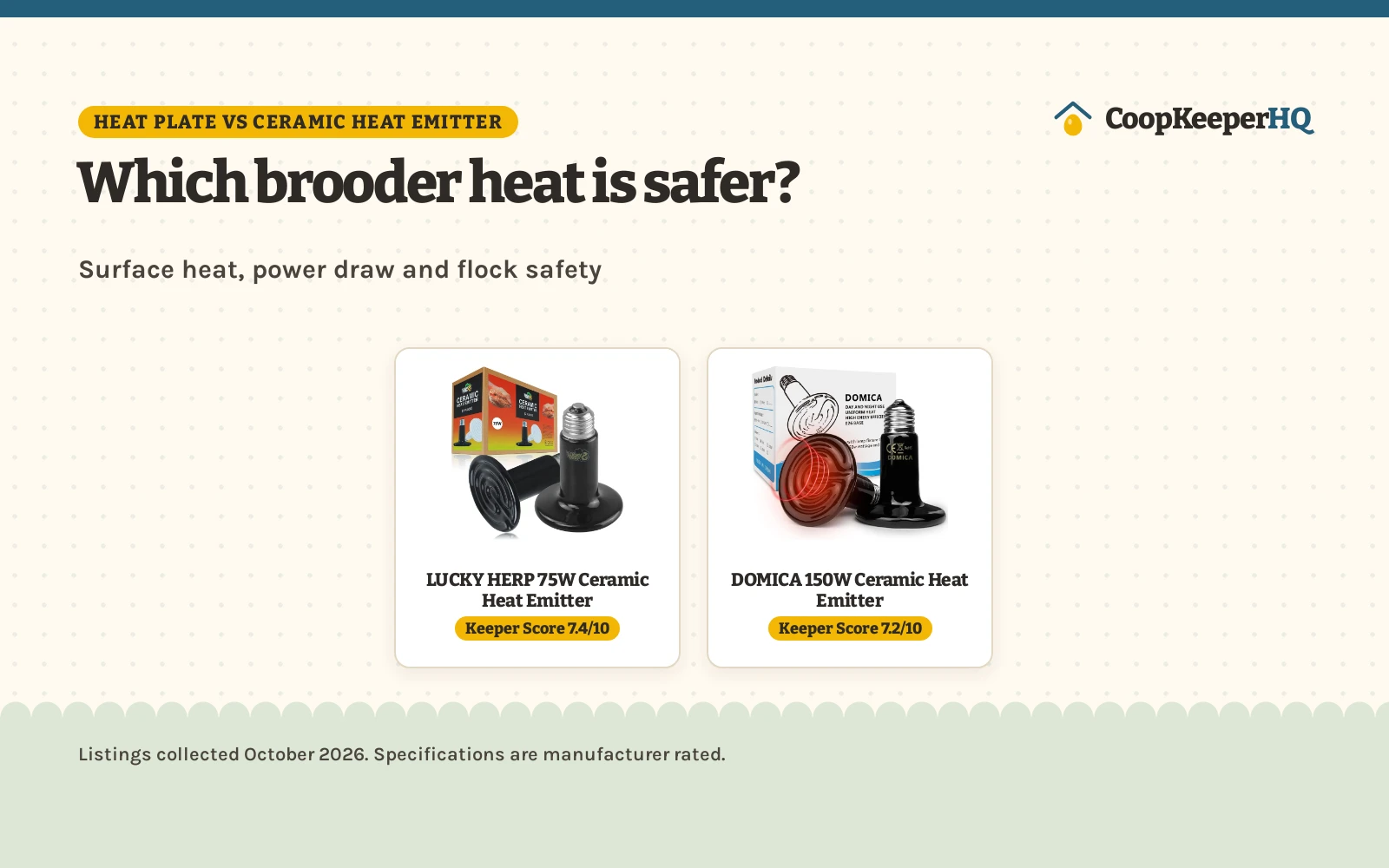
Heat plates and ceramic heat emitters compared on brooder safety, surface heat, power draw, chick behavior and sleep cycles, featuring two ceramic emitter listings.

On this page
Top picks at a glance
As an Amazon Associate I earn from qualifying purchases.
- 1
 LUCKY HERP 75W Ceramic Heat Emitter9.5/10View on Amazon
- 2
 DOMICA 150W Ceramic Heat Emitter9.5/10View on Amazon
Heat plate vs ceramic heat emitter verdict: Choose a heat plate for brooding chicks in an indoor brooder or spare room: it provides safe contact warmth underneath without extreme overhead surface temperatures, letting chicks rest in natural darkness. Choose a ceramic heat emitter if you need overhead radiant warmth in a taller, spacious brooder enclosure, provided you use a porcelain E26 ceramic socket, maintain safe clearance above bedding, and secure all hanging hardware.
Every spring, when the peeping starts in the brooder and morning chores mean checking water dishes and topping off chick crumb, keeping that nursery area warm is the first job of the day. A cold draft can chill chicks fast, but overheating the brooder brings its own worries. Deciding between a heat plate vs ceramic heat emitter comes down to how each heat source delivers warmth, how much surface heat it generates, and how safely it fits into your daily routine.
Both options keep young birds warm without casting visible light, which helps chicks settle into a normal sleep cycle. A heat plate warms chicks by gentle contact from above, much like a mother hen brooding her flock, while a ceramic heat emitter screws into an overhead socket and radiates infrared heat down across the pen. This heat plate vs ceramic heat emitter comparison looks at safety, power draw, chick behavior and enclosure requirements, using two ceramic emitter listings to show how the numbers compare.
CoopKeeperHQ earns a commission if you buy through our links, at no added cost to you. Affiliate disclosure.

LUCKY HERP 75W Ceramic Heat Emitter
A 75 W ceramic infrared heat emitter bulb (2-pack) with a standard E26 screw base, producing zero light and reaching operating temperature in 4 minutes.
Who it's for: keepers who need overhead warmth without visible light in a draft-free brooder with a secure ceramic fixture.
Who should skip it: anyone seeking a low-contact heat source or keepers lacking a fixture rated for ceramic heat bulbs.
The LUCKY HERP ceramic heat emitter is 3 inches wide and 3.93 inches high, draws 75 W at 120 V and screws into a standard E26 base. The maker states the thick ceramic shell heats up within 10 seconds, reaches rated temperature in 4 minutes, emits zero light and lasts up to 10,000 hours. The listing notes that a ceramic lamp holder is required and warns to keep a distance of more than 30 cm from animals. In the spec table, the maker lists app control and a push button, which contradicts the physical screw-in ceramic bulb.
Pros
- Emits zero light so it does not disturb chick sleep cycles
- Reaches rated temperature in 4 minutes according to the listing
- Rated for up to 10,000 hours of operating life
- Standard E26 base fits common ceramic brooder lamp fixtures
Cons
- No warranty term is stated in the listing
- No UL or ETL safety listing is stated
- Requires a ceramic fixture rated for heat lamps rather than standard plastic sockets

DOMICA 150W Ceramic Heat Emitter
A 150 W high-density ceramic heat emitter (2-pack) with an E26 base that withstands temperatures up to 500°F without warping and emits zero light.
Who it's for: keepers warming a larger, draft-free brooder pen who have a heavy-duty ceramic fixture rated for 150 W bulbs.
Who should skip it: keepers with small brooder boxes or low-wattage fixtures where 150 W creates excessive heat.
The DOMICA ceramic heat emitter measures 3 inches wide and 4.3 inches high, drawing 150 W on a standard E26 socket. The maker states the high-density ceramic body withstands temperatures up to 500°F without warping and provides infrared heat without casting light. The listing warns that fixtures must be rated for 150W or higher due to intense surface heat and advises keeping a safe distance from flammable materials. Contradictions appear in the listing: the bullets state 110 to 120 volts while the spec table lists 110 volts, and the spec table lists a T8 tube shape and app control for this screw-in emitter.
Pros
- Produces zero light to avoid disrupting chick night sleep cycles
- High-density ceramic shell withstands temperatures up to 500°F without warping
- Higher 150 W output suits larger brooder enclosures
- Standard E26 base fits common ceramic brooder fixtures
Cons
- No warranty term is stated in the listing
- No UL or ETL safety listing is stated
- Draws 150 W, twice the power of a 75 W emitter
Other options for the coop
 RentACoop 10x10” Adjustable Heating Plate with FoldableCheck price on Amazon
 K&H Brooder PlateCheck price on Amazon
 RentACoop 12x12” Adjustable Heating Plate with FoldableCheck price on Amazon
 RentACoop 10x10” Heating Plate with Hard Anti-Roost Cone SetCheck price on Amazon
 RentACoop 12x12” Adjustable Heating Plate with HardCheck price on Amazon
 Heat Plate for ChicksCheck price on Amazon
Heat plate vs ceramic heat emitter: side by side
| Product | Power | Socket Base | Dimensions |
|---|---|---|---|
| LUCKY HERP 75W Ceramic Heat Emitter | 75 W, 120 V | Standard E26 | 3 x 3.93 in |
| DOMICA 150W Ceramic Heat Emitter | 150 W, 110 to 120 V | Standard E26 | 3 x 4.3 in |
These are common ranges across the poultry listings we read; we quote the brand’s rated specs from the product listings (as of 13 October 2026).
Fire risk and surface heat
Surface temperature is the critical difference between these two heating methods. A heat plate operates at a mild contact temperature so chicks can press their down against the underside without burning. By contrast, ceramic heat emitters produce concentrated dry heat from a screw-in ceramic element. The DOMICA listing states its ceramic shell can withstand temperatures up to 500°F, while the LUCKY HERP listing warns that keepers must maintain a distance of more than 30 cm from animals and use a dedicated ceramic lamp holder rather than a standard plastic socket. If a hanging ceramic heat emitter drops into dry pine shavings or straw bedding, that high surface heat presents a severe fire hazard. When using ceramic emitters, always hang the fixture with a solid chain, double-clamp the mount, and plug into a GFCI outlet.
Power draw and wattage
Power draw directly influences both your electric bill and brooder warmth. While heat plates typically operate on modest power to provide gentle contact warmth, the ceramic heat emitter examples we reviewed draw substantial power, with the LUCKY HERP unit rated at 75 W and the DOMICA model drawing 150 W. The 150 W DOMICA example draws twice the electrical power of the 75 W LUCKY HERP example, producing significantly higher heat output. Operating an emitter continuously around the clock means higher power draw, so matching the emitter wattage to your enclosure size is essential to avoid overheating young birds.
Behavior and light
Both heat plates and ceramic heat emitters provide a major advantage over traditional heat lamps: neither source casts visible light. As noted in the LUCKY HERP and DOMICA listings, zero light emission ensures that chicks maintain a natural day and night sleep cycle without constant illumination disrupting their rest.
Chick behavior differs under each setup. Under a heat plate, chicks duck beneath the warm surface to rest and venture out into cooler room temperatures to eat and drink. With an overhead ceramic emitter, heat radiates downward across an open zone. Keepers must monitor chick behavior carefully: if chicks huddle directly under the emitter and peep loudly, the zone is too chilly; if they scatter to the far corners panting with wings spread, the 75 W or 150 W emitter is creating too much heat.
Enclosure space and cold rooms
Brooder location dictates which system works best. A heat plate creates a localized warm microclimate directly beneath its surface, making it well suited for indoor brooders, utility rooms, or heated basements where ambient air is mild. If you are brooding chicks in an unheated barn or garage during early spring, ambient air can pull warmth away from a plate faster than chicks can absorb it. Review our guide on requirements for a chick brooder to plan your space.
An overhead ceramic heat emitter radiates infrared warmth downward over a broader surface area than a compact plate. However, because the DOMICA listing notes high surface temperatures and the LUCKY HERP listing requires more than 30 cm of clearance from animals, ceramic emitters demand a tall, spacious enclosure with ample headroom. Placing a 150 W ceramic emitter in a shallow plastic tote or small cardboard box creates dangerous hot spots and risks melting plastic or scorching bedding. For brooders where vertical clearance is limited, a model from our best brooder heat plate guide provides safer proximity.
Cost and upkeep
Upkeep and longevity differ between a self-contained plate and a screw-in ceramic bulb. A heat plate has no bulb to change; daily maintenance is as simple as scraping off chick droppings and wiping the plastic shell between batches.
A ceramic heat emitter requires an appropriate overhead fixture with a porcelain socket rated for high temperatures, such as the 150W rating specified by DOMICA. The bulbs themselves are durable compared to glass heat lamps because there is no fragile glass envelope or delicate filament to shatter if bumped. The LUCKY HERP listing rates its ceramic emitter for up to 10,000 hours of operating life. However, fixtures and bulbs must be inspected regularly for heat degradation, cord wear, and dust accumulation from brooding shavings.
Two examples
The two products reviewed below illustrate how 75 W and 150 W ceramic heat emitter options compare for backyard brooder duty.
Flock fit
LUCKY HERP 75W Ceramic Heat Emitter
DOMICA 150W Ceramic Heat Emitter
Fitting It to Your Flock
- Match brooder height to heat clearance: The LUCKY HERP listing requires more than 30 cm of clearance from animals, so ensure your brooder walls are tall enough to suspend the emitter safely above curious chicks.
- Verify fixture wattage ratings: The DOMICA listing requires a fixture rated for 150W or higher, while the LUCKY HERP draws 75 W; always check your E26 socket rating before screwing in either ceramic bulb.
- Adjust for flock enclosure size: In small brooder pens with standard plastic totes, lower-wattage heating or a heat plate prevents overheating, whereas a 150 W emitter suits broader brooder pens that need wider overhead heat dispersion.
- Routine fixture inspection: With ceramic emitters reaching high operating temperatures (up to 500°F stated for DOMICA), make checking clamp stability, hanging chains and cord clearance part of your twice-daily flock watering routine.
FAQ for the flock
Is a heat plate safer than a ceramic heat emitter for baby chicks?
In most indoor brooders, yes. A heat plate warms by direct contact underneath and does not reach the extreme surface temperatures of a ceramic bulb. The DOMICA ceramic emitter listing notes high surface heat withstanding up to 500°F, which requires strict clearance from dry bedding and birds to avoid fire hazards.
Do ceramic heat emitters emit light that keeps chicks awake?
No. Both the LUCKY HERP and DOMICA listings state that ceramic heat emitters emit zero light. They generate infrared warmth without illuminating the brooder, allowing chicks to maintain a natural sleep pattern.
What type of lamp fixture does a ceramic heat emitter require?
A ceramic heat emitter must be used in a porcelain or ceramic E26 base socket rated for high heat. Standard plastic sockets can melt. The DOMICA listing explicitly specifies using a fixture rated for 150W or higher to handle intense heat output.
How far should a ceramic heat emitter be from chicks and bedding?
The LUCKY HERP listing specifies maintaining a distance of more than 30 cm from animals. For high-output emitters like the 150 W DOMICA, keepers should ensure generous clearance above bedding and suspend the fixture securely with chains rather than relying solely on spring clamps.
Can you use a heat plate or ceramic heat emitter in a cold garage?
A heat plate warms chicks that sit directly beneath it, so if ambient temperatures in an unheated garage dip too low, chicks can get chilled when stepping out to eat and drink. A ceramic heat emitter projects radiant heat over a broader floor zone, but in an unheated space, cold drafts must still be blocked and brooder temperatures monitored closely so chicks do not get chilled.
How the Coop Score came out
Each ceramic heat emitter example is scored out of 10 across performance, build, value, safety and warranty, evaluated strictly against manufacturer stated specifications. Neither listing states a warranty term, so warranty scores are zero. You can read the scoring criteria on our blog and information pages.
| Product | Keeper Score | Perf. /35 | Build /25 | Value /25 | Safety /10 | Warranty /5 |
|---|---|---|---|---|---|---|
| LUCKY HERP 75W Ceramic Heat Emitter | 9.5 | 30 | 20 | 20 | 3 | 0 |
| DOMICA 150W Ceramic Heat Emitter | 9.5 | 29 | 21 | 19 | 3 | 0 |
A product’s weighted total becomes its score on a scale capped at 9.8 and floored at 9.2, in a straight line.
Which should you choose?
Choose a heat plate if you are raising a small to medium brood in an indoor room, spare bedroom or heated basement, want the lowest fire risk around wood shavings, and want chicks to warm up by contact beneath a safe surface.
Choose a ceramic heat emitter if you need overhead radiant warmth in a tall, roomy, draft-free brooder pen, already own a heavy-duty porcelain fixture with an E26 base rated for your bulb wattage, and can maintain safe clearance from bedding and birds.
Pick a species and a set date for candling days, lockdown and hatch day, with a calendar file to save.
Heat lamps are a common cause of coop and barn fires. If you use one, secure it with more than the clamp (a chain or wire to a fixed point), keep it well away from bedding, walls and cardboard, and plug it into an outlet or a cord rated for the load. Radiant heat plates run cooler and remove most of that risk. Check chicks often in the first days: huddling under the heat means too cold, spreading to the edges means too warm. Read our Safety Disclaimer.
More coop guides
- Requirements for a Chick Brooder: Setup, Heat and Sizing Guide (2026)
- Chicken Brooder Ideas: Setups and Enclosures for Backyard Chicks
- Chicken Brooder Size: Space Guide for Backyard Chicks
- Best Chick Brooder Design (2026)
- Best Brooder Heat Plate: Safer Heat for Chicks
- Chicken Brooder with Tray: 5 Top Picks Compared (2026)
- Chick Perch for Brooder (2026): 5 Top Roosting Bars Compared
- Best Thermometer for Chick Brooder: 5 Brooder Picks Compared (2026)
- Best Flooring for Chick Brooder (2026)
- How to Keep Duck Brooder Clean: Dry Setup and Daily Care Guide
- Water Feeder for Chicks: 5 Brooder Sets Compared (2026)
- What Is a Brooder Box?
- What Is a Duck Brooder?
- Alternative to Heat Lamp for Chickens: Which One Should You Buy?
- Brooder Heater vs Heat Lamp: Which One Should You Buy?
- Best Waterer for Baby Chicks (2026): 5 Top Picks Compared
- Chicken Brooder for 15 Chicks (2026): 5 Top Picks Compared
- Cheap Chick Brooder: 5 Budget Picks for Chicks (2026)
- Chick Brooders for Backyard: 5 Starter Kits Compared (2026)
- Ceramic Heat Emitter for Chicken Coop: 5 Top Picks Compared (2026)
Explore our complete collection of brooder guides and setup resources for raising a healthy backyard flock.