How to Keep Chickens Cool in Summer: Shade, Water and Airflow
Reliable shade, cool drinking water, open coop ventilation and simple misting setups to help a backyard flock stay comfortable through hot summer weather.


On this page
Top picks at a glance
As an Amazon Associate I earn from qualifying purchases.
- 1
 Omlet Eglu Cube Large Chicken CoopView on Amazon
- 2
 Farm Innovators HB-60P Heated Poultry Waterer DrinkerView on Amazon
- 3
 6 Packs Chicken Waterer Cups with PVC Tee FittingsView on Amazon
- 4
 Premier 1 All-Season Heated Poultry Waterer for Chickens &View on Amazon
- 5
 Premier 1 PoultryNet® Electric Fence for ChickensView on Amazon
- 6
 Frienda 2 Pcs Medium Chicken Duck Harness and LeashView on Amazon
Walking out to the run on a scorching summer afternoon, you quickly notice the flock panting with their wings lifted to catch a breeze. Chickens cannot sweat, so high temperatures challenge their natural ability to shed body heat through rapid breathing and bare skin. Knowing how to keep chickens cool in summer comes down to reliable overhead shade, constant cool drinking water and generous coop ventilation that keeps fresh air moving across the roosts.
Other options for the coop
 Omlet Eglu Cube Large Chicken CoopCheck price on Amazon
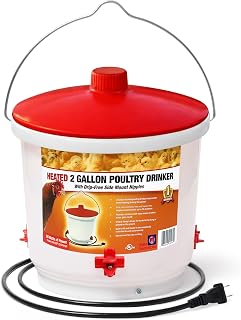 Farm Innovators HB-60P Heated Poultry Waterer DrinkerCheck price on Amazon
 6 Packs Chicken Waterer Cups with PVC Tee FittingsCheck price on Amazon
 Premier 1 All-Season Heated Poultry Waterer for Chickens &Check price on Amazon
 Premier 1 PoultryNet® Electric Fence for ChickensCheck price on Amazon
 Frienda 2 Pcs Medium Chicken Duck Harness and LeashCheck price on Amazon
CoopKeeperHQ earns a commission if you buy through our links, at no added cost to you. Affiliate disclosure.
How to keep chickens cool in summer: start with shade
Direct sunlight heats chicken runs and coop roofs rapidly during summer months. Because hens spend daylight hours foraging and scratching outside, providing continuous shade throughout the run is essential. Natural shade from overhanging trees or tall shrubs helps, but open wire runs need artificial covering to block radiant heat. Unlike solid plastic covers that trap hot air and humidity underneath, breathable shade cloth allows rising warmth and cross breezes to pass through freely while shielding the flock below.
When choosing run coverings, stated density ratings determine light blockage. VitalCozy lists 70% sunblock shade cloth measuring 11.5 x 6.6 ft made from polyethylene mesh, supplied with 20 ball bungees to fasten along coop frames. For areas facing intense sun, Voccos lists 90% sunblock shade cloth in the same 11.5 x 6.6 ft dimensions with 20 ball bungees for heavy light blockage. Fasten cloth firmly along the roofline and the sun-facing side of the run pen to shield birds as afternoon shadows move. For more run covering options, explore our shade cloth for chicken run guide.
Coop ventilation for summer airflow
An enclosed coop traps heat quickly, turning sleeping quarters into an oven long before sunset. Chickens release considerable body warmth and moisture, so open ventilation is vital to keep air circulating. Vents placed high along the eaves let rising hot air escape, while low windows draw in cooler outside air to create a continuous chimney effect across the roosts.
Leave wall windows and gable vents wide open day and night, shielding every opening with heavy welded wire mesh to bar entry to nocturnal predators. Our hardware cloth for chicken coop guide covers protective mesh options for coop windows. Sizing also matters for summer comfort, because crowded roosts concentrate body heat. You can check our square foot for chicken coop guide or use our chicken run size calculator to ensure your birds have enough space, and read our chicken coop ventilation guide for layout advice.
Provide cool, clean drinking water
Hydration is the frontline defense for chickens facing heat. Hens drink significantly more water on hot afternoons to support evaporative cooling from their respiratory tract. When water sits in warm sun, it heats up quickly, and chickens will refuse to drink warm or fouled water even when thirsty.
Position waterers in deep shade where afternoon sun cannot reach them. Setting up multiple drinker stations around the run ensures timid hens can drink freely without being chased away by dominant birds. Elevate water fonts slightly on stepping blocks or hang them at bird shoulder level to keep flying dirt and scratched litter out of the drinking pans. For durable drinker ideas, see our best chicken run waterer and hanging chicken waterer reviews. If you plan to plumb an automatic supply, check our automatic chicken waterer DIY guide.
Misting lines and outdoor cooling setups
Misting systems provide evaporative cooling by dispersing micro-fine water droplets into outdoor run air, absorbing heat from the immediate surroundings as the water vaporizes. This cooling effect works best in dry climates with steady air movement. In regions with high summer humidity, evaporative cooling is far less effective, because saturated air cannot absorb additional moisture quickly.
When installing misting equipment, pick kits sized to your flock and run layout. MADHOLLY lists a pre-assembled 26.2 ft misting line featuring 7 brass nozzles designed for 7-12 chickens, connecting to a standard 3/4 in faucet or garden hose with included cable ties and clamps. The maker also lists a 16.4 ft line with 4 nozzles for 4-6 chickens, and a 39.4 ft line with 11 nozzles for 13-18 chickens. For larger runs, Kalolary lists a 100ft misting cooling system equipped with 25 adjustable brass nozzles that connects to a 3/4″ garden hose adapter and claims cooling by up to 15°F. For portable ground cooling, VIHOSE lists a 30.7 inch standing mister equipped with 4 shape memory tubes and 4 brass nozzles along a 26.2 ft line.
Mount mist lines along the outer run perimeter where prevailing breezes blow the mist through wire fencing. Avoid spraying directly inside enclosed wooden coops, where excess moisture could wet roost bedding. While waterfowl readily swim, chickens generally avoid stepping into standing water and rarely use pools voluntarily. However, shallow basins can serve as accessible drinking spots or dry dust baths. Enochainchin lists a 19.7-inch round foldable tub with a shallow 3.9-inch wall height, which can be filled with dry dirt and sand for dust bathing or used as a wide, accessible watering basin.
Manage coop bedding and litter heat
Bedding management plays a major role in coop temperature. The deep litter method works well for insulating floors in winter because composting manure generates internal heat. In summer, that biological warmth works against your birds, warming the coop from the ground up.
Before hot weather sets in, clean out accumulated winter litter and replace it with a thin layer of dry pine shavings or coarse washed sand. Sand does not decompose or generate microbial heat, providing a naturally cool, dry surface for resting hens. Scoop droppings frequently from beneath night roosts and around nesting boxes. Removing manure promptly reduces humid decomposition gases and keeps flies away from the flock.
Should you add a coop fan?
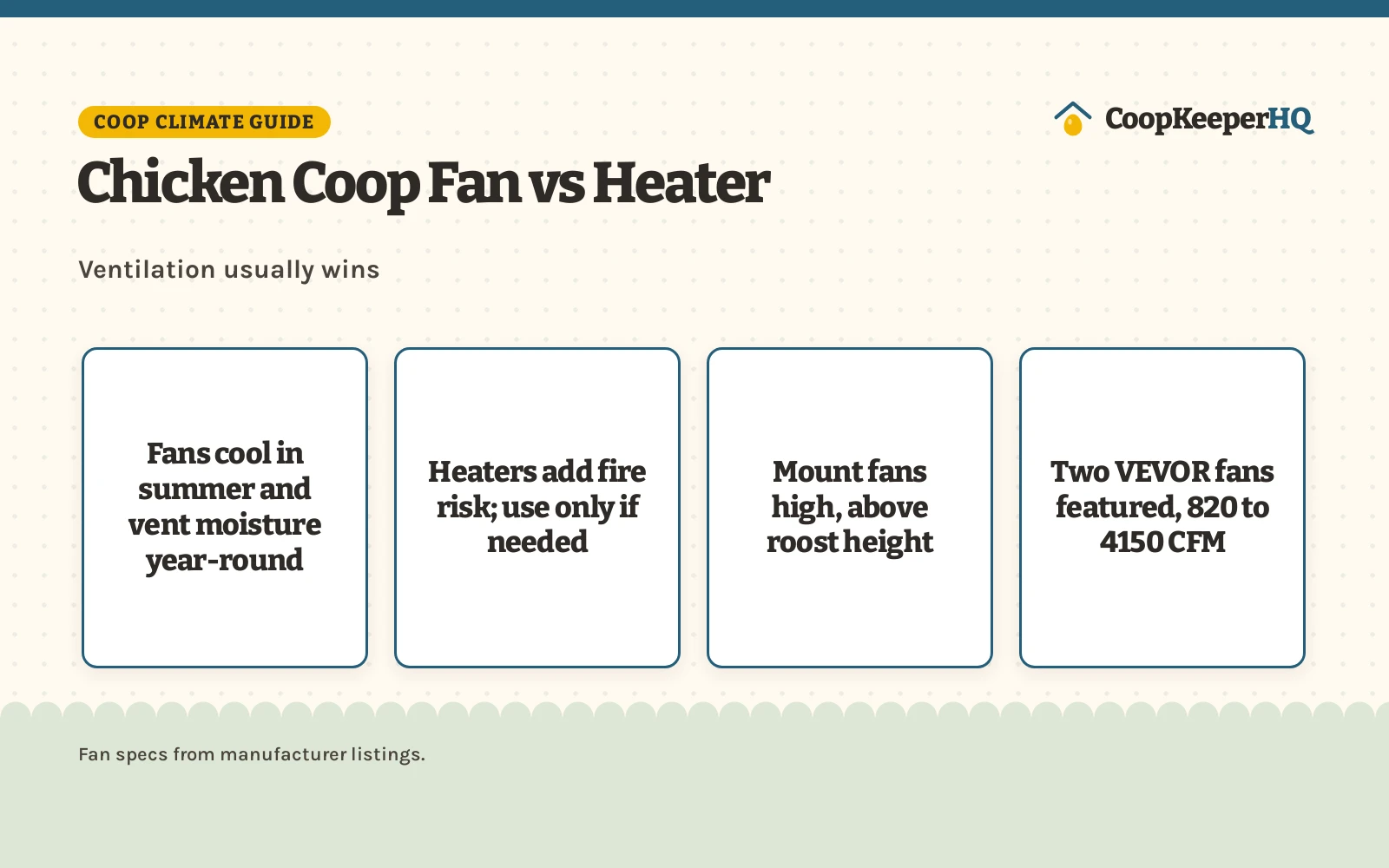
During still, humid afternoons and stagnant summer nights, passive ventilation through open windows may struggle to move air. An exhaust fan installed high on a coop gable wall helps pull trapped heat out while drawing fresh air across the floor.
Any fan used around chickens requires an enclosed motor casing built to keep out airborne feather dander and dry dust. Standard open-motor household box fans can overheat when clogged with coop dust, creating a severe fire hazard. Look for purpose-built poultry fans with sealed motors, such as the moisture-rated exhaust units reviewed in our best chicken coop fan for humidity guide or solar options in our chicken coop fan with battery backup review. Mount fans high out of bird reach, shield blades with protective wire guards, and orient exhaust airflow outward to pull stale heat out without creating harsh drafts directly across roosting hens.
Dust baths and cool ground spots
Chickens naturally burrow into shaded dirt to cool down. Cool subterranean soil absorbs body heat as hens fluff loose dirt into their feathers. Dust bathing also cleans feathers and discourages mites and lice during warm summer months.
Provide shaded dust bathing boxes under run covers or beneath leafy shrubs. In bare run areas, lightly moistening a patch of dirt with a garden hose in early morning creates a cool soil hollow where birds can lie down during afternoon heat. Ensure dampened dirt areas drain properly so standing water does not stagnate, and keep feeding areas completely dry.
Mind outdoor wiring and water connections
Powering coop fans, misting lines and automated equipment outdoors requires careful attention to electrical and water safety. Summer storms, direct sun and pecking birds can damage poorly routed cords and loose hose fittings.
Connect all outdoor electrical equipment to a GFCI outlet to protect against short circuits. Route cords through protective conduit or keep wiring elevated along coop rafters far beyond the reach of inquisitive beaks. For misting lines, verify that hose connections and brass adapters include tight filter gaskets and thread tape to prevent leaks that could flood run soil. Inspect fittings periodically throughout the summer to ensure connections stay firm.
Daily rhythm for chickens in hot weather
A consistent daily chore routine keeps hot-weather flock management manageable. Opening coop doors early in the morning lets birds leave stuffy roosts for cool run air before sunrise heat builds up. An automatic coop door can let birds out into a protected run at dawn.
During midday, walk the run to check water stations, dumping warm water and refilling fonts with fresh, cool water. Drop in frozen water bottles to keep drinking water chilled, and turn on perimeter misting lines during the hottest hours. In late afternoon, verify that shade cloth still blocks direct sunlight as the sun angles across the sky, and gather eggs promptly so they do not sit in high heat. At dusk, verify all birds are on the roost, close the pop door to protect against night predators, and leave high gable vents and wire windows open overnight. If a bird appears lethargic, weak, or severely distressed, move the bird to a cool area and contact a poultry vet or local state extension office immediately rather than attempting home treatments.
A simple summer checklist
- Overhead shade cloth covers open runs to block direct radiant sun
- Coop windows and high gable vents stay open with predator-proof wire mesh
- Multiple clean water stations are placed in deep shade
- Coop bedding is kept thin and clean to eliminate composting heat
- Misting lines in dry climates or shaded cool spots are available for flock relief
- Outdoor fans and electrical cords run through a GFCI outlet
- Evening roost vents remain open overnight to flush out lingering warmth
Birds, breed size, run time and climate in; coop floor, run space, roost length and nesting boxes out.
Wash your hands after handling birds, eggs or equipment, supervise children around the flock, and check local rules on flock size and roosters before you buy. For sick birds, call a poultry veterinarian or your state extension office. See CDC backyard poultry guidance. Read our Safety Disclaimer.
FAQ for the flock
How do I know if my chickens are too hot?
Chickens exhibit panting with open beaks, hold their wings away from their bodies, drink water heavily, and seek shaded corners. If a bird becomes limp, unresponsive, or severely distressed, contact a poultry vet or agricultural extension office right away.
Can I give chickens ice water in summer?
Yes. Floating frozen water bottles or ice cubes in poultry drinking fonts helps keep water cool during hot afternoons, which encourages hens to drink regularly and stay hydrated.
Should I close up the coop at night in summer?
Close predator-proof pop doors at dusk to keep the flock safe, but leave high wall vents and wire-shielded windows wide open. A closed coop traps body heat and humidity, making roosting conditions uncomfortable.
Does misting make the chicken coop too humid?
Misting lines must only be run along outdoor run fencing or exterior shade perimeters, never inside an enclosed wooden coop. In dry climates, breezes evaporate the fine mist quickly to cool the air without wetting bedding. In humid climates, however, misters evaporate poorly and can raise run humidity, so keepers in humid regions should rely on shade and airflow instead.
What bedding stays coolest in a coop during summer?
A thin layer of clean pine shavings or coarse washed sand works best. Deep bedding packs generate internal microbial warmth through decomposition, so warm months call for thin, frequently cleaned coop floor coverings.
More coop guides
- Shade Cloth for Chicken Run: 5 Top Picks Compared (2026)
- Chicken Coop Ventilation: How Much and Where
- Best Chicken Coop Fan for Humidity (2026): 5 Moisture Exhaust Picks
- Best Chicken Run Waterer (2026): 5 Clean Drinkers Compared
- Chicken Coop Fan with Battery Backup: 5 Solar Exhaust Kits Compared (2026)
See the feeders and waterers picks and the chicken run guides.