Pine Shavings vs Aspen Shavings: Which One Should You Buy?
Pine shavings vs aspen shavings for the brooder: a keeper's comparison of kiln-dried pine and resin-free-claimed aspen, by dust, absorbency, size and upkeep.

On this page
Top picks at a glance
As an Amazon Associate I earn from qualifying purchases.
- 1
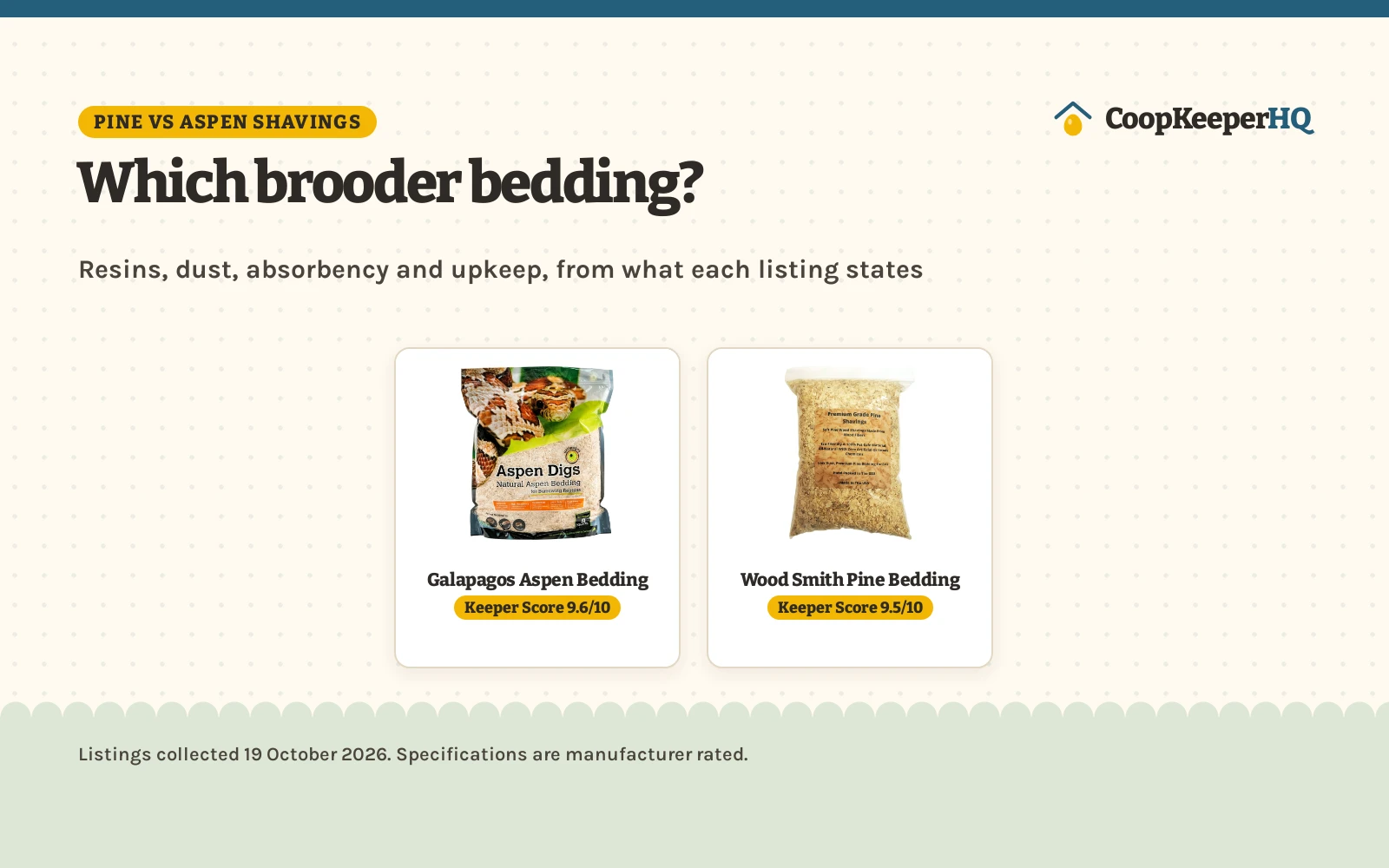
 Galapagos Aspen Digs Shavings Bedding, 8 Quart9.6/10View on Amazon
- 2
 Wood Smith USA Premium Pine Bedding, 4 Quart9.5/10View on Amazon
Pine Shavings vs Aspen Shavings verdict: Choose pine shavings for kiln-dried bedding with a stated absorbency figure and a compostable claim, like the Wood Smith example. Choose aspen shavings if the resin question matters to you: the Galapagos listing claims its aspen contains no harmful resins, unlike pine or cedar. Either way, buy the bag sized for your brooder and change it on schedule.
Brooder bedding is the first thing chicks touch, so keepers argue about it endlessly. Pine is the old standby; aspen is the challenger with a resin story. This pine shavings vs aspen shavings comparison walks through the two types side by side, then scores one example of each from the listings we reviewed.
CoopKeeperHQ earns a commission if you buy through our links, at no added cost to you. Affiliate disclosure.
Two examples

Galapagos Aspen Digs Shavings Bedding, 8 Quart
An 8 quart bag of 100% natural aspen shavings with a no-harmful-resins claim, low dust processing and sustainable sourcing.
Who it's for: keepers who buy the resin argument and want the bigger bag.
Who should skip it: anyone who wants a stated absorbency figure or a poultry-pitched listing.
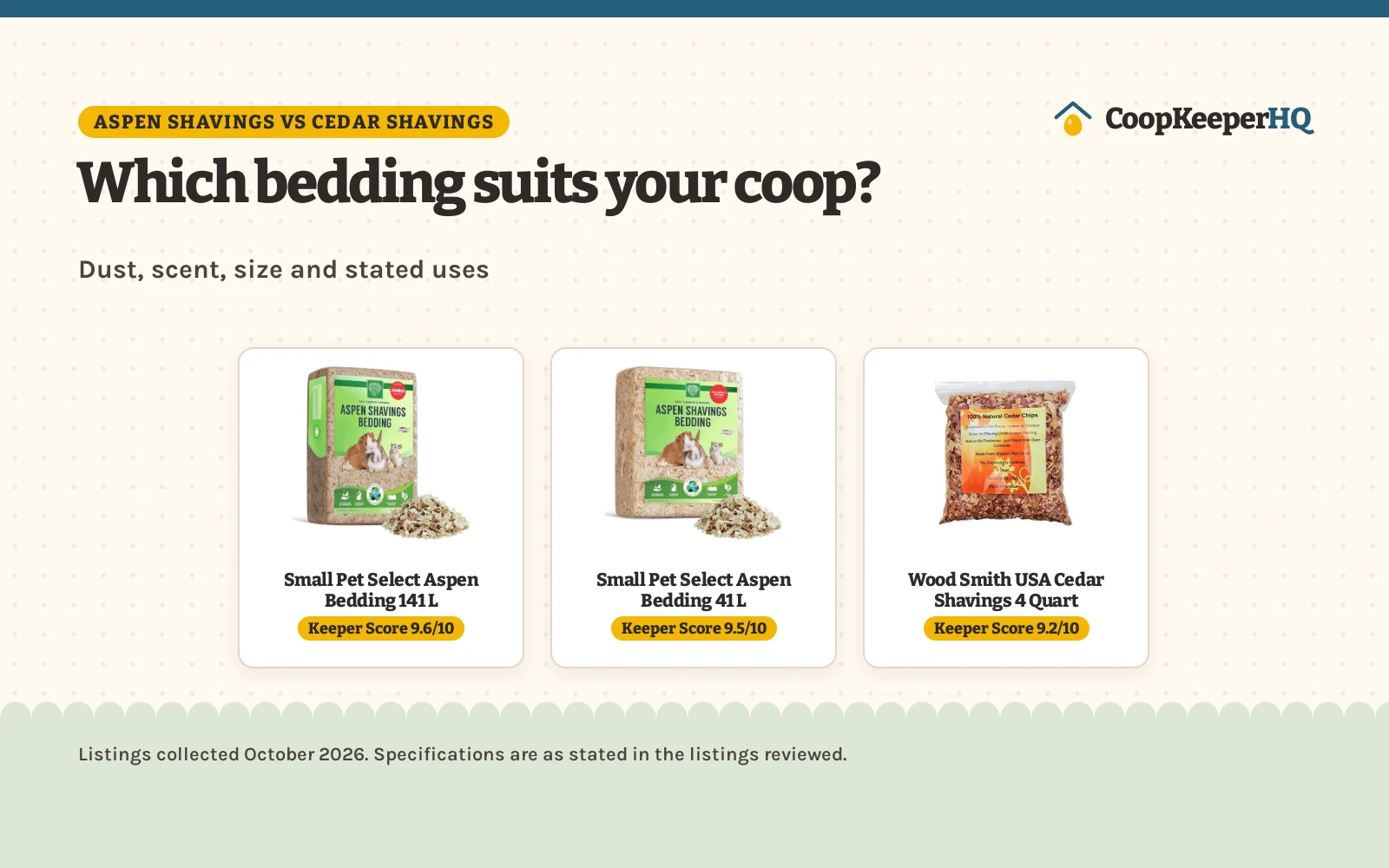
The Galapagos is the aspen example: an 8 quart bag of shavings made from 100% aspen trees, pitched at burrowing animals. Its headline claim is the resin story: no added chemicals, oils or parasites, and unlike pine or cedar, no harmful resins. It is processed to remove dust and debris, and the listing calls it sustainably sourced from timber by-products.
The absorbency pitch is claim-only: superior absorbency and odor control with no figure, so it cannot be measured against the pine example's 2x figure. The listing is aimed at reptiles and small animals rather than poultry, and no warranty term is stated.
Pros
- 100% natural aspen with a no-harmful-resins claim, unlike pine or cedar per the listing
- 8 quart bag: twice the stated volume of the pine example
- Low dust processing stated for respiratory health
- Timber by-products, sustainably sourced and biodegradable
Cons
- No absorbency figure stated, only a claim
- Pitched at reptiles and small animals; poultry is not named
- No warranty term stated
- Hand wash only in the care line, an odd instruction for bedding

Wood Smith USA Premium Pine Bedding, 4 Quart
A 4 quart bag of kiln-dried pine shavings with a stated 2x absorbency figure, odor control and a dust free claim.
Who it's for: keepers who want kiln-dried pine with a stated absorbency figure.
Who should skip it: anyone who wants a bigger bag or a poultry-first listing.
The Wood Smith is the pine example: a 4 quart bag of kiln-dried pine shavings, with chicken coops in the title though the bullets lean toward small pets. The listing states the bedding absorbs liquid up to 2 times its weight, controls odor, and is soft, chemical-free and non-irritating.
It is made in Florida, USA, and the listing says each bag is measured, weighed and inspected before shipment. The satisfaction promise carries no stated term, so warranty scores zero. The care line says clean daily and replace weekly.
Pros
- Kiln dried pine with a dust free claim
- Absorbs up to 2 times its weight in moisture, per the listing
- Odor control stated; compostable and eco-friendly claimed
- Made in Florida, USA; each bag weighed and inspected, per the listing
Cons
- 4 quart bag: the smaller pack here
- Pitched mostly at small pets; chicken coops are in the title but the bullets lean small-animal
- No warranty term stated; the satisfaction promise has no term
- Care line says clean daily and replace weekly
Pine shavings vs aspen shavings: side by side
| Factor | Pine shavings | Aspen shavings |
|---|---|---|
| Example product | Wood Smith Pine Bedding | Galapagos Aspen Bedding |
| Bag size | 4 quart (listed) | 8 quart (listed) |
| Absorbency claim | Up to 2x its weight (listed) | Superior absorbency, no figure (listed) |
| Dust claim | Dust free (listed) | Low dust (listed) |
| Resin and chemical claim | Kiln dried; free of chemicals (listed) | No harmful resins, unlike pine or cedar (listed) |
| Sourcing | Made in Florida, USA (listed) | Timber by-products, sustainably sourced (listed) |
| Upkeep | Clean daily, replace weekly (listed) | Spot clean and full changes (listed) |
These are common ranges across the poultry listings we read; we quote the brand’s rated specs from the product listings (as of 19 October 2026).
Resins and safety claims
This is the argument that starts the debate. The Galapagos listing claims its aspen bedding is made from pure aspen wood with no added chemicals, oils or parasites, and states that unlike pine or cedar, aspen does not contain harmful resins. The Wood Smith listing answers from the pine side: its pine is kiln dried, free of chemicals and has no irritants, and the title calls it dust free. Each listing makes its own claim; neither side proves the other’s wrong, so read them as maker claims and decide what matters to you.
Absorbency and odor
Only one side gives a number. The Wood Smith listing states its pine absorbs liquid up to 2 times its weight in moisture and helps control odor. The Galapagos listing claims superior absorbency and odor control with no figure. Because only the pine example states a figure, the listings leave a direct absorbency comparison unclear; both claim odor control.
Dust
Both sides claim low dust. The Wood Smith title calls its pine dust free; the Galapagos listing says its aspen is processed to remove dust and debris for better respiratory health. For a brooder, where chicks breathe at bedding level, either claim is worth weighing, and neither listing gives a measured dust figure.
Size, sourcing and upkeep
The Wood Smith example is a 4 quart bag, made in Florida, USA, with each bag weighed and inspected per the listing. The Galapagos example is an 8 quart bag, made from timber by-products and described as sustainably sourced and biodegradable. On upkeep, the Wood Smith care line says clean daily, replace weekly and wash the cage monthly; the Galapagos listing pitches spot cleaning and full bedding changes. See how often to clean a chicken brooder.
Flock fit
Wood Smith Pine Bedding
Galapagos Aspen Bedding
FAQ for the flock
Is aspen safer than pine for chicks?
The Galapagos listing claims its aspen contains no harmful resins, unlike pine or cedar. The Wood Smith listing says its pine is kiln dried, free of chemicals and has no irritants. Those are the makers’ claims; neither listing proves the other’s case.
Which is more absorbent, pine or aspen?
Only the Wood Smith pine example states a figure: up to 2 times its weight in moisture. The Galapagos aspen example claims absorbency with no figure, so the listings leave a direct comparison unclear.
Which is less dusty?
Both claim low dust: the Wood Smith title says dust free, and the Galapagos listing says its aspen is processed to remove dust and debris. Neither gives a measured dust figure.
How often should I change brooder bedding?
The Wood Smith care line says clean daily, replace weekly and wash the cage monthly. Whatever bedding you use, wet bedding should come out promptly. See how often to clean a chicken brooder.
Can I compost used bedding?
The Wood Smith listing calls its pine economical, compostable and eco-friendly; the Galapagos listing calls its aspen biodegradable. Both makers pitch their bedding as compost-friendly.
How the Coop Score came out
Each example is scored on performance, build, value, safety and warranty, using only what the listing publishes. Neither listing states a warranty with a concrete term. The weights are on the site’s how we pick page.
| Product | Keeper Score | Perf. /35 | Build /25 | Value /25 | Safety /10 | Warranty /5 |
|---|---|---|---|---|---|---|
| Galapagos Aspen Bedding | 9.6 | 30 | 21 | 20 | 4 | 0 |
| Wood Smith Pine Bedding | 9.5 | 29 | 21 | 21 | 3 | 0 |
A product’s weighted total becomes its score on a scale capped at 9.8 and floored at 9.2, in a straight line.
Which should you choose?
Choose pine shavings if you want kiln-dried bedding with a stated absorbency figure, a dust free claim and a compostable, eco-friendly pitch, like the Wood Smith example.
Choose aspen shavings if the resin question matters to you: the Galapagos listing claims no harmful resins, unlike pine or cedar, and its 8 quart bag is the bigger pack here.
Pick a species and a set date for candling days, lockdown and hatch day, with a calendar file to save.
Heat lamps are a common cause of coop and barn fires. If you use one, secure it with more than the clamp (a chain or wire to a fixed point), keep it well away from bedding, walls and cardboard, and plug it into an outlet or a cord rated for the load. Radiant heat plates run cooler and remove most of that risk. Check chicks often in the first days: huddling under the heat means too cold, spreading to the edges means too warm. Read our Safety Disclaimer.
More coop guides
- Hemp Bedding vs Pine Shavings: Which One Should You Buy?
- Pine Shavings vs Straw: Which One Should You Buy?
- Sand vs Pine Shavings: Which One Should You Buy?
- Pine Pellets vs Pine Shavings: Which One Should You Buy?
- Best Chicken Coop Bedding for Deep Litter (2026): 4 Top Picks
- How Often to Clean Chicken Brooder
- Requirements for a Chick Brooder: Setup, Heat and Sizing Guide (2026)