Requirements for a Chick Brooder: Setup, Heat and Sizing Guide (2026)
Essential heat, ventilation, bedding, feeding and space guidelines for setting up a safe, reliable chick brooder for growing backyard poultry.

On this page
Top picks at a glance
As an Amazon Associate I earn from qualifying purchases.
- 1
 Brinsea Ecoglow Safety 600 Chick or Duckling Brooder9.7/10View on Amazon
- 2
 Tetuga Brooder Box for Chick Starter Kit with 10x 12” Brooder9.6/10View on Amazon
- 3
 RentACoop Big Red Barn Chick Brooder Set with Heating Plate9.6/10View on Amazon
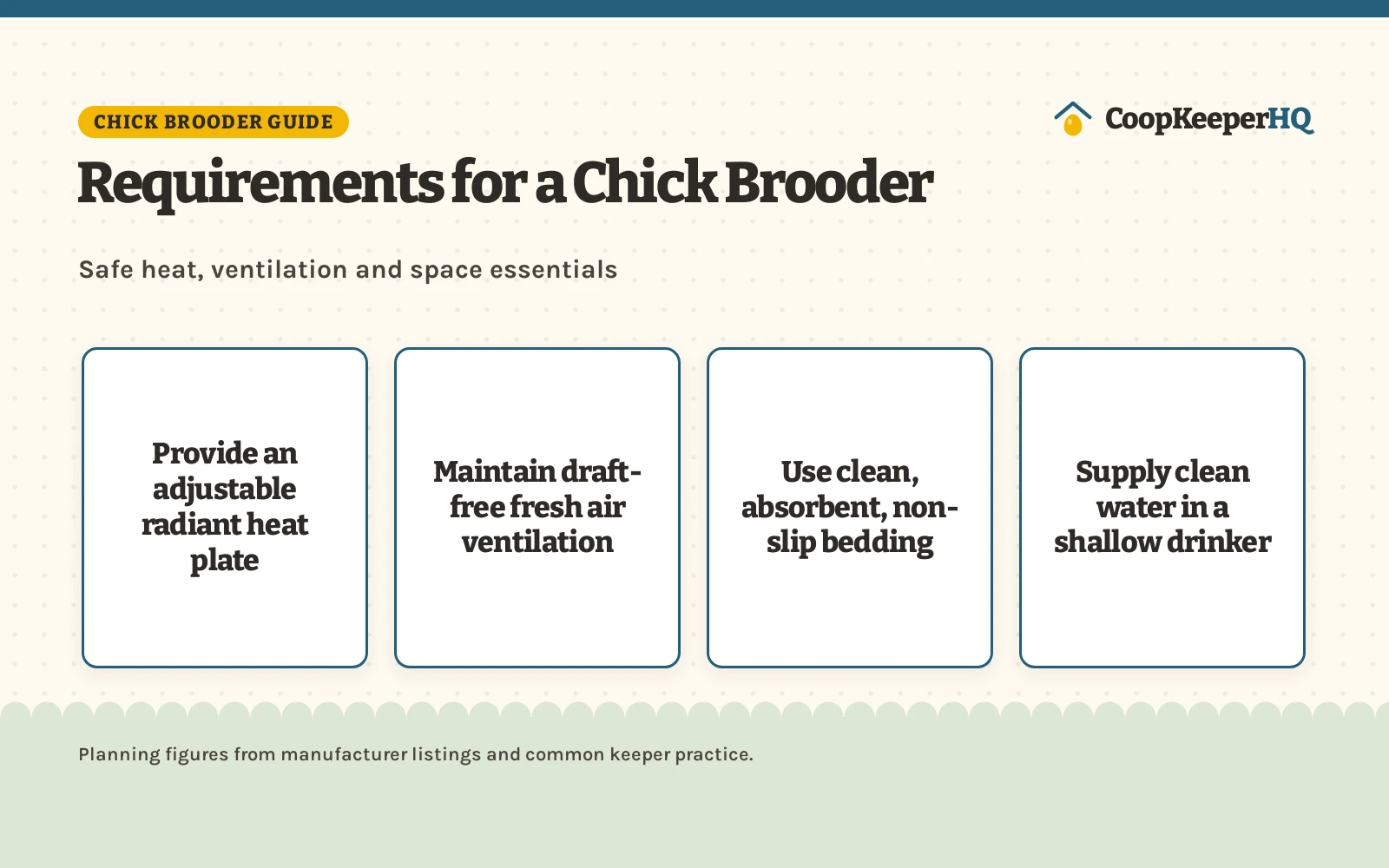
Every spring, peeping from a shipping box brings chore time to the homestead. The core requirements for a chick brooder are straightforward: a secure draft-free enclosure, an adjustable radiant heat source that mimics a mother hen, absorbent non-slip bedding, fresh water, starter feed, and adequate floor space. Meeting these basic needs keeps young birds lively and dry.
CoopKeeperHQ earns a commission if you buy through our links, at no added cost to you. Affiliate disclosure.
Requirements for a chick brooder: the essential elements
For chicks without a broody hen, the brooder provides shelter, warmth, and feeding space. Chicks cannot regulate body temperature until juvenile feathers grow in, making draft protection, heat, and hygiene critical daily chores. If you are starting out, our what is a brooder box guide explains how these systems function. A complete brooder combines draft protection, a warm retreat, clean bedding, and easy access to feed and water.
Choosing and sizing the brooder enclosure
The brooder enclosure must contain chicks safely, block drafts, and offer enough floor space to prevent overcrowding and damp litter.
Footprints vary across listings. For compact nursery care, the HaoCpetslian wooden brooder (on Amazon) measures 15.7 by 11.8 inches with an 11.8-inch wall height. The GIFANK foldable pen measures 16 by 13 inches with a 7-inch height and assembles in 5 minutes with no tools required. Larger playpens include the Kerty enclosure at 45 by 20 inches with a 20-inch wall height, and the circular TharroCotte tent with a 45-inch diameter rated for up to 15 chicks.
Proshine measures 32 by 16 inches with a 16-inch height for up to 30 chicks. NEWTRY measures 32 by 15 inches with a 15-inch height (stating 30 by 13 inches and 9.8 inches high inside) rated for up to 35 chicks. Hydralis spans 44.88 by 44.88 inches with a 22.83-inch height for up to 30 chicks, and OUJIMAI provides a 142-liter plastic enclosure measuring 23.62 by 16.53 inches by 13 inches rated for 20 to 30 birds. See our chicken brooder size guide for sizing details.
How high should a chick brooder be?
Wall height prevents active chicks from fluttering over borders into drafts. Shallow pens like GIFANK feature 7-inch walls, requiring close attention as feathers sprout. Taller wooden brooders from NEWTRY and Proshine offer 15 to 16 inches of wall height, while Kerty offers a 20-inch wall height and Hydralis provides 22.83 inches of height. Covering the top with breathable mesh prevents escapes while maintaining airflow.
Safe warmth: brooder heating plates vs lamps
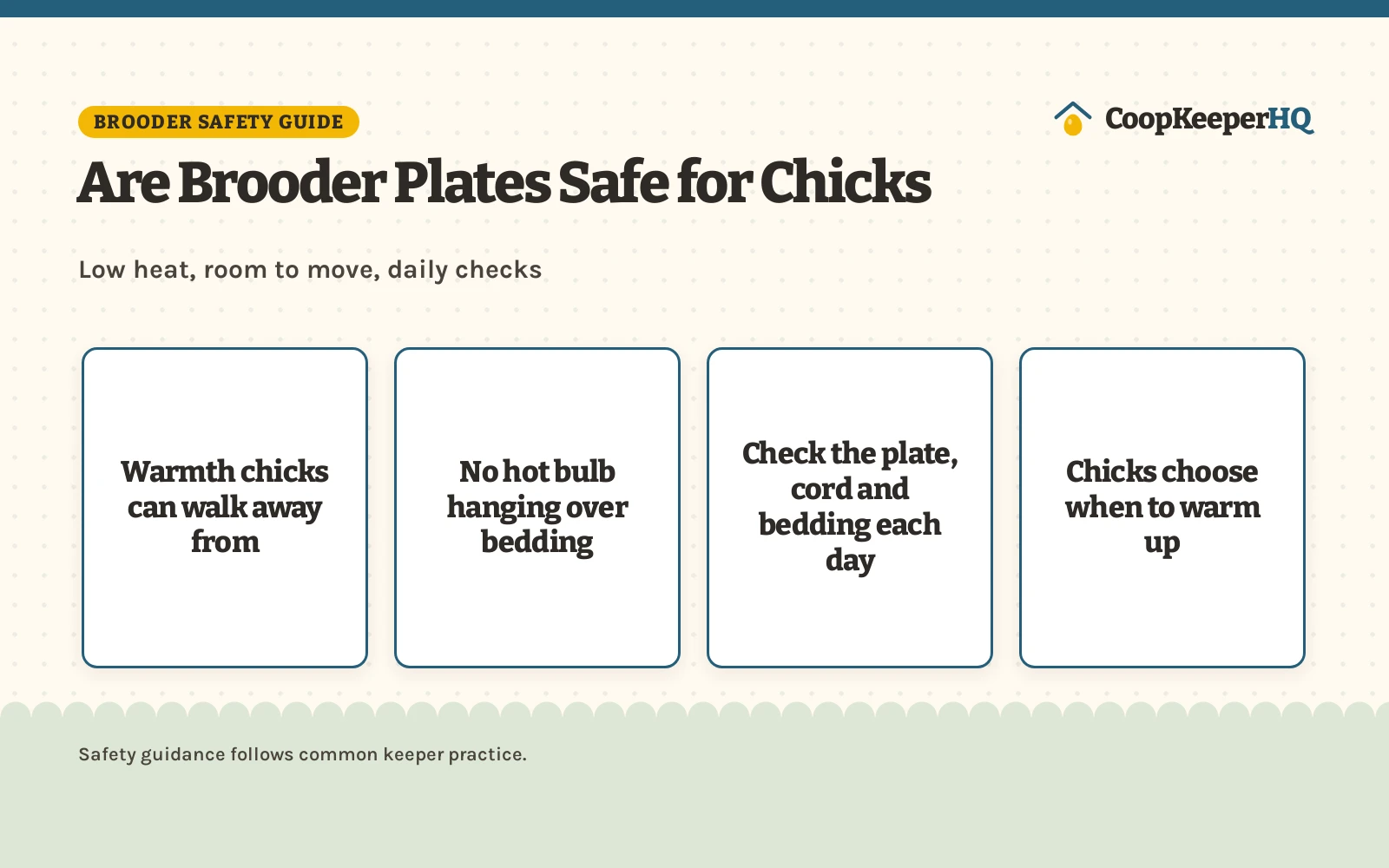
Supplemental warmth is vital, but traditional heat lamps present fire risks around bedding. We recommend radiant brooder heating plates, which warm chicks from above while keeping ambient pen air cooler.
Chicks duck underneath the plate to warm up, mimicking a mother hen. Match plate size to flock count: TharroCotte includes a 10 by 10 inch heating plate rated for up to 15 chicks. Kerty features an 11.8 by 11.8 inch heating plate (also listed as 12 by 12 inches) with a stated thermostat adjustment range from 50°F to 158°F and a real-time digital display showing 32°F to 210°F. Hydralis provides a 12.8 by 17.8 inch heating plate rated for up to 30 chicks.
While NEWTRY includes 2 ceramic lights and 1 heating lamp with controller stabilization stated within ±1°C, heating lamps carry fire hazards, making radiant plates or ceramic emitters safer. Proshine lists digital control with monitoring down to 0.1℃. Watch chick behavior: huddling tightly means chicks are chilled, scattering to corners means they are overheated, and content exploration means warmth is balanced. Compare options in our brooder heat plate guide, our heat plate vs heat lamp comparison, and our brooder thermometer guide.
Gas brooder for chicks vs backyard electric setups
A gas brooder for chicks runs on propane or natural gas to warm large commercial barns without electricity. In residential backyards, however, a gas brooder for chicks introduces severe hazards: open flames, oxygen depletion, and carbon monoxide in enclosed spaces. Backyard keepers should use electric radiant heating plates on a protected GFCI outlet, keeping cords clear of litter.
Ventilation without chilling drafts
Chicks produce moist droppings and breathe rapidly. Steady air exchange removes moisture and ammonia fumes without creating floor drafts. For rigid brooders, solid lower walls stop floor breezes while open mesh tops vent warm air. Fabric pens like Kerty and TharroCotte feature roll-down curtains over mesh windows to block drafts or roll open for airflow in warm weather. Wooden models like Proshine and HaoCpetslian include built-in ventilation slots. If you smell ammonia, increase airflow and replace damp bedding immediately.
Flooring, bedding and brooder cleanliness
Slick materials like newspaper lack traction and cause chick legs to splay outward. The brooder floor must provide grip and absorb moisture. Pine shavings, chopped straw, or washable liners work well. Kerty includes 2 washable nesting pads, while Kinchoix features an alloy steel brooder with a slide-out tray designed for 30 seconds cleanup. GIFANK uses moisture-resistant PVC designed to wipe clean quickly. Spot-clean soiled bedding daily. See our guide to flooring for chick brooders.
Feeders, drinkers and chick perches
Chicks need constant starter feed and clean water. Use shallow chick drinkers to prevent drowning in open dishes. GIFANK includes a 1.3-liter waterer with a splash-proof guard and hanging handle, plus a feeder with 12 individual compartments to curb waste. Kerty provides a 12-hole trough feeder, and Proshine incorporates a 1600 ml waterer and a 2000 ml feeder into its cabinet. Low roosts like the 2 wooden chick perches in the GIFANK kit (on Amazon) encourage natural perching. See our baby chick waterer guide, our chicken feeder for chicks, and our chick perch guide.
Daily brooder routine and transition to the coop
Daily, rinse and refill the waterer, check feed flow, and observe chick activity. Raise the radiant heat plate as chicks grow to maintain comfortable back clearance. The GIFANK listing references brooding from day one through the sixth week before moving birds to an outdoor chicken coop. In practice, transition chicks once fully feathered and nighttime coop temperatures are mild. If a chick appears weak, isolate it in a quiet box and consult a poultry vet or state extension office. For setup layouts, see our chicken brooder ideas.
A simple chick brooder checklist
- Draft-free enclosure with secure walls and breathable top cover
- Radiant heating plate adjusted to chick back height
- Fresh air exchange without floor drafts
- Absorbent, non-slip bedding kept clean and dry
- Shallow drinker that prevents drowning
- No-waste feeder trough with fresh starter feed
- Low wooden perch for roost training
Birds, breed size, run time and climate in; coop floor, run space, roost length and nesting boxes out.
Heat lamps are a common cause of coop and barn fires. If you use one, secure it with more than the clamp (a chain or wire to a fixed point), keep it well away from bedding, walls and cardboard, and plug it into an outlet or a cord rated for the load. Radiant heat plates run cooler and remove most of that risk. Check chicks often in the first days: huddling under the heat means too cold, spreading to the edges means too warm. Read our Safety Disclaimer.
FAQ for the flock
How to build chick brooder box at home?
Choose a sturdy tote or plywood box with smooth, draft-free walls. Cut a lid opening and secure hardware cloth for ventilation. Add non-slip bedding, an adjustable heat plate, and shallow dishes along the perimeter.
How high should a chick brooder be?
Walls should contain active chicks as wing feathers grow. While GIFANK features 7-inch walls, enclosures from NEWTRY, Proshine, or Kerty offer 15 to 20 inches. A breathable mesh lid ensures complete escape prevention.
Can you use a gas brooder for chicks in a backyard setup?
Gas brooders are built for commercial barns, not backyards. In homes or garages, open flames create severe fire hazards and carbon monoxide risks. Electric radiant heat plates are far safer for backyard flocks.
When do chicks move from the brooder to the coop?
Chicks transition to the coop once fully feathered with juvenile plumage and nighttime temperatures are mild. While GIFANK references brooding through the sixth week, readiness depends on local weather, breed, and a predator-proof coop.
What is the safest heat source for a chick brooder?
An adjustable radiant heat plate is safest. Operating at low surface temperatures, heat plates direct warmth downward without the shattering or fire risks of traditional high-wattage heat lamps.
More coop guides
- Chicken Brooder Ideas: Setups and Enclosures for Backyard Chicks
- Best Brooder Heat Plate: Safer Heat for Chicks
- Chicken Brooder Size: Space Guide for Backyard Chicks
See the brooder picks and the coop supply guides.