Types of Fence Gates for Chicken Runs
Walk-through, wide, sliding and self-closing gates for a chicken run, with the mesh, hinges and latch each type needs to hold.

On this page
Top picks at a glance
As an Amazon Associate I earn from qualifying purchases.
- 1
 Goldshire 48x72in Adjustable Galvanized Chain Link Fence Gate9.7/10View on Amazon
- 2
 FULUPET Chain Link Fence Gate9.6/10View on Amazon
- 3
 VEVOR Chain Link Fence Gate 32 x 46 in Adjustable Garden9.6/10View on Amazon
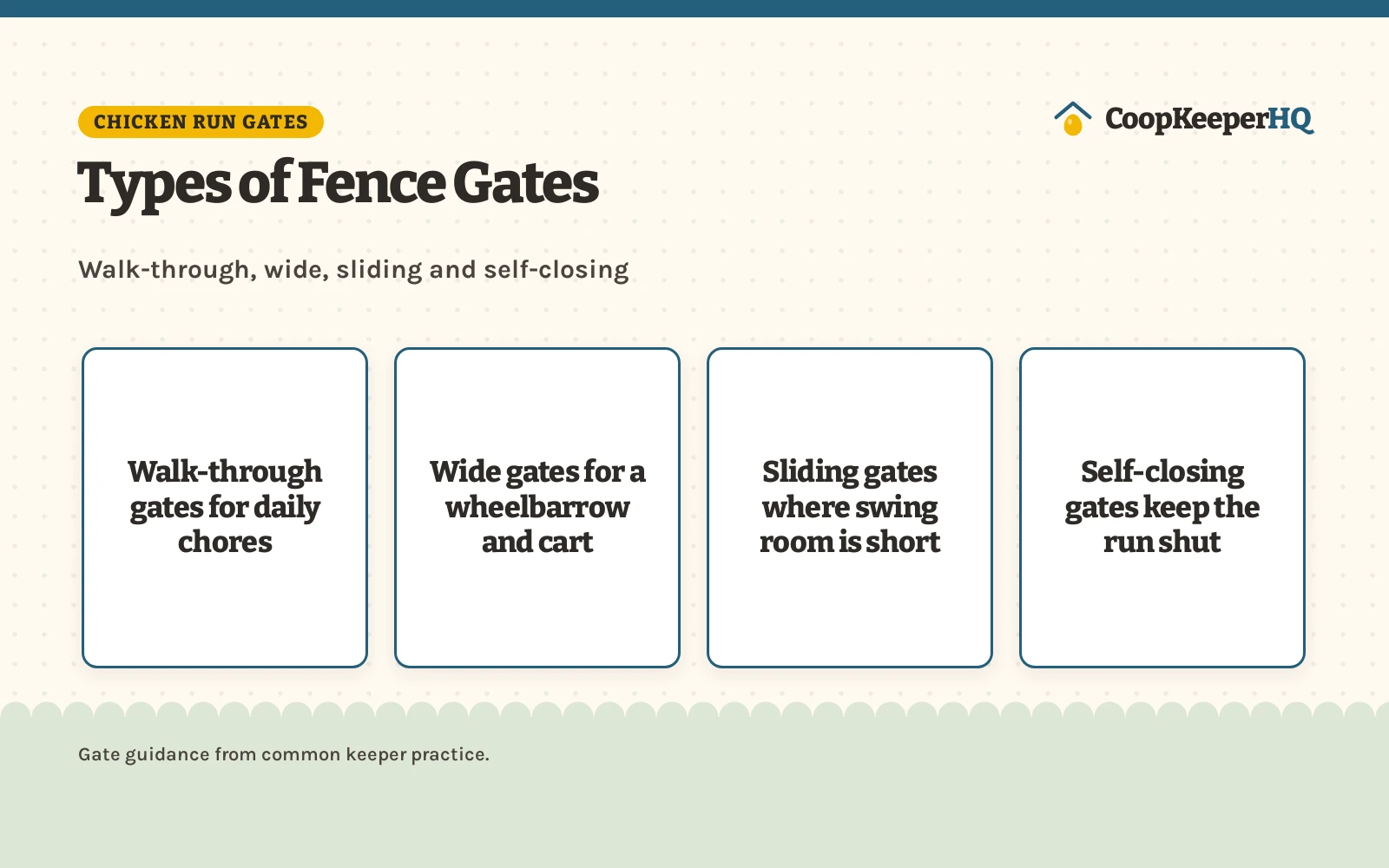
A run gate is the door you open and shut on every trip to the flock, so it has to swing free, latch shut and keep predators out while you carry feed and water through it. Types of fence gates for a chicken run come down to how the gate moves and how it shuts: a walk-through gate for daily chores, a wide gate for a wheelbarrow and cart, a sliding gate where swing room is short, and a self-closing gate that shuts behind you. This guide walks through each type, then the mesh, hinges and latch that make it hold.
CoopKeeperHQ earns a commission if you buy through our links, at no added cost to you. Affiliate disclosure.
Types of fence gates: the short version
Start with how you use the run. A walk-through gate suits daily chores on foot, with a latch you can work with a free hand. A wide gate suits a wheelbarrow, a cart or a mower, with leaves that meet in the middle and a drop rod to hold them shut. A sliding gate suits a run where a swinging gate would hit the coop wall or the fence, since it rolls along the fence line instead of swinging out. A self-closing gate suits a run where the gate gets left open, since a spring hinge pulls it shut behind you and a gravity latch drops into place. Pick the type by the opening and the chore, then match the mesh and the latch to the predators in your yard.
Walk-through gates for daily chores
A walk-through gate is the everyday gate: sized for a person on foot carrying a bucket or a basket of eggs. It hangs on hinges on a post, swings on a clear arc and latches with a thumb latch or a gravity latch you can lift with a finger. Hang it so it swings into the run or out toward the yard, whichever side leaves room for you to step through with a load. Keep the hinges oiled and the latch clean, since a gate that sticks open is a gate the flock walks through.
Fit the mesh to the frame and the frame to the opening. Hardware cloth over the gate keeps paws from reaching through, and the hardware cloth guide covers the mesh that holds up to predators. A gate that sags drags on the ground and will not latch, so check the hinges and the posts when the gate starts to stick.
Wide gates for carts and mowers
A wide gate opens the run to a wheelbarrow, a garden cart or a mower. It carries a leaf on each side, hung on sturdy posts, and the leaves meet in the middle with a drop rod that pins the meeting stile to the ground. Open a leaf for a quick trip through the run, or swing the leaves wide for a full load of bedding or feed. A wide gate needs posts set firm, since the weight of the leaves pulls on the hinges, and a sagging leaf will not meet its mate.
Keep the ground under a wide gate clear and level, so the leaves swing free and the drop rod finds its socket. A gate that drags wears its hinges out and leaves a gap at the bottom that a predator can push under. Check the posts after wet weather, since soft ground lets a post lean and a leaning post takes the gate with it.
Sliding gates where swing room is short
A sliding gate rolls along the fence line on a track or a rail, so it needs no swing room at all. It suits a run pressed against a coop wall, a narrow yard or a path where a swinging gate would block the way. The gate hangs from rollers on a rail above, or rides on wheels in a track below, and it slides aside to open the run.
Keep the track clear of bedding, leaves and mud, since grit in the track stops the gate short of shut. A sliding gate needs a stop at each end of the track, so it cannot roll off the rail, and a latch that holds it shut against a push from outside. In wet weather, check the track before the gate sticks.
Self-closing gates and latches
A self-closing gate shuts itself, so the run is less likely to be left open by mistake. A spring hinge pulls the gate shut after you pass through, and a gravity latch drops into place as the gate meets the post. The gate still needs a latch you can work from outside the run, and a hold-open catch for the days you carry loads in and out.
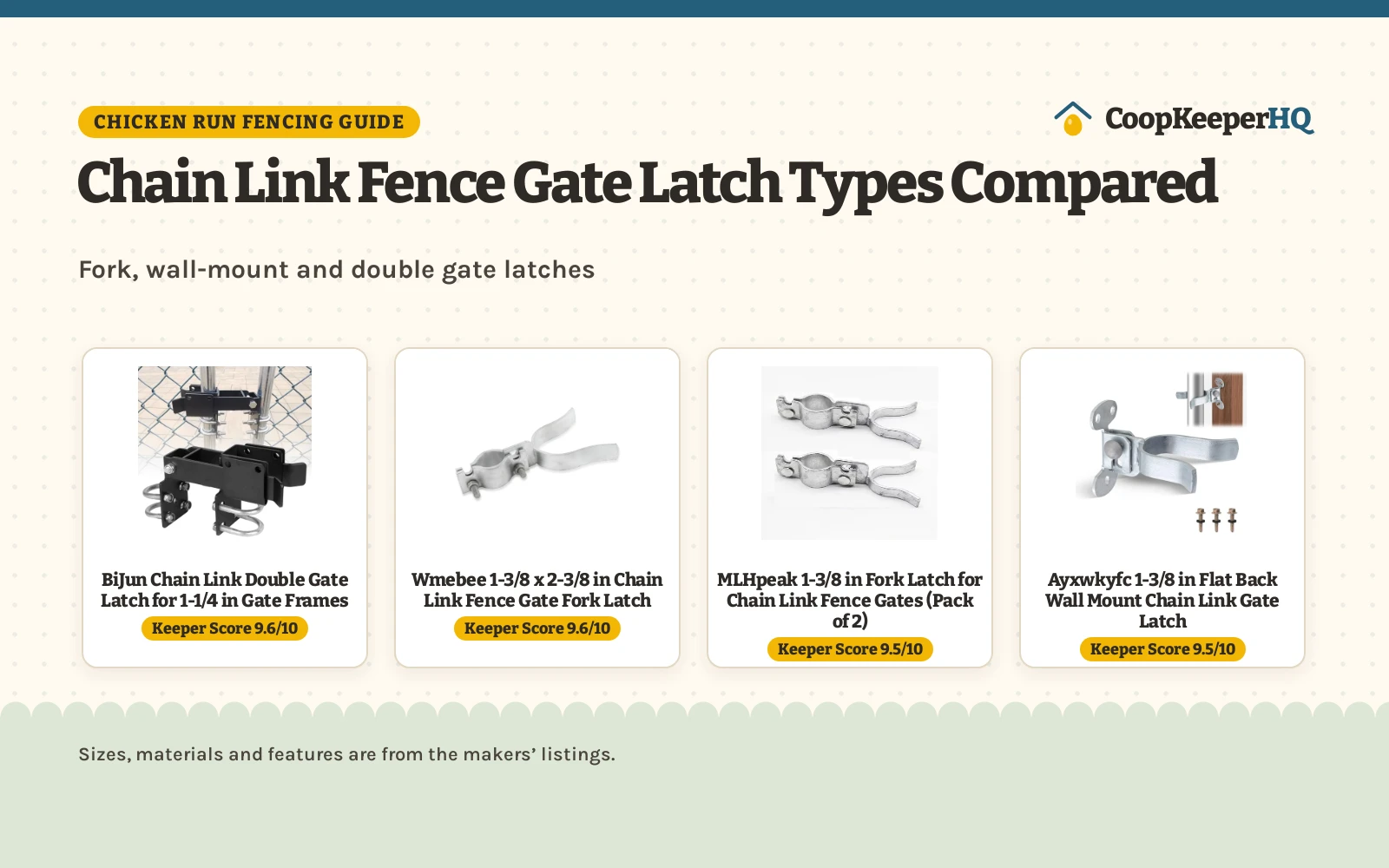
Pick the latch by the predator, not by the gate. A thumb latch suits a quiet yard, while a carabiner or a padlock suits a yard with raccoons, since a raccoon can lift a simple latch with its paws. The gate latch guide covers the latch types that hold against clever paws, and the best gate latch picks compare them. Check the latch each time you leave the run, since a latch that looks shut and is not shut is no latch at all.
Mesh, frame and hinges
The gate is only as strong as its mesh and its frame. Hardware cloth keeps small paws and beaks out, while welded wire suits a run where the fence is already welded wire and the gate should match it. The wire fence guide covers the fence types a gate can match. Stretch the mesh tight across the frame and fix it with staples or screws, so no edge lifts where a predator can pull.
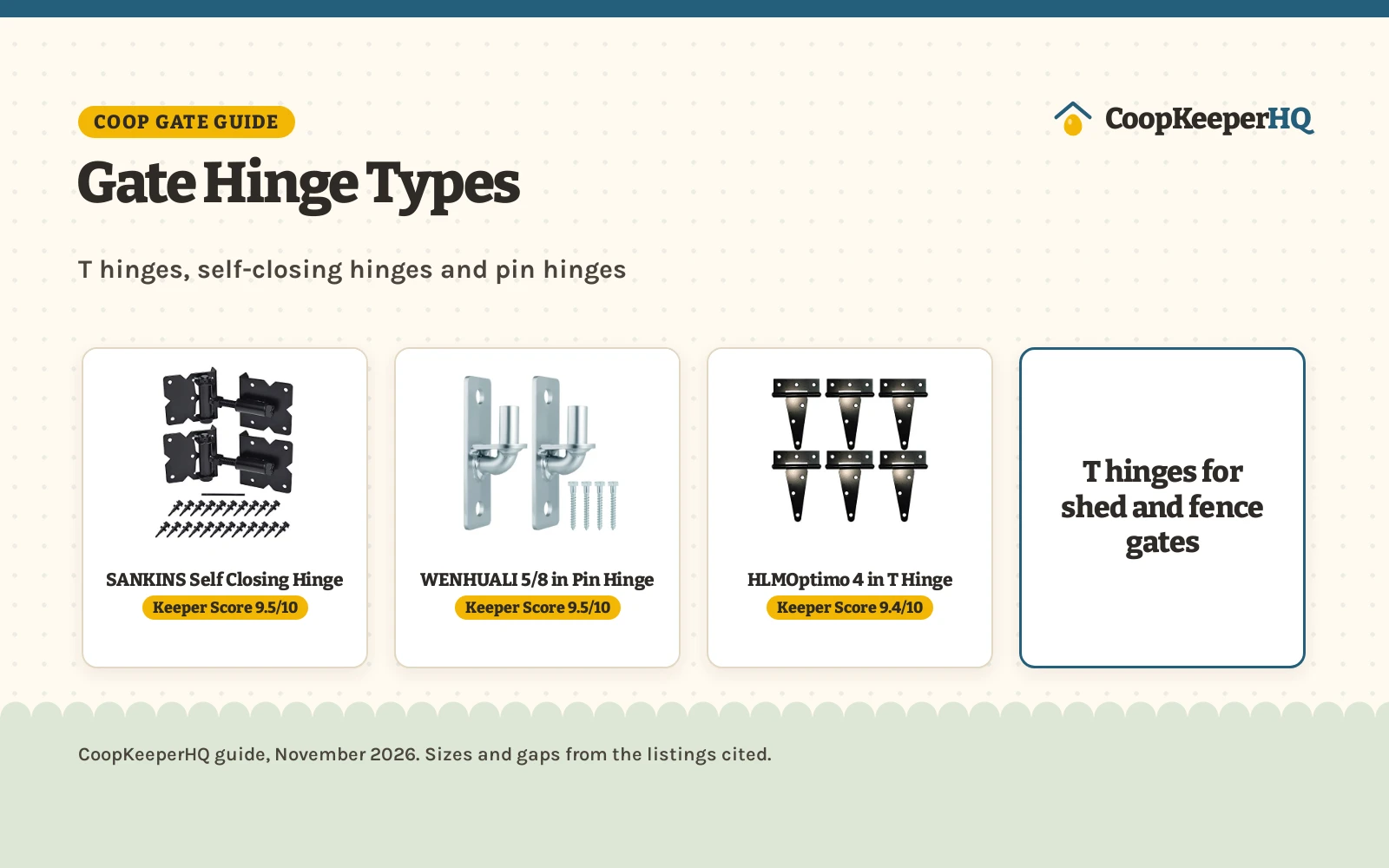
Hinges carry the weight, so use hinges made for outdoor gates, with screws that bite deep into the post. Strap hinges spread the load across the gate frame, and a diagonal brace keeps a wide gate from sagging. The field fence gate hardware guide covers hinges and braces for outdoor gates. Oil the hinges when they start to squeak, and turn any screw that works loose before the gate drops.
A simple gate checklist
- Gate swings free and shuts without a push
- Latch drops into place and holds against a pull
- Mesh is tight on the frame, with no lifted edge
- Hinges are oiled and screws are firm
- Ground under the gate is clear and level
- Gate matches the run fence, so no gap shows at the sides
For the fence around the gate, see the chicken runs and fencing guides and the predator protection guides.
Birds, breed size, run time and climate in; coop floor, run space, roost length and nesting boxes out.
Wash your hands after handling birds, eggs or equipment, supervise children around the flock, and check local rules on flock size and roosters before you buy. For sick birds, call a poultry veterinarian or your state extension office. See CDC backyard poultry guidance. Read our Safety Disclaimer.
FAQ for the flock
What gate suits a small chicken run?
A walk-through gate suits a small run, since it takes little room to swing and it is easy to latch with a free hand. A sliding gate also suits a small run where a swinging gate would hit the coop wall or the fence. Pick the gate by the room around the opening, not by the size of the run alone.
Should a run gate swing in or out?
Either way works, as long as the swing stays clear. A gate that swings into the run keeps the path outside clear, while a gate that swings out keeps the inside of the run clear for feeders and waterers. Check the swing before you hang the gate, so it does not hit the coop wall, the fence or a feeder.
What keeps a gate from sagging?
A firm post, a braced frame and hinges made for the weight of the gate. A diagonal brace across the frame keeps a wide gate square, and a drop rod holds the meeting stile firm. Check the hinges and the posts when the gate starts to drag, and turn any screw that works loose before the gate drops.
Do I need a latch a raccoon cannot open?
Yes, in a yard with raccoons. A simple thumb latch lifts with a push, and a raccoon can work it open with its paws. Use a latch that needs a lift and a turn, or add a carabiner or a padlock to the latch, and check it each time you leave the run.
Can a gate match the run fence?
Yes. Cover the gate frame with the same mesh as the run fence, so the gate looks like part of the fence and leaves no weak spot. Hardware cloth suits a run fenced with hardware cloth, and welded wire suits a run fenced with welded wire. The best chicken wire run guide covers runs fenced with chicken wire.
More coop guides
- Gate Latch Types: How to Choose the Right One
- Best Gate Latch (2026)
- Best Field Fence Gate Hardware (2026)
- Types of Wire Fence for Chicken Runs
- Best Chicken Wire Run (2026): 5 Picks for Flocks and Gardens
- Best Fox Proof Walk in Chicken Run (2026)
- How Deep Post for Fence: Setting Run Posts That Stay Straight
- Best T Fence Posts for Poultry Netting (2026): 4 Compared
See the chicken coop picks and the coop supply guides.