How to Cut Chicken Wire for Backyard Coops and Runs
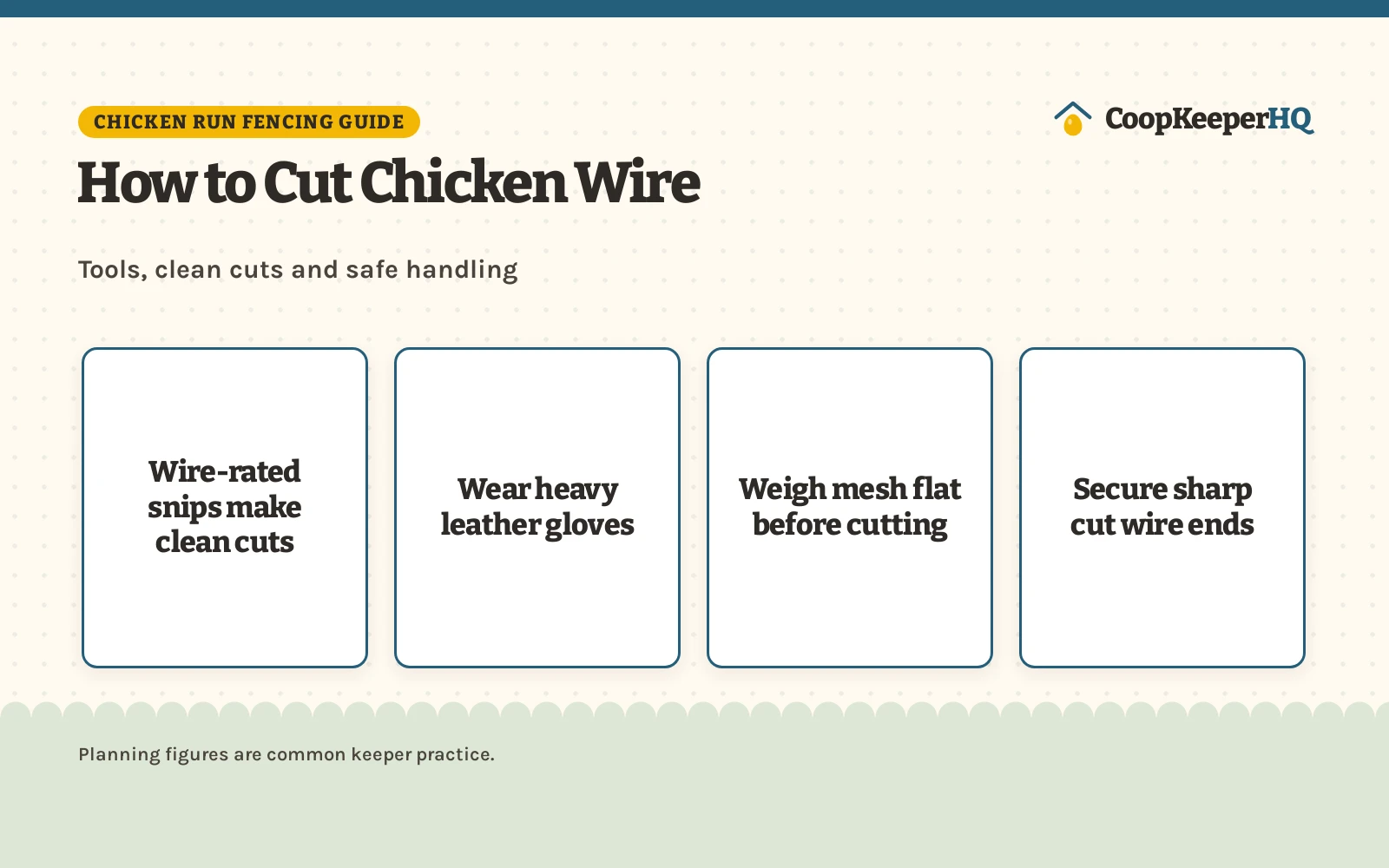
Straight-cut wire snips, heavy gloves, a flat workspace and clean cuts along the mesh keep backyard flock runs tidy and hands safe.

On this page
Top picks at a glance
As an Amazon Associate I earn from qualifying purchases.
- 1
 10 Inch Aviation Tin Snips9.6/10View on Amazon
- 2
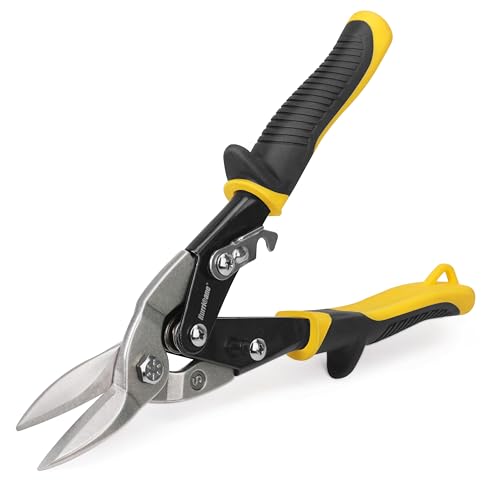 HURRICANE 10 inch Aviation Tin Snips9.4/10View on Amazon
- 3
 WORKPRO 6 in Wire Cutters9.4/10View on Amazon
- 4
 Upgraded 304 Crimped Wire 0.65mmView on Amazon
- 5
 Topworths Hardware Cloth 1/8" Chicken Wire Mesh Fencing 36inView on Amazon
- 6
 Ondware Chicken Wire MeshView on Amazon
- 7
 Hardware Cloth 1/4" 24" X 50' Hot Dip Galvanizing AfterView on Amazon
- 8
 IGAN-P6 Wire Flush CuttersView on Amazon
- 9
 IGAN-P6 6-inch Ultra Sharp & Powerful Side Cutter ClippersView on Amazon
Patching a torn run fence after morning chores or unrolling fencing for a new flock pen brings keepers up against stubborn wire. Knowing how to cut chicken wire cleanly comes down to using wire-rated cutting snips, wearing heavy leather gloves, weighting the mesh flat on the ground and snipping along the wire twists strand by strand. The right compound-action tool slices through galvanized netting smoothly without warping the roll or leaving jagged barbs that snag feathers and fingers.
Other options for the coop
 Upgraded 304 Crimped Wire 0.65mmCheck price on Amazon
 Topworths Hardware Cloth 1/8" Chicken Wire Mesh Fencing 36inCheck price on Amazon
 Ondware Chicken Wire MeshCheck price on Amazon
 Hardware Cloth 1/4" 24" X 50' Hot Dip Galvanizing AfterCheck price on Amazon
 IGAN-P6 Wire Flush CuttersCheck price on Amazon
 IGAN-P6 6-inch Ultra Sharp & Powerful Side Cutter ClippersCheck price on Amazon
CoopKeeperHQ earns a commission if you buy through our links, at no added cost to you. Affiliate disclosure.
How to cut chicken wire cleanly and safely
Backyard poultry netting is woven from thin galvanized steel wire twisted into flexible hexagonal patterns. Slicing through a coiled roll without securing the wire first results in twisted mesh, jagged wire points and ragged edges that refuse to sit flat against wooden posts. Keepers who unroll the netting flat, weigh down the ends and cut right next to the wire twists get straight panels that mount smoothly to coop runs. Using the proper cutting tool prevents crushed wires and protects your hands, and our best chicken wire cutters review covers top options for coop projects.
What to use to cut chicken wire: choosing the right tool
Choosing the proper tool makes wire cutting straightforward and saves your hands from fatigue during fence repairs. Straight-cut aviation tin snips rated for wire are among the most dependable options. Their compound hinge multiplies hand leverage, while finely serrated blade edges bite into round wire to prevent slipping. The listing for the Amazon Basics straight-cut aviation tin snips states that the tool cuts up to 18 gauge (1.2 mm) cold-rolled steel and 22 gauge (0.8 mm) stainless steel, with a tool weight of 12.8 ounces and an overall size of 9.84″L x 2.91″W, noting that it handles metal wire.
However, keepers should confirm that snips are rated for wire mesh. Certain sheet metal shears are engineered strictly for flat stock. For example, HURRICANE lists its 10 inch aviation tin snips with Chrome Vanadium steel blades, a 1.7 inches blade length, and a tool weight of 0.4 kg, specifying a cutting capacity of up to 20-gauge cold rolled steel and 22-gauge stainless steel, but the maker explicitly warns to avoid using the tool on wire mesh to protect blade integrity.
For lighter mesh trimming around coop framing, TUOLEWE lists its 8.7 Inch tin snips with HRC55 stainless steel blades, measuring 8.7″L x 2″W with an item weight of 6.72 ounces. For heavier perimeter wire ropes or boundary fencing, DISEN lists its heavy-duty wire cutter built with 50CR alloy structural steel hardened to HRC-58-63, rating the tool for cutting up to 3/16″ cable wire with a 0.19 inches cutting width, a weight of 0.31 kg, and including 6 aluminum sleeves.
Standard diagonal cutting pliers, or wire dikes, also cut chicken wire cleanly for small patches. Avoid household scissors, craft shears and utility knives, which dull immediately or slide off curved wire strands.
Safety gear and handling springy wire
Chicken wire stored in a tight roll acts like a coiled steel spring that curls back when packaging bands are cut. Thick leather work gloves are essential, as thin garden gloves tear easily on sharp cut wire ends. Heavy cowhide or goatskin gloves protect palms and fingers. Eye protection is equally critical because wire strands can whip upward suddenly as tension releases along a cut line. Always wear safety glasses to shield your eyes, alongside sturdy leather work boots to protect ankles from loose wire on the ground.
Unrolling and flattening the mesh before cutting
Cutting chicken wire while the roll is curled leads to uneven cuts and twisted hexagons. Choose a level stretch of ground near the run, unroll the needed length, and place heavy timber or concrete pavers across the ends to hold the netting flat. Remember that woven hexagonal mesh behaves like an accordion: pulling the wire wide reduces its length, while stretching it lengthwise narrows its width. Allow extra width along each edge to staple firmly to coop posts. See our guide to chicken wire sizes for roll widths and gauge options.
Step-by-step technique for clean wire cuts
After securing the netting flat, mark your cut line using chalk or painters tape along the target row of wire twists. Position aviation snips with the blades opened wide, sliding each wire strand deep into the cutting throat near the pivot bolt. Cutting deep in the throat provides high mechanical leverage and prevents the wire from twisting.
Cut across the wire right next to the twisted joints. Severing the wire directly against the twist leaves short, blunt stubs rather than sharp wire tails. Work steadily across the roll, cutting strand by strand along the marked line. When finished, snip off any stray wire tails that protrude awkwardly from the border.
Finishing and securing cut wire edges
Severed chicken wire leaves sharp steel ends that can scratch chicken combs or puncture keeper hands. The cleanest way to finish a raw cut edge is to fold the outer row of wire hexagons back over itself, creating a smooth, folded border. When mounting netting to wooden coop framing, position the folded edge against the timber and secure it flush with galvanized poultry fencing staples.
To completely conceal sharp barbs, sandwich the wire edge beneath a wooden batten board screwed over the seam. If attaching netting to metal pipe runs, use heavy-duty outdoor UV-resistant zip ties, pulling them tight and rotating the cut plastic ends away from birds.
Chicken wire limits: containment versus predator security
Chicken wire was developed to keep chickens contained and protect garden beds; it is not designed to stop determined predators. The thin galvanized wire and flexible hexagonal weave offer little resistance against raccoons, dogs, coyotes and foxes, which can tear, chew through or stretch open chicken wire. Raccoons can also reach paws through hexagonal openings to grab roosting birds.
For predator protection on coop windows, ventilation openings and lower run perimeters, keepers should install heavy welded wire mesh instead. Our detailed hardware cloth guide and best hardware cloth overview compare welded wire options for predator-proof coops. You can also read our poultry netting vs chicken wire comparison for details on flexible netting versus heavy wire.
Common wire cutting mistakes to avoid
Cutting wire under tension is a frequent mistake. If you snip through chicken wire while pulling on the roll, the cut ends snap back suddenly, creating bent mesh and sharp barbs. Always keep the roll weighted flat before cutting. Another common mistake is using improper tools, such as dull garden pruners, utility knives or household scissors, which crush the wire and strip the protective zinc coating. Always recheck measurements and leave extra margin for fastening. If you are planning overall run dimensions, our chicken run size calculator helps balance run space with flock welfare.
Maintaining your wire cutters and snips
After finishing fencing repairs, wipe down snip blades with a dry cloth to remove dirt and grit. A light drop of machine oil on the pivot bolt and return spring prevents corrosion and maintains fluid cutting action. Check the pivot bolt occasionally to ensure it remains snug, and engage the safety latch for storage.
A simple wire cutting checklist
- Heavy leather work gloves and eye protection are worn before handling wire
- The roll is unrolled flat on level ground and weighted down at each end
- The cut line is marked clearly along the wire twists
- Wire-rated snips or dedicated wire cutters are used for clean shearing
- Cuts are made deep in the blade throat right next to the wire twists
- Cut wire edges are folded back, stapled flush, or covered with wooden batten boards
Birds, breed size, run time and climate in; coop floor, run space, roost length and nesting boxes out.
Use a charger rated for the length of netting you run, ground it as the manual describes and post warning signs where neighbors or children can reach the fence. Keep grass and weeds off the bottom strands, and never leave netting unpowered, because birds and wildlife can tangle in it. Read our Safety Disclaimer.
FAQ for the flock
Can you cut chicken wire with regular scissors?
Household scissors should never be used to cut chicken wire. Galvanized steel wire immediately nicks and dulls scissor blades, while the wire can slide forward and twist your fingers. Always use compound aviation tin snips or dedicated wire cutting shears designed for metal.
What is the easiest tool for cutting chicken wire?
Straight-cut aviation tin snips rated for wire or heavy-duty wire cutters are the easiest tools for cutting chicken wire. Keepers should confirm that snips are rated for metal wire, as some aviation snips are designed only for sheet metal and caution against wire mesh. Wire-rated snips with compound leverage and serrated blades grip galvanized wire securely without slipping.
How do you keep chicken wire from rolling back up while cutting?
Unroll the needed length across an open, level surface such as a lawn or driveway. Place heavy objects, such as wooden planks or concrete pavers, across each end of the netting to hold the wire flat while you work.
How do you hide sharp chicken wire edges on a coop?
Fold the outer margin over itself to create a smooth, blunt border. Fasten the folded edge to wooden framing with galvanized fencing staples, then screw a wooden batten board directly over the seam to enclose all sharp wire ends.
Will chicken wire protect chickens from predators?
Chicken wire does not protect against strong predators such as raccoons, foxes, coyotes or dogs. For secure predator defense, install heavy welded hardware cloth across all coop openings and lower run perimeters.
More coop guides
- Best Chicken Wire Cutters (2026)
- Chicken Wire Sizes: Mesh Openings, Gauges and Roll Dimensions
- Poultry Netting vs Chicken Wire: Which One Should You Buy?
See the chicken runs and fencing section and our best chicken wire cutters review.