Do I Need to Insulate My Chicken Coop?
Insulation helps a thin-walled coop hold warmth in cold snaps, but dry bedding, closed drafts and high vents matter more than lining every wall.

On this page
Top picks at a glance
As an Amazon Associate I earn from qualifying purchases.
- 1
 SmartSHIELD 3mm 16 in x 10 ft Reflective9.6/10View on Amazon
- 2
 24 in x 10 ft DIY Bubble Core Reflective Sheet9.4/10View on Amazon
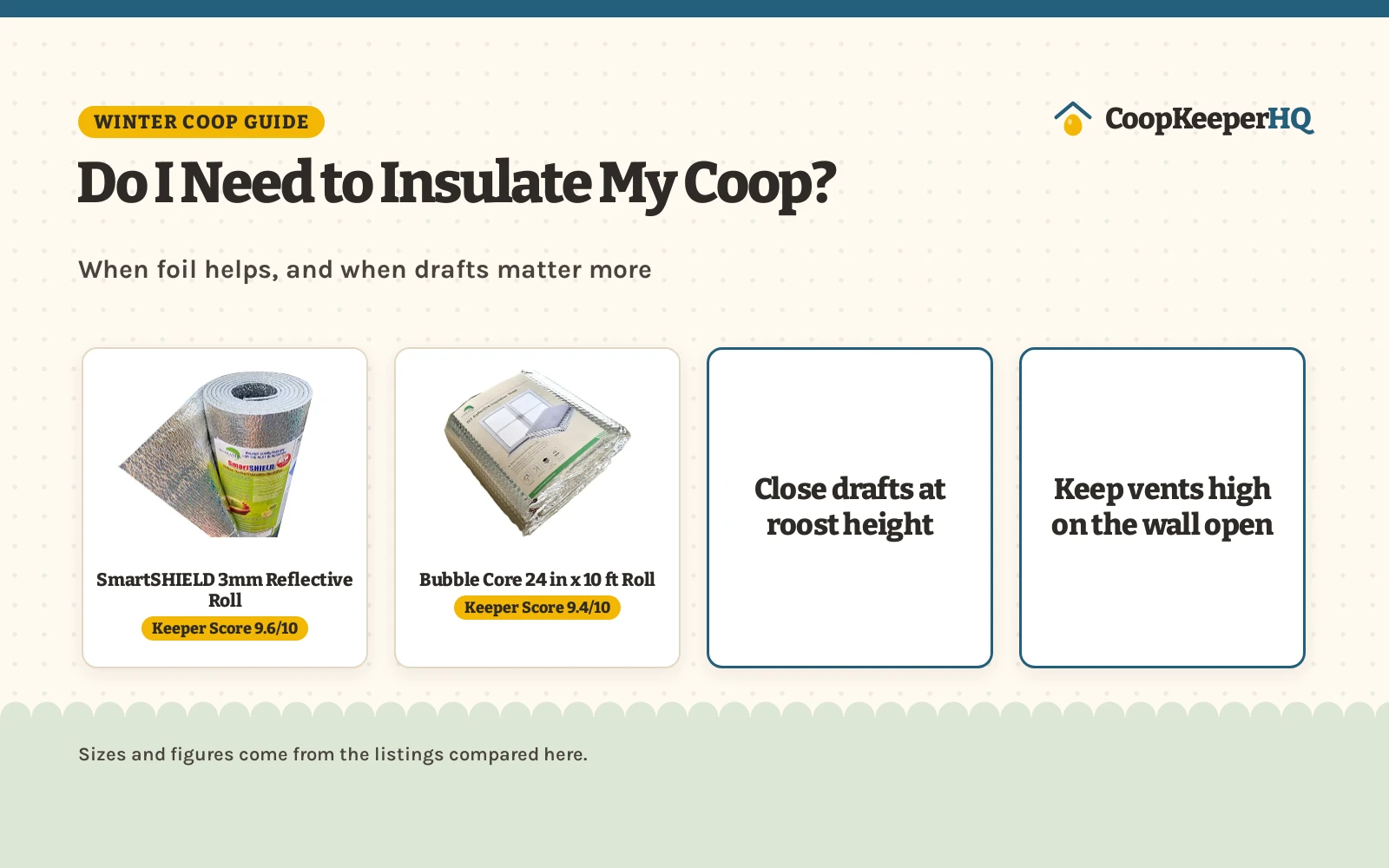
On a cold morning, the water in the drinker has a skin of ice and the hens are puffed up on the roost, and the question comes up: do I need to insulate my chicken coop? Most coops do not need full insulation. A dry coop with drafts closed at roost height and vents left open high on the wall usually keeps a flock comfortable, and reflective foil is for thin-walled coops and cold snaps.
CoopKeeperHQ earns a commission if you buy through our links, at no added cost to you. Affiliate disclosure.
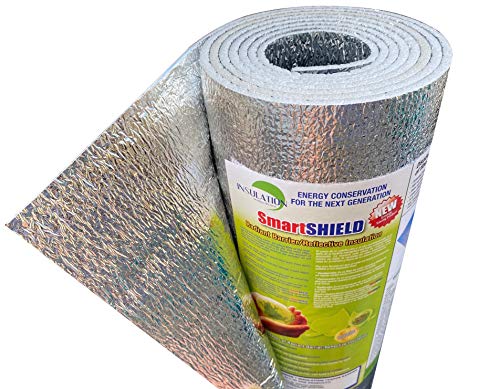
SmartSHIELD 3mm 16 in x 10 ft Reflective
A 3mm foam-core reflective roll in a 16 in x 10 ft size that lines coop walls and covers drafts, reflecting 95% of radiant energy.
Who it's for: keepers lining a thin-walled coop who want a light foil roll they can cut to fit.
Who should skip it: anyone who needs a wide roll to cover a wall in a strip, or a stated R-value.
INSULATION MARKETPLACE lists the SmartSHIELD roll at 16 in by 10 ft, with 3mm closed cell polyethylene foam between engineered foil on both sides. The listing states that it reflects 95% of radiant energy, acts as a vapor barrier unaffected by humidity and moisture, and works indoors or outdoors. It also states that the roll is easy to install, easy to cut and easy to clean, strong but lightweight, and non-toxic, with no irritation to skin, eye or throat.
Pros
- Reflects 95% of radiant energy, as the listing states
- 3mm closed cell polyethylene foam between engineered foil on both sides
- Vapor barrier, unaffected by humidity and moisture, for indoor or outdoor use
- Easy to cut, install and clean, and strong but lightweight
Cons
- Only 16 in wide, so lining a wall takes several strips
- No R-value is stated
- No warranty term is stated
- Thin 3mm foam, so it lines a wall rather than standing in for a panel
24 in x 10 ft DIY Bubble Core Reflective Sheet
A 24 in x 10 ft reflective sheet with 35 self-adhesive pads that covers windows, doors and walls, blocking up to 97% of the sun's heat.
Who it's for: keepers who want a wide roll with pads included for quick fitting on flat surfaces.
Who should skip it: anyone lining a rough-board coop wall, or who wants a stated R-value.
INSULATION MARKETPLACE lists this roll at 24 in by 10 ft, with 35 self-adhesive pads in the package. The listing states that it blocks up to 97% of the sun's heat, cuts to size with scissors, and wipes clean with a damp cloth or a mild soap and water solution. The title calls it a bubble core sheet while the bullets call it a foam core sheet, so the core type is not settled by the listing.
Pros
- 24 in wide roll, 10 ft long, with 35 self-adhesive pads included
- Blocks up to 97% of the sun's heat, as the listing states
- Cuts to size with scissors and applies with the included pads
- Easy to clean with a damp cloth or mild soap and water
Cons
- Marketed for windows, garage doors and RVs, not for coops
- Only 10 ft long, so a long wall needs extra rolls
- No R-value is stated
- No warranty term is stated
Do I need to insulate my chicken coop? Start with drafts, not foil
Insulation slows heat leaving the coop, but it does not fix a draft or a damp floor. Close gaps at roost height, patch holes where rain and snow blow in, and repair roof leaks before you buy foil. Wet bedding and a damp floor pull warmth out of a coop, so dry bedding matters more than lining every wall. If the coop is dry and draft-free at roost height and the birds still huddle away from the walls on cold nights, foil on the coldest wall is the next step.
Hardware cloth over openings keeps predators out while you work, and the hardware cloth guide covers what to buy. Dry bedding is the other half of the job: the chicken coop bedding picks compare the options.
Keep ventilation, even in the cold
It feels backwards, but a sealed coop is a problem. Chickens breathe out moisture overnight, and a closed-up coop holds it. Leave vents high on the walls, above the roosts, so damp air leaves without a breeze blowing across the birds. Foil on the walls does not replace those vents: cover the walls, not the vent openings, and keep the vents open through winter.
How to fit reflective foil, step by step
Step 1: Measure the wall and cut the foil
Measure the wall, then cut the foil to fit with scissors. The SmartSHIELD roll lists a 16 in width and a 10 ft length, and the bubble core roll lists 24 in by 10 ft, so count the strips each wall needs from the roll width. Cut on a flat surface and keep the foil face clean.
Step 2: Fix the foil to the wall
Press the foil flat against the wall with the reflective face toward the birds. The bubble core roll includes 35 self-adhesive pads for fixing, and the SmartSHIELD listing states easy installation and easy cutting. Work from the top of the wall down so each strip overlaps the strip below it.
Step 3: Check the vents and the roosts
After the foil is up, check that the vents high on the wall are still open and that no foil blocks them. Check that the roosts sit clear of drafts and that the birds can reach them without brushing the foil. Wipe the foil clean with a damp cloth when it gets dusty; the bubble core listing states it wipes clean with a damp cloth or a mild soap and water solution.
The gear: foil for the cold snaps
The foil in Step 1 comes in a narrow 16 in roll and a wide 24 in roll with pads, so match the roll to the wall it will cover.
What this guide does not cover
This guide does not cover heaters or heat lamps. Do not use heat lamps in a coop: they are a fire risk in a coop full of dust and dry bedding. If you decide to heat, a flat radiant panel with a stated UL or ETL listing is the safer type, and any outdoor electrical gear needs a GFCI outlet. The best chicken coop heater guide compares panels. If you are unsure whether your birds need extra warmth, ask a poultry vet or your state extension office.
Birds, breed size, run time and climate in; coop floor, run space, roost length and nesting boxes out.
Wash your hands after handling birds, eggs or equipment, supervise children around the flock, and check local rules on flock size and roosters before you buy. For sick birds, call a poultry veterinarian or your state extension office. See CDC backyard poultry guidance. Read our Safety Disclaimer.
FAQ for the flock
Does a chicken coop need insulation in winter?
Most coops do not need full insulation. Dry bedding, drafts closed at roost height and vents left open high on the wall matter more, and foil suits thin-walled coops and cold snaps.
What kind of insulation suits a chicken coop?
Reflective foil suits a coop because it is light, easy to cut and easy to clean. The SmartSHIELD roll reflects 95% of radiant energy, and the bubble core roll blocks up to 97% of the sun’s heat.
Should I cover the vents with insulation?
No. Leave vents high on the wall open so damp air can leave. Cover the walls, not the vent openings.
Can I cut reflective insulation to fit my coop?
Yes. The SmartSHIELD roll is easy to cut, and the bubble core roll cuts to size with scissors and includes 35 self-adhesive pads.
Is reflective foil safe around chickens?
The SmartSHIELD listing states it is non-toxic and will not irritate skin, eye or throat. Fix the foil flat so birds cannot peck at loose edges.
More coop guides
- Chicken Coop Fan vs Heater: Which One Should You Buy?
- Insulated vs Uninsulated Chicken Coop: Which One Should You Buy?
- How to Winterize a Chicken Coop: A Fall Checklist
- Best Chicken Coop Heater: Safer Panels for Winter
- Best Chicken Coop Bedding: Shavings, Hemp and Sand
- How to Keep Chickens Warm in Winter Without Overheating the Coop
- How to Keep Chickens Cool in Summer: Shade, Water and Airflow
- Are Backyard Chickens Worth It? Costs, Time and Eggs
- Chicken Keeping Supplies List: What You Need and What Can Wait
See the chicken coop picks and the coop supply guides.